

Image source: zdnet.com
The Email Overload Challenge
A journalist’s inbox as a test case for AI productivity tools
For professionals drowning in email, the promise of AI-powered assistants is tantalizing. A recent real-world test pitted Google’s Gemini, integrated into Gmail, against Anthropic’s Claude Cowork, a connected AI tool, in a nuanced email-sifting task. The result highlights both the potential and current limitations of AI in handling complex, context-rich queries.
The experiment began when a tech journalist, covering AI and robotics, needed to find relevant email pitches and comments from a crowded inbox. After publishing a story about Anthropic throttling certain users of its Fable 5 platform, the journalist received over 7,000 emails in a single week—many from PR representatives and experts offering perspectives on the news. Manually sifting through such a volume would typically take hours. The journalist turned to Gmail’s built-in Gemini AI, which had previously handled simpler tasks like finding messages by sender or topic. This time, however, the request required discernment: identifying emails that pushed back on the throttling policy as either too restrictive or not restrictive enough. Gemini failed to deliver useful results, unable to grasp the contextual nuance.
Claude Cowork Steps In
How a connected AI assistant tackled the task with precision
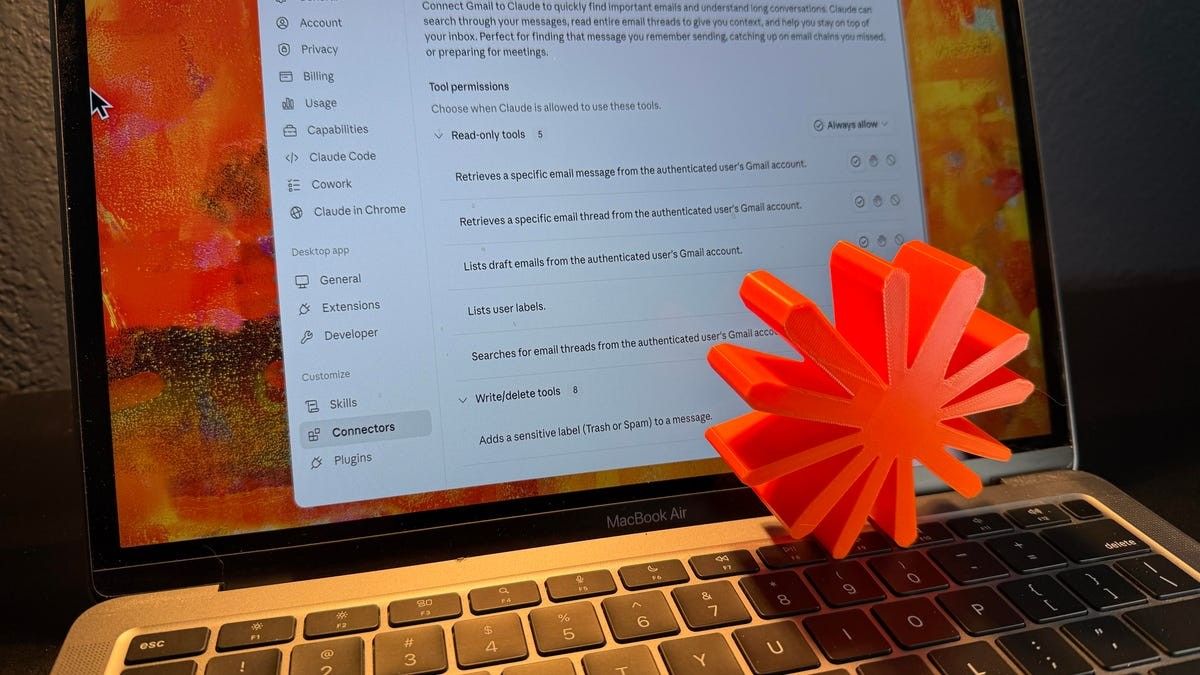
After Gemini’s failure, the journalist turned to Anthropic’s Claude Cowork, a tool designed to integrate with external services like Gmail. Setting it up required granting Claude read-only access to the journalist’s Gmail account via a connector in the settings, which could be disabled after use. This step raised privacy concerns—email archives are often considered highly confidential. The journalist noted that while Google’s infrastructure likely already had access to the data, allowing a third-party AI like Claude to read emails felt like a leap of faith. However, the potential time savings—up to half a day of manual sifting—made the trade-off worthwhile.
Using the same prompt that had stumped Gemini, Claude Cowork scanned the inbox and, in just over a minute, identified 12 relevant PR pitches. It also added context, noting that most were from cybersecurity vendors using the news event as a hook. The tool then filtered these messages to find those with explicit permission to publish, extracted usable quotes without altering them, and provided links to original emails for verification. The journalist emphasized that Claude was used as a research assistant, not an author, and that all quotes were manually verified before publication. This approach saved hours of tedious work while maintaining editorial integrity.
Context and Implications for AI Productivity
What this test reveals about the current state of AI assistants
This comparison underscores a key divide in AI capabilities: simple pattern matching versus contextual understanding. Gemini excels at straightforward searches but struggles with tasks requiring interpretation of tone, intent, or relevance. Claude Cowork, by contrast, demonstrated an ability to parse complex requests—likely due to its design as a general-purpose assistant that can connect to external data sources and perform multi-step reasoning.
The test also highlights the growing trend of “connected AI assistants” that integrate with email, calendars, and files to automate workflows. Anthropic’s data shows that 90% of Claude Cowork sessions are not for coding, indicating a broader demand for productivity tools. However, privacy remains a significant barrier. Users must weigh the convenience of AI-driven email management against the risk of exposing sensitive data to third-party systems. In this case, the journalist mitigated risk by revoking access after the task, a practice experts recommend for any temporary AI integration.
For global readers—especially in regions with strict data protection laws like the EU’s GDPR—this trade-off is critical. Companies like Anthropic and Google are under pressure to demonstrate robust security and compliance, but trust is built through transparency and user control. The success of tools like Claude Cowork may hinge on their ability to offer granular permissions and clear data-handling policies.
Key Takeaways for Professionals
Choosing the right AI tool for email management
For professionals facing email overload, this experiment offers practical lessons. First, not all AI assistants are equal for complex tasks; Gemini may suffice for simple searches, but Claude Cowork proved more effective for nuanced research. Second, setting clear boundaries—such as read-only access and temporary permissions—can mitigate privacy risks. Third, AI tools are best used as assistants, not replacements for human judgment. The journalist’s method of verifying all extracted quotes underscores the importance of human oversight, especially in fields like journalism, law, or finance where accuracy is paramount.
As AI assistants become more integrated into daily workflows, users should test them on low-stakes tasks first, gradually scaling up as trust builds. The technology is evolving rapidly, but the balance between productivity and privacy will remain a central challenge. For now, tools like Claude Cowork offer a glimpse of a future where AI helps tame inbox chaos—but only if users remain vigilant about data security.
Based on reporting from zdnet.com

