

Image source: sciencedaily.com
New Modeling Reveals a Surprising Role for Cosmic Collisions
From destruction to creation: SwRI simulations show impacts may have made Earth habitable
Scientists at the Southwest Research Institute (SwRI) have used advanced computer models to revisit Earth's violent early history, suggesting that ancient asteroid impacts may have done more than reshape the planet's surface—they could have created the conditions necessary for life to emerge. Published in the journal AGU Advances, the study is the first comprehensive effort to quantify how asteroid impacts generated permeability in the early Earth's crust, allowing hot water to circulate and form extensive hydrothermal systems.
Lead author Amanda Alexander of SwRI explained the significance: "While often considered catastrophic in the context of dinosaur extinction, impact bombardment was also likely critical for creating environments for prebiotic chemistry." The research provides a new perspective on how cosmic destruction could have turned into an unexpected opportunity for life.
How Impacts Created Life-Friendly Environments
Fractured crust and hot water: A recipe for prebiotic chemistry
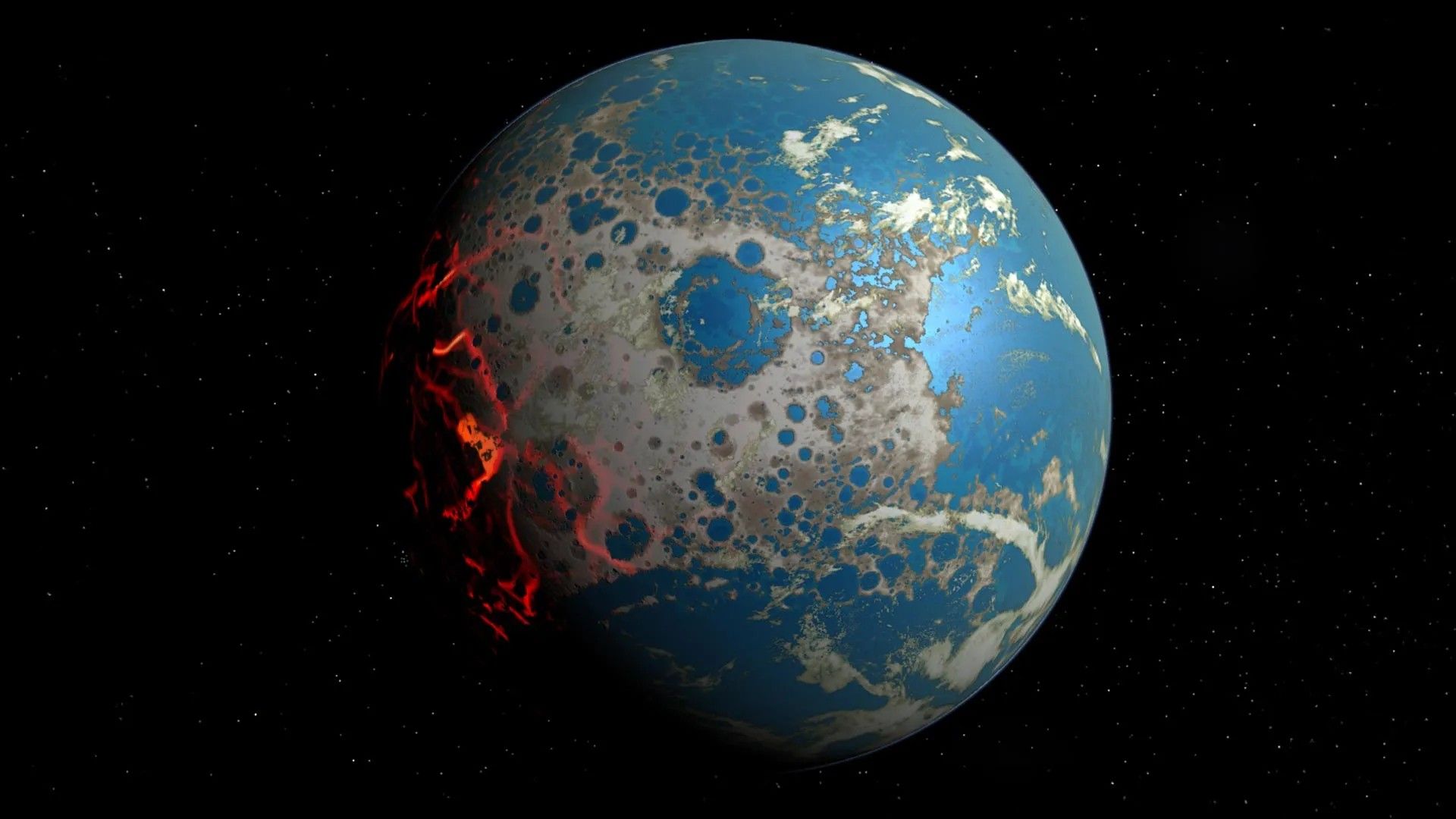
Earth formed about 4.5 billion years ago and soon entered an era of intense asteroid bombardment. High-velocity impacts shattered enormous volumes of rock beneath the surface, while vaporizing material and scattering molten rock across the landscape. The researchers used a sophisticated shock physics code to simulate how these collisions broke apart solid rock and created porous, permeable regions in the crust. This permeability allowed water to circulate through the upper layers, driven by the tremendous heat from each impact combined with the planet's natural geothermal heat.
The resulting hydrothermal systems—comparable to the network of geysers at Yellowstone National Park—may have provided favorable settings for the origin and early evolution of life. According to the simulations, a single large impact during this early period could have generated as much as 100 times the hydrothermal activity found across the Yellowstone region today. These long-lasting, life-friendly environments may have covered much of the early Earth, turning cosmic destruction into an unexpected cradle for life.
Long-Lasting Effects on Earth's Crust
Permeability persisted for hundreds of millions of years
The models indicate that the amount of fractured, permeable rock created by an impact depended mainly on the energy of the collision, which was controlled by the asteroid's size and speed. The degree of permeability within those fractured regions was influenced by Earth's geothermal gradient and the composition of the crust. By incorporating estimates of how frequently these impacts occurred, the researchers built a bombardment history model to infer cumulative effects.
Alexander stated, "Using a bombardment history model to infer the cumulative effects of recurring impacts, we estimate that the upper 5-mile (8-kilometer) shell of the Earth's crust likely was highly permeable 4.3 billion years ago and that a significant portion of this volume may have remained permeable until 3.5 billion years ago." This suggests that impact-driven hydrothermal systems could have persisted for nearly a billion years, providing a stable environment for prebiotic chemistry to unfold. The study underscores that impacts were instrumental in driving hydrothermal changes to the early Earth's crust, with important consequences for the geochemical evolution of near-surface environments.
Implications for the Search for Life Beyond Earth
A new lens for understanding habitability on other worlds
The findings have broader implications for astrobiology and the search for life on other planets. If asteroid impacts can create long-lived hydrothermal systems on Earth, similar processes may have occurred on Mars, Europa, or other rocky bodies that experienced heavy bombardment. Understanding how impacts generated habitable environments on early Earth provides a template for identifying potential biosignatures elsewhere.
However, the researchers note that additional work is needed to better define the characteristics of these ancient hydrothermal systems, such as their temperature ranges, chemical compositions, and duration. The study opens new avenues for exploring how life might arise in seemingly hostile cosmic environments, turning the destructive power of impacts into a key ingredient for life's origin.
Based on reporting from sciencedaily.com

