

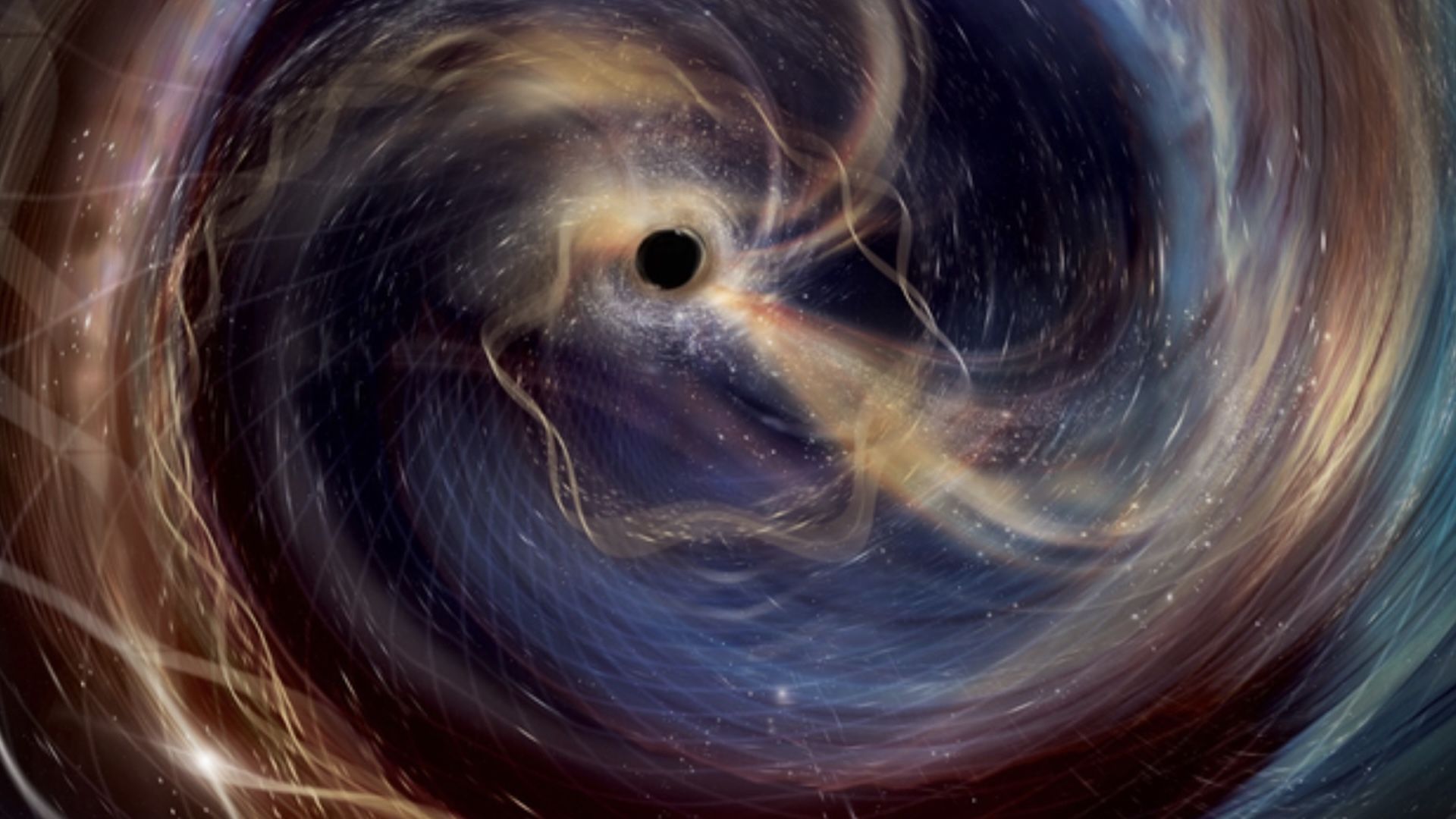
Cosmic Collisions Reveal Einstein's Enduring Legacy Through Second-Generation Black Holes

📷 Image source: cdn.mos.cms.futurecdn.net
Gravitational Wave Breakthrough
Ripples in spacetime confirm theoretical predictions
Physicists have detected an extraordinary cosmic phenomenon through gravitational wave observations—rare second-generation black holes that provide yet another validation of Albert Einstein's general theory of relativity. According to livescience.com, these detections represent black holes that formed from previous mergers rather than stellar collapse, creating a cosmic lineage that traces back through multiple generations of collisions.
The findings, reported on October 30, 2025, come from sophisticated analysis of data collected by gravitational wave observatories. These instruments detected subtle ripples in spacetime caused by massive cosmic collisions occurring billions of years ago. The specific signature of these waves revealed properties that could only belong to black holes born from earlier mergers, rather than those formed directly from dying stars.
The Hierarchical Merger Process
How black holes build cosmic dynasties
Second-generation black holes emerge through what scientists term hierarchical mergers. This process begins when two first-generation black holes—those formed from collapsing massive stars—collide and merge. The resulting single black hole then wanders through its cosmic environment until it encounters and merges with another black hole, creating what physicists identify as second-generation.
According to livescience.com, these hierarchical mergers typically occur in dense stellar environments like globular clusters or galactic nuclei where black holes can frequently encounter potential partners. The detection provides crucial evidence that such environments serve as cosmic factories for building increasingly massive black holes through successive generations of mergers. This process helps explain how some black holes reach masses that would be difficult to achieve through single stellar collapse events alone.
Detection Methodology
Decoding spacetime vibrations
Researchers identified these second-generation black holes through meticulous analysis of gravitational wave signals detected by the LIGO, Virgo, and KAGRA observatories. These facilities use laser interferometry to measure minute distortions in spacetime caused by massive cosmic events. The specific waveform patterns and frequency characteristics revealed telltale signs of black holes with unusual mass ratios and spin properties inconsistent with first-generation origins.
The analysis required sophisticated computational models to match observed signals with theoretical predictions about how second-generation mergers should appear. According to livescience.com, physicists compared the detected signals against thousands of simulated merger scenarios to identify the distinctive characteristics that pointed toward hierarchical formation. This painstaking process eliminated other possible explanations and provided compelling evidence for the second-generation interpretation.
Mass and Spin Signatures
The fingerprints of cosmic ancestry
The key evidence distinguishing second-generation black holes lies in their mass and spin characteristics. According to livescience.com, these objects typically display higher masses than would be expected from single stellar collapse and often have distinctive spin orientations that reflect their merger history. The detected black holes showed mass distributions clustering in ranges that strongly suggest previous merger events.
Spin measurements provided additional confirmation. First-generation black holes often have spins aligned with their orbital angular momentum, while second-generation objects frequently exhibit misaligned spins resulting from the complex dynamics of previous mergers. The detected signals matched the predicted patterns for such misaligned systems, providing multiple lines of evidence supporting the second-generation classification. These spin measurements also offered new tests of general relativity under extreme conditions.
Einstein's Enduring Theory
General relativity passes another extreme test
The detection provides what physicists describe as another robust confirmation of Einstein's general theory of relativity. The gravitational waves emitted during these second-generation mergers match precisely with predictions derived from Einstein's equations, even under the extreme conditions of multiple black hole collisions. According to livescience.com, the observations show no deviations from general relativity's predictions, even when testing the theory against events involving black holes that themselves formed through previous relativistic encounters.
This represents one of the most stringent tests yet of general relativity in the strong-gravity regime. The fact that the theory accurately describes not just single black hole interactions but complex multi-generation merger histories demonstrates its remarkable robustness. Physicists note that each new gravitational wave detection provides opportunities to search for potential limitations or modifications to Einstein's theory, but so far, it continues to pass every test.
Cosmic Implications
Rewriting black hole evolution theories
The confirmation of second-generation black holes has significant implications for our understanding of cosmic structure formation and evolution. According to livescience.com, these findings suggest that hierarchical merging may be more common than previously thought, particularly in certain cosmic environments. This challenges existing models that primarily considered first-generation black holes as the dominant population.
The discoveries also help explain the existence of intermediate-mass black holes that have puzzled astronomers for decades. Through successive mergers, stellar-mass black holes can grow into this intermediate category, potentially serving as stepping stones toward the supermassive black holes found at galactic centers. This provides a plausible mechanism for how the universe builds its most massive compact objects over cosmic time.
Detection Challenges
Finding needles in cosmic haystacks
Identifying second-generation black holes presents substantial technical challenges. According to livescience.com, the signals from these events are often fainter and more complex than those from first-generation mergers, requiring advanced data analysis techniques and increasingly sensitive detectors. The rare nature of these events means researchers must sift through vast amounts of observational data to find the characteristic signatures.
Additional complications arise from the fact that second-generation mergers can occur in environments with multiple black holes, creating complex dynamical interactions that influence the resulting gravitational wave signals. Researchers must account for these environmental effects when interpreting the data. The successful identification of these events represents a significant achievement in gravitational wave astronomy and data analysis methodology.
Future Research Directions
The path toward third-generation detections
According to livescience.com, the detection of second-generation black holes opens exciting new avenues for gravitational wave astronomy. Researchers now aim to identify even rarer third-generation black holes—objects that have undergone two previous mergers. Finding such objects would provide further insights into the hierarchical buildup of black hole masses and the dynamics of dense stellar environments.
Future gravitational wave detectors with improved sensitivity, such as the planned Einstein Telescope and Cosmic Explorer, should dramatically increase the detection rate of these rare events. These advanced facilities may enable astronomers to map out the full population hierarchy of black holes and better understand the cosmic processes that drive their formation and evolution. The current discoveries represent just the beginning of what promises to be a rich field of study in multi-messenger astronomy.
Broader Scientific Impact
Connecting black holes to fundamental physics
Beyond confirming Einstein's theories, these discoveries have broader implications for multiple areas of physics. According to livescience.com, studying second-generation black holes provides insights into nuclear physics through the equation of state of dense matter, particle physics through potential beyond-standard-model effects, and cosmology through their role in structure formation.
The observations also contribute to understanding how black holes influence their host environments through gravitational interactions and emission of gravitational waves. Each detection adds another data point to our growing catalog of cosmic collisions, helping physicists build statistical samples large enough to draw meaningful conclusions about black hole population properties and formation channels. This systematic approach is transforming gravitational wave astronomy from discovery science to precision measurement science.
#BlackHoles #GravitationalWaves #Einstein #Astrophysics #SpaceDiscovery #CosmicCollisions


