

The Crimson Moon: Unraveling the Science Behind the Lunar Eclipse's Blood-Red Hue

📷 Image source: earthsky.org
A Celestial Spectacle in Scarlet
The dramatic transformation of the full moon
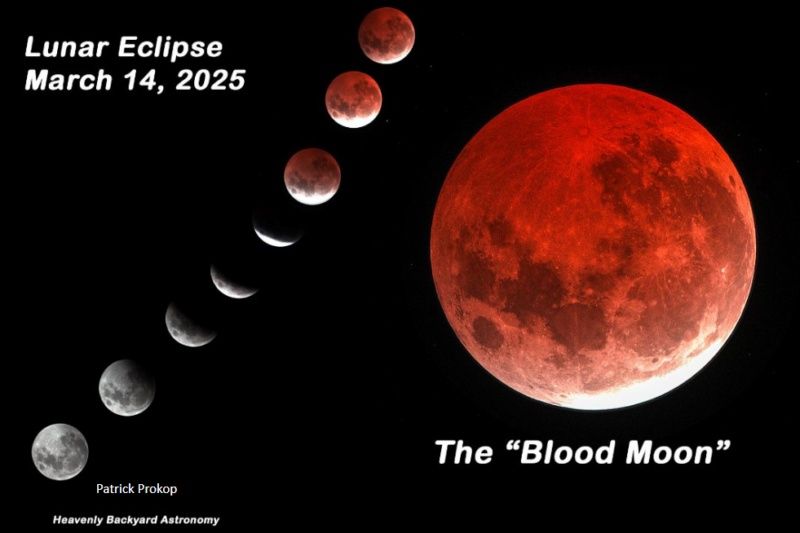
During a total lunar eclipse, the moon undergoes a breathtaking metamorphosis. Instead of vanishing into the Earth's shadow, it often glows with a deep, coppery red or orange light. This phenomenon, which has captivated humanity for millennia, is not a sign of celestial anger but a stunning demonstration of atmospheric physics. The sight raises an immediate question: why does the moon turn red?
The answer lies not on the moon itself, but in the ring of atmosphere surrounding our own planet. As the Earth moves directly between the sun and the moon, sunlight is blocked. However, our atmosphere acts as a lens, bending and filtering the sun's rays to paint the lunar surface in shades of crimson and rust.
Rayleigh Scattering: The Sky Painter's Brush
The same physics that colors our sunsets
To understand the red moon, we must first look to our own skies at dusk. The vibrant reds and oranges of a sunset are caused by a process called Rayleigh scattering. According to the explanation from earthsky.org, sunlight is composed of all the colors of the rainbow. As it passes through Earth's atmosphere, molecules and tiny particles scatter the shorter wavelengths of blue and violet light in all directions. This scattering is why our sky appears blue during the day.
What remains and continues traveling in a straighter line are the longer wavelengths of red, orange, and yellow light. At sunset and sunrise, sunlight must pass through a much thicker slice of atmosphere to reach our eyes, maximizing this filtering effect and leaving primarily the warm hues. This exact same filtered light is what illuminates the moon during a total eclipse. The moon, in essence, is bathed in the combined light of every sunrise and sunset happening around the Earth at that moment.
The Atmospheric Ring of Fire
How Earth's atmosphere projects a colored shadow
Imagine standing on the moon during a total lunar eclipse. You would witness a remarkable sight: a black disk of Earth completely obscuring the sun, but ringed by a brilliant, fiery halo. This halo is our atmosphere, backlit by the sun. From our vantage point on Earth, we see the result of that backlighting projected onto the lunar surface.
The earthsky.org report clarifies that if Earth had no atmosphere, the moon would disappear entirely during totality, becoming nearly invisible against the starry backdrop. It is our planet's blanket of air that saves the eclipse from being a simple vanishing act. The atmosphere refracts, or bends, sunlight around the edges of Earth. Just as a prism splits white light, our atmosphere acts as a global filter, stripping out the blues and allowing the reds to pass through and continue their journey to the moon.
A Palette of Possible Reds
Why no two eclipses look exactly the same
Not every Blood Moon is the same shade. The specific color and brightness can range from a bright, fiery orange and copper to a deep, dark burgundy or even a muted, grayish brown. This variation is a direct report on the state of Earth's atmosphere at the time of the eclipse.
The key factor is atmospheric clarity. According to the principles outlined by earthsky.org, a clear, clean atmosphere—free of excessive dust or aerosols—tends to produce a brighter, more orange-red moon. The light passes through efficiently. Conversely, an atmosphere loaded with extra particles, such as from recent major volcanic eruptions, can lead to a darker, deeper red eclipse. After a significant volcanic event, ash and sulfate aerosols high in the stratosphere can block and absorb even more of the passing sunlight, dimming the moon further and sometimes giving it a darker, smokier hue.
The Path Through the Shadow
Understanding umbra and penumbra
The Earth's shadow during an eclipse is composed of two distinct parts: the penumbra and the umbra. The penumbra is the outer, lighter part of the shadow where Earth blocks only some of the sun's light. The umbra is the inner, central cone of complete shadow.
As the moon moves into the penumbra, the dimming is subtle and often difficult to notice with the naked eye. The dramatic change begins when the moon starts to enter the dark umbra. This partial phase sees a dark 'bite' taken out of the lunar disk. Totality occurs when the entire moon is within the umbra. It is during this totality, immersed in the heart of Earth's shadow, that the red glow becomes most pronounced and captivating. The moon's journey through different parts of the shadow directly influences the intensity and visibility of its coloration.
Historical Omens and Modern Science
From fear to understanding
Throughout history, the sudden appearance of a red moon in the sky was often interpreted as a portent of doom, a sign of anger from the gods, or a harbinger of major events. These interpretations were born from a lack of understanding of the celestial mechanics at play. The unpredictable and dramatic nature of the event made it a powerful symbol in cultures worldwide.
Modern astronomy has completely demystified the process. We can now predict lunar eclipses with extraordinary precision centuries in advance, knowing exactly when and where they will be visible. The science of Rayleigh scattering and atmospheric refraction provides a complete and elegant explanation. What was once a fearful omen is now a widely anticipated astronomical event, a chance to witness a fundamental and beautiful interaction between sunlight, our planet's atmosphere, and our nearest celestial neighbor.
Observing the Phenomenon
How to best experience a total lunar eclipse
One of the greatest advantages of lunar eclipses is their accessibility. Unlike solar eclipses, which require special eye protection, a lunar eclipse is perfectly safe to watch with the naked eye. No telescopes or binoculars are needed, though they can enhance the view of the moon's surface details as the shadow passes and the colors shift.
The best viewing strategy is simply to find a location with a clear, unobstructed view of the moon. The eclipse happens simultaneously for everyone on the night side of Earth, though local weather is the ultimate deciding factor for visibility. Patience is key, as the entire process from first penumbral contact to final exit can last several hours, with totality itself typically lasting between 30 minutes and over an hour. This slow pace allows observers to watch the gradual painting of the moon in Earth's sunset hues.
A Global Sunset Captured on the Moon
The enduring wonder of the Blood Moon
The red moon of a total lunar eclipse is more than just a pretty sight. It is a cosmic demonstration, a visible proof of our planet's dynamic atmosphere and its interaction with light. It connects the familiar beauty of our own sunsets to the stark landscape of the moon, 384,400 kilometers away.
Every time we witness this event, we are seeing a projection of Earth's living, breathing envelope of air onto a distant, barren world. The specific shade of red serves as a momentary snapshot of our global atmospheric health. According to the science detailed by earthsky.org, this phenomenon underscores the interconnectedness of our planetary system. The next time the moon dips into that coppery glow, remember: you're not just looking at the moon. You're seeing the collective, filtered light of every dawn and dusk on Earth, reflected back at us in a silent, scarlet show.
#LunarEclipse #BloodMoon #Astronomy #Science #Space


