

How Cooperative Energy Networks Are Reshaping Power Distribution Through Game Theory

📷 Image source: pub.mdpi-res.com
The Energy Sharing Revolution
Beyond Traditional Grid Systems
Energy systems worldwide are undergoing a fundamental transformation from isolated operations to interconnected networks that share resources dynamically. According to mdpi.com, 2025-10-30T00:00:00+00:00, multi-integrated energy systems represent the next evolutionary step in power distribution, enabling different energy networks to exchange electricity, heat, and cooling resources based on real-time needs and availability. This approach moves beyond the conventional centralized grid model toward a more resilient and efficient ecosystem where energy flows where it's most needed.
The concept of energy sharing draws from economic principles of resource optimization and cooperative game theory. Unlike traditional systems where each energy provider operates independently, these integrated networks create symbiotic relationships that benefit all participants. The research published in Energies, Vol. 18, Pages 5729 demonstrates how asymmetric Nash bargaining provides a mathematical foundation for fair resource distribution among interconnected systems. This framework ensures that all participants receive equitable benefits based on their contributions and needs, creating sustainable partnerships rather than competitive relationships.
Understanding Multi-Integrated Energy Systems
The Architecture of Connected Power Networks
Multi-integrated energy systems (MIES) represent complex networks where different energy infrastructures connect and coordinate their operations. These systems typically combine electricity grids, heating networks, cooling systems, and sometimes renewable generation sources into a unified operational framework. The integration allows for complementary use of resources—for instance, waste heat from electricity generation can be captured for heating purposes, while excess solar power can be redirected to cooling systems during peak demand periods.
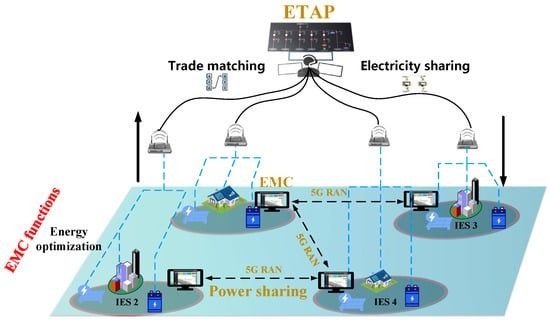
The physical infrastructure of MIES includes interconnection points, smart controllers, monitoring systems, and communication networks that enable real-time data exchange. These technical components work together to create what researchers call 'energy internet'—a networked approach to power distribution that mirrors how information flows across digital networks. The sophistication of these systems varies significantly, from basic bilateral energy exchanges to complex multilateral networks involving dozens of participants across different geographic regions and energy domains.
The Mathematics of Fair Energy Distribution
Asymmetric Nash Bargaining Explained
At the core of effective energy sharing lies the mathematical framework of asymmetric Nash bargaining, a concept derived from game theory that determines how benefits should be distributed among cooperating parties. Unlike simple equal splitting, this approach recognizes that different participants bring different resources, capabilities, and needs to the partnership. The bargaining solution calculates optimal distribution based on each participant's contribution, alternative options, and strategic position within the network.
The mathematical model considers multiple factors including energy production costs, transmission limitations, storage capabilities, and demand patterns. According to the research, this approach ensures that no participant can improve their position by leaving the cooperative arrangement, creating what game theorists call a 'stable solution.' The complexity of these calculations requires advanced computational methods, but the outcome is a distribution scheme that all participants recognize as fair and beneficial, even when their individual gains are not identical.
Real-World Implementation Challenges
Bridging Theory and Practice
Implementing cooperative energy sharing systems faces significant practical challenges that extend beyond theoretical models. Technical compatibility between different energy systems represents a major hurdle, as legacy infrastructure often lacks the communication protocols and control systems needed for seamless integration. Regulatory frameworks present another substantial barrier, with existing energy markets and policies designed for traditional, centralized systems rather than dynamic, multi-party sharing arrangements.
Economic considerations also complicate implementation, particularly regarding investment recovery and risk distribution. Participants must make substantial upfront investments in interconnection infrastructure and control systems without guaranteed returns. The research acknowledges uncertainty about how these costs should be allocated among participants and how long-term maintenance responsibilities should be distributed. These practical challenges require careful planning and often customized solutions for each specific implementation context.
Global Applications and Case Studies
Learning from International Experiments
Various countries have experimented with energy sharing concepts, though comprehensive multi-integrated systems remain relatively rare. European nations, particularly Germany and Denmark, have implemented district heating systems that incorporate waste heat from industrial processes and power generation. These systems demonstrate the principles of energy integration on a local scale, though they typically involve fewer participants and less complex bargaining arrangements than the theoretical models propose.
Asian countries, including China and Japan, have developed industrial park energy systems where multiple factories share energy resources. These implementations show promising results in reducing overall energy consumption and costs, though detailed performance data remains limited. The research from mdpi.com doesn't specify exact locations or comprehensive results from existing implementations, indicating that widespread adoption of fully developed multi-integrated energy systems with sophisticated bargaining frameworks remains in early stages globally.
Technical Infrastructure Requirements
The Hardware and Software Backbone
Successful energy sharing networks depend on sophisticated technical infrastructure that enables real-time monitoring, control, and communication. Smart meters and sensors must be deployed throughout the participating systems to track energy production, consumption, storage levels, and quality parameters. These devices provide the raw data needed for the bargaining algorithms to make informed distribution decisions. The infrastructure must be robust enough to handle the continuous data flow and secure enough to prevent manipulation or cyberattacks.
Control systems represent another critical component, requiring both centralized coordination and distributed intelligence. The research describes hierarchical control architectures where local controllers manage immediate operational decisions while central systems handle strategic distribution and bargaining calculations. Communication networks must provide reliable, low-latency connections between all components, with redundancy to ensure continuous operation even during partial system failures. The exact technical specifications vary based on system scale and complexity, but all implementations share these core infrastructure requirements.
Economic Benefits and Cost Structures
The Financial Case for Cooperation
The economic rationale for multi-integrated energy systems centers on improved resource utilization and reduced operational costs. By sharing resources, participants can avoid redundant investments in backup generation and storage capacity. The bargaining framework ensures that cost savings are distributed fairly, with each participant receiving benefits proportional to their contribution to the overall system efficiency. These arrangements can significantly reduce energy costs for all participants while maintaining system reliability.
Investment recovery presents a complex economic challenge, as participants must fund interconnection infrastructure without clear precedents for return timelines. The research acknowledges uncertainty about optimal financing models, though it suggests that public-private partnerships may offer viable approaches. Operating costs include system maintenance, communication services, and computational resources for the bargaining algorithms. While the research demonstrates theoretical economic benefits, it provides limited specific data on actual cost savings from implemented systems, indicating an area requiring further practical validation.
Environmental Impact Assessment
Sustainability Advantages and Limitations
Multi-integrated energy systems offer significant environmental benefits through improved energy efficiency and reduced waste. By enabling optimal use of available resources, these systems can decrease overall energy consumption and associated greenhouse gas emissions. The integration of renewable energy sources becomes more practical, as surpluses in one part of the system can be redirected to meet deficits in other areas, reducing the need for fossil fuel backup generation.
Environmental limitations also exist, particularly regarding the manufacturing and disposal of additional infrastructure components. The research doesn't provide comprehensive life-cycle assessment data for these systems, creating uncertainty about their net environmental impact when accounting for embodied energy in new equipment. Additionally, the environmental benefits depend heavily on the energy mix of participating systems—integration that primarily connects fossil fuel-based systems may offer limited environmental advantages compared to networks with high renewable penetration.
Regulatory and Policy Considerations
Navigating Legal Frameworks
Existing energy regulations often present barriers to multi-integrated systems, as they were designed for traditional utility models with clear distinctions between producers, distributors, and consumers. Energy sharing arrangements blur these categories, creating regulatory uncertainty about licensing requirements, tariff structures, and liability frameworks. Policy makers face the challenge of updating regulations to enable innovation while maintaining consumer protection and system reliability.
International policy approaches vary significantly, with some countries creating special regulatory sandboxes for energy innovation while others maintain restrictive frameworks. The research from mdpi.com doesn't specify recommended policy changes, but it implicitly acknowledges that regulatory adaptation is necessary for widespread implementation. Key policy questions include how to classify participants in sharing arrangements, how to ensure fair market competition, and how to allocate responsibility during system failures or quality issues. These considerations require careful balancing between enabling innovation and maintaining oversight.
Future Development Pathways
Evolution of Energy Networks
The development of multi-integrated energy systems likely will follow an evolutionary path rather than revolutionary transformation. Initial implementations will probably focus on limited-scale pilots involving willing participants with compatible systems. As technology matures and regulatory frameworks adapt, these systems may expand to include more participants and more diverse energy resources. The ultimate vision involves creating extensive energy networks that operate similarly to the internet, with dynamic routing and resource sharing across broad geographic areas.
Technological advancements will play a crucial role in this evolution, particularly in artificial intelligence for optimization algorithms, blockchain for transaction management, and advanced materials for more efficient energy transmission. The research suggests that standardization of interfaces and protocols will be essential for scalable growth, allowing different systems to interconnect seamlessly. While the timeline for widespread adoption remains uncertain, the theoretical foundations established in studies like this one provide a roadmap for future development efforts across the energy sector.
Perspektif Pembaca
How do you envision energy sharing transforming your local community's approach to power distribution, and what concerns would you need addressed before supporting such initiatives in your area?
What balance should regulators strike between encouraging innovative energy sharing models and ensuring reliable, affordable power for all consumers, particularly those who cannot participate directly in these advanced systems?
#EnergyNetworks #GameTheory #PowerDistribution #RenewableEnergy #SmartGrid


