

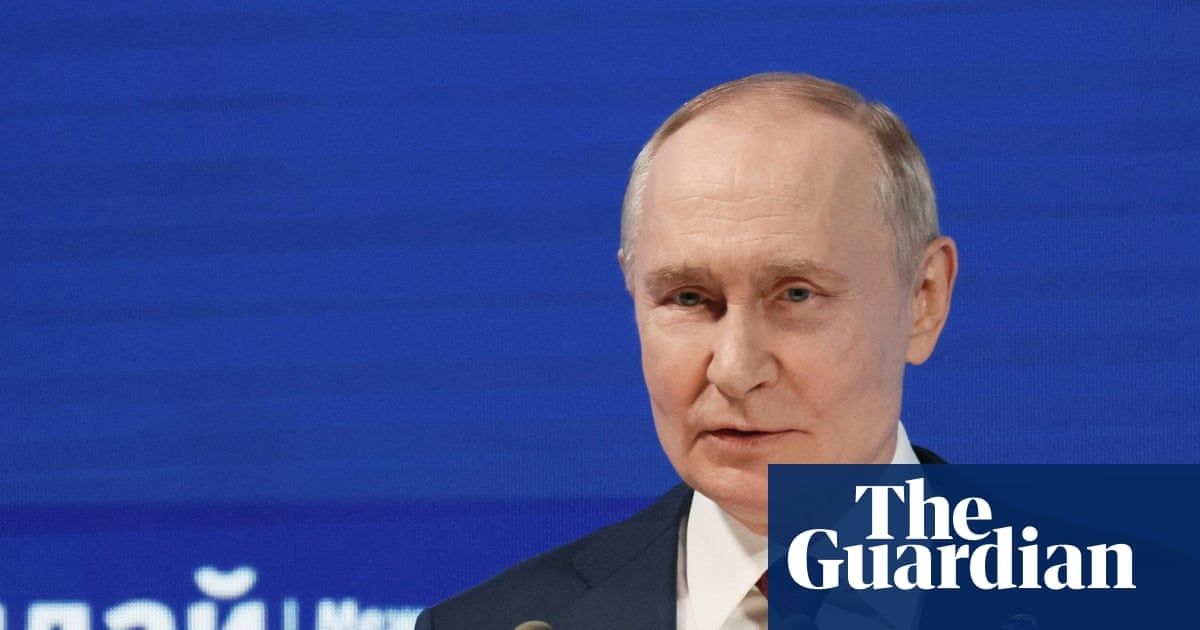
Putin Dismisses NATO Attack Fears as 'Complete Nonsense' Amid Rising Tensions

📷 Image source: i.guim.co.uk
Kremlin's Firm Denial
Putin addresses Western anxieties head-on
Russian President Vladimir Putin has categorically dismissed concerns about Moscow planning an attack on NATO as 'complete nonsense' during his recent public address. The statement comes amid escalating tensions between Russia and Western military alliances following years of conflict in Eastern Europe.
Speaking to reporters, Putin emphasized that Russia has no territorial ambitions toward NATO member states, framing such fears as manufactured hysteria. His comments represent the most direct response yet to growing apprehensions within European capitals about potential Russian expansionism beyond Ukraine.
Western Intelligence Assessments
Conflicting reports about Russian intentions
According to theguardian.com, Western intelligence agencies have been divided in their assessments of Moscow's long-term plans. Some analysts point to Russia's continued military buildup along NATO's eastern flank as cause for concern, while others argue economic constraints limit Moscow's capabilities.
NATO officials have noted increased Russian military exercises near member state borders, with some drills involving nuclear-capable aircraft and missile systems. These developments have prompted several Eastern European nations to call for enhanced NATO presence in their territories.
Historical Context of Tensions
From Cold War to current standoff
The current friction represents the most severe deterioration in Russia-NATO relations since the Cold War era. Relations began worsening significantly after Russia's 2014 annexation of Crimea, with the 2022 full-scale invasion of Ukraine creating what many describe as a new Iron Curtain.
Putin's latest remarks attempt to counter what Russian officials characterize as fearmongering by Western politicians. The Russian leader suggested that such rhetoric serves to justify increased military spending among NATO members rather than reflecting genuine security threats.
Military Positioning and Readiness
Force deployments on both sides
NATO has substantially enhanced its forward presence in Eastern Europe since 2022, with battle groups deployed to Estonia, Latvia, Lithuania and Poland. The alliance has also maintained higher alert levels for its rapid response forces.
Meanwhile, Russia has relocated significant military assets from other regions to its Western Military District, which borders multiple NATO countries. Satellite imagery analyzed by independent researchers shows expanded infrastructure at several bases near the Finnish and Baltic borders.
Economic Dimensions of Security
Sanctions and defense budgets
The economic consequences of Western sanctions have complicated Russia's military modernization plans. According to theguardian.com, 2025-10-02T18:48:42+00:00, Moscow has been forced to prioritize certain weapons programs while delaying others due to budget constraints.
NATO members, meanwhile, have collectively increased defense spending by over $150 billion since 2022, with several countries now meeting or exceeding the alliance's 2% of GDP target. This military investment race shows no signs of abating despite diplomatic efforts.
Diplomatic Channels and Communication
The struggle for dialogue
Direct military-to-military communication between Russian and NATO officials has been minimal since the suspension of formal cooperation mechanisms. This communication vacuum has raised concerns about miscalculation or accidental escalation during border incidents.
Several European leaders have attempted to maintain backchannel communications with the Kremlin, though these efforts have yielded little substantive progress. The absence of regular diplomatic engagement has created what one analyst described as 'the most dangerous transparency deficit in decades.'
Public Perception and Media Narratives
Competing information campaigns
Russian state media has consistently portrayed NATO as an aggressive expansionist alliance that threatens Russian sovereignty. This narrative has been instrumental in maintaining domestic support for Moscow's security policies and military expenditures.
In Western media, coverage has emphasized Russia's actions in Ukraine as evidence of broader revisionist ambitions. This fundamental disagreement about basic facts and intentions makes diplomatic resolution increasingly challenging for both sides.
Future Trajectory and Scenarios
Potential pathways forward
Security experts interviewed by theguardian.com suggest several possible developments in the coming months. Some anticipate a prolonged period of managed tension, while others warn of increasing incidents of military brinksmanship.
The upcoming NATO summit will likely address contingency planning for various scenarios involving Russian actions. Meanwhile, European governments are debating whether to pursue renewed diplomatic engagement or further strengthen deterrence measures in response to Putin's latest statements.
Regional Security Implications
Neighboring states' perspectives
Countries along NATO's eastern edge have responded to Putin's comments with skepticism. Polish officials have called for additional permanent NATO bases on their territory, while Baltic states have accelerated their military modernization programs.
Finland and Sweden's recent NATO accessions have fundamentally altered the strategic balance in Northern Europe, giving the alliance significant new advantages in monitoring Russian activities in the Baltic Sea and Arctic regions. These developments have featured prominently in Russian security assessments.
Nuclear Dimensions of the Standoff
Strategic weapons and deterrence
Both Russia and NATO have taken steps to modernize their nuclear arsenals amid the ongoing tensions. Putin has referenced Russia's nuclear capabilities in several speeches, describing them as a guarantee against what he calls 'Western aggression.'
NATO has responded by emphasizing the credibility of its nuclear deterrent while avoiding explicit nuclear threats. This careful balancing act reflects alliance leaders' awareness that nuclear rhetoric carries particularly grave risks in the current climate of mistrust and limited communication channels.
#Russia #NATO #Ukraine #MilitaryTensions #Putin


