

The Critical Scientific Practice of Rejecting the Null Hypothesis

📷 Image source: sciencebasedmedicine.org
Understanding the Foundation of Hypothesis Testing
Why this statistical concept matters in medical research
In scientific research, particularly in medicine, the null hypothesis represents the default position that there is no relationship between two measured phenomena. According to sciencebasedmedicine.org, rejecting this null hypothesis forms the cornerstone of evidence-based conclusions. But what does this statistical process actually mean for medical practitioners and patients?
When researchers design studies, they begin with the assumption that any observed effects are due to chance alone. The rigorous process of testing allows scientists to determine whether their results are statistically significant enough to challenge this initial assumption. This methodology prevents researchers from making premature claims about treatments or interventions without sufficient evidence.
The Mechanics of Statistical Significance
How p-values and confidence intervals work in practice
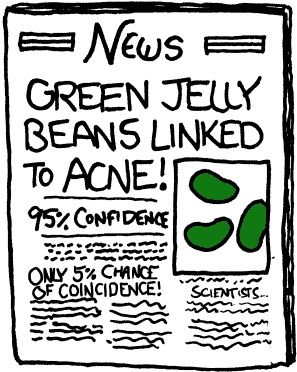
The standard threshold for rejecting the null hypothesis in medical research typically involves a p-value of less than 0.05. This means there's less than a 5% probability that the observed results occurred by random chance alone. However, as sciencebasedmedicine.org explains, this threshold isn't a magical line separating truth from falsehood.
Many researchers misunderstand that a p-value of 0.04 doesn't necessarily mean a finding is 'true' while 0.06 means it's 'false.' The report emphasizes that statistical significance should be interpreted within the broader context of study design, sample size, and prior evidence. This nuanced understanding helps prevent both false positives and missed discoveries in medical research.
Common Misinterpretations in Medical Literature
Where researchers and readers often go wrong
One widespread misunderstanding involves conflating statistical significance with clinical importance. A treatment might show statistically significant results while having minimal practical impact on patient outcomes. The source material highlights how this distinction frequently gets blurred in medical reporting.
Another frequent error involves the misinterpretation of confidence intervals. When a 95% confidence interval for a treatment effect excludes zero, researchers often conclude they've rejected the null hypothesis. However, as sciencebasedmedicine.org notes, this interpretation oversimplifies the complex reality of statistical inference and can lead to overconfident conclusions about treatment efficacy.
The Replication Crisis in Medical Research
How null hypothesis testing relates to reproducibility problems
The ongoing replication crisis in psychology and medicine has forced researchers to reexamine their approach to statistical testing. Many published findings that initially appeared to reject null hypotheses have failed to replicate in subsequent studies. This pattern raises important questions about how we interpret statistical results.
According to the analysis from sciencebasedmedicine.org, part of the problem stems from publication bias—the tendency for journals to publish only 'positive' results that reject null hypotheses. Studies that fail to find significant effects often remain in file drawers, creating a distorted picture of the actual evidence. This systematic bias affects everything from clinical guidelines to treatment recommendations.
Bayesian Alternatives and Complementary Approaches
Expanding beyond traditional null hypothesis testing
While null hypothesis significance testing remains dominant in medical research, Bayesian methods offer complementary approaches. These alternative statistical frameworks allow researchers to quantify evidence for both the null and alternative hypotheses rather than simply rejecting or failing to reject.
The source material suggests that Bayesian approaches might provide more nuanced interpretations of medical evidence. However, implementing these methods requires additional statistical sophistication and computational resources. Many medical researchers continue to rely primarily on traditional methods while gradually incorporating Bayesian elements where appropriate.
Practical Implications for Clinical Decision-Making
How statistical concepts translate to patient care
For practicing physicians, understanding null hypothesis testing isn't just academic—it directly impacts patient care decisions. When reading clinical trial results, doctors need to assess whether the statistical evidence genuinely supports changing their practice patterns.
The report emphasizes that statistical significance alone shouldn't dictate clinical decisions. Factors like effect size, clinical relevance, potential harms, and cost-effectiveness often matter more than whether a p-value crossed an arbitrary threshold. This practical perspective helps clinicians provide evidence-based care without being misled by statistical artifacts.
Improving Statistical Literacy in Medical Education
Addressing gaps in researcher and clinician training
Medical education traditionally emphasizes biological sciences over statistical reasoning, creating knowledge gaps that affect research quality and clinical practice. Many clinicians feel underprepared to critically evaluate the statistical methods used in the studies they rely on for patient care.
Sciencebasedmedicine.org suggests that improving statistical literacy requires both better education and clearer communication of statistical concepts in medical literature. Researchers bear responsibility for presenting their findings in ways that non-statisticians can understand, while clinicians need ongoing training to maintain their critical appraisal skills throughout their careers.
Future Directions in Medical Statistics
Evolving approaches to evidence evaluation
The field of medical statistics continues to evolve in response to recognized limitations of traditional methods. New approaches emphasize transparency, reproducibility, and the cumulative nature of scientific evidence rather than single studies that reject null hypotheses.
Registered reports, where study protocols undergo peer review before data collection, represent one promising innovation. This approach reduces publication bias and ensures that the decision to publish doesn't depend solely on whether researchers managed to reject their null hypotheses. As sciencebasedmedicine.org concludes, these methodological improvements promise to strengthen the foundation of evidence-based medicine for years to come.
The Human Element in Statistical Interpretation
Balancing numbers with clinical wisdom
Despite the mathematical precision of statistical tests, human judgment remains essential in interpreting medical research. Statistical significance doesn't automatically translate to medical importance, and failing to reject a null hypothesis doesn't necessarily mean an effect doesn't exist.
The most effective medical practitioners combine statistical understanding with clinical experience and patient-centered values. They recognize that statistics provide tools for decision-making rather than definitive answers. This balanced approach, as highlighted in the source material, represents the ideal integration of statistical reasoning and medical practice in serving patient needs.
#NullHypothesis #MedicalResearch #Statistics #EvidenceBasedMedicine #Science


