

How Open-Source Robotics Kits Are Democratizing STEM Education

📷 Image source: spectrum.ieee.org
Breaking Down Barriers in Robotics Education
Professor's affordable approach reaches underrepresented communities
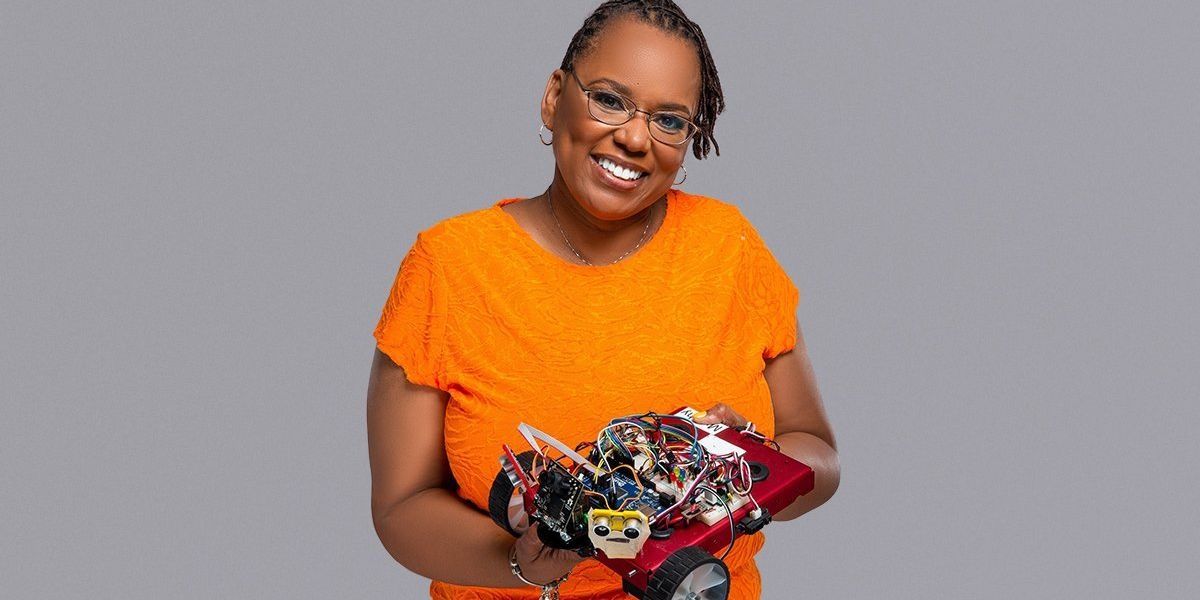
In academic laboratories worldwide, advanced robotics equipment often carries price tags reaching tens of thousands of dollars, creating significant barriers for underrepresented student populations. Professor Tom Berry at the University of Texas at Austin recognized this fundamental inequity and decided to engineer a solution. His response? Developing open-source robotics kits that cost approximately $200 per unit—roughly 1% of what commercial alternatives typically demand.
According to spectrum.ieee.org, Berry's motivation stems from wanting to 'make robotics education more inclusive and accessible.' The kits specifically target students from communities traditionally underrepresented in STEM fields, including those from rural areas, lower-income backgrounds, and first-generation college students. This approach represents a radical departure from conventional robotics education models that often require substantial institutional funding.
The Technical Architecture Behind Accessibility
Precision engineering meets educational practicality
Each robotics kit incorporates sophisticated components carefully selected for both performance and affordability. The system centers around custom-designed circuit boards that students assemble themselves, providing hands-on experience with electronics fundamentals. These boards interface with high-torque servo motors capable of precise movement control, alongside multiple sensors that enable environmental interaction.
The mechanical structure utilizes 3D-printed parts that students can fabricate using standard desktop printers, significantly reducing manufacturing costs. Berry emphasizes that 'every component serves both an educational purpose and functional role,' ensuring students understand the relationship between individual elements and overall system performance. This integrated approach teaches mechanical design, electronics, and programming within a single cohesive platform.
Educational Methodology and Learning Progression
From basic assembly to advanced programming
The educational journey begins with physical assembly, where students learn mechanical principles through constructing their robots. This hands-on approach develops spatial reasoning and problem-solving skills as learners troubleshoot assembly challenges. The process intentionally mirrors professional engineering workflows, preparing students for real-world technical careers.
Once mechanical assembly completes, students progress to electronics integration, connecting motors, sensors, and control systems. The final phase introduces programming through Python-based interfaces, allowing students to implement increasingly complex behaviors. This structured progression ensures students build confidence gradually while developing multiple technical competencies simultaneously. The curriculum design acknowledges that different learning styles require varied approaches to mastery.
Real-World Impact and Student Outcomes
Measurable results in diverse educational settings
Berry's robotics kits have demonstrated significant success across multiple educational contexts. In one implementation, students from traditionally excluded backgrounds achieved competency levels comparable to their peers from well-resourced institutions. The program's effectiveness stems from its ability to provide equivalent technical experiences regardless of institutional funding disparities.
According to spectrum.ieee.org, participants reported increased confidence in pursuing STEM careers and developed practical skills immediately applicable to industry positions. The hands-on nature of the curriculum particularly benefits kinesthetic learners who struggle with purely theoretical approaches. Multiple students have transitioned directly from these programs to internships and entry-level positions in robotics companies, demonstrating the program's real-world relevance.
The Open-Source Philosophy in Practice
How transparency drives innovation and accessibility
Berry's commitment to open-source principles extends beyond mere cost reduction. All design files, including circuit board layouts, 3D-printable components, and software libraries, remain publicly available. This transparency enables educational institutions worldwide to adapt the technology to local needs and resources without licensing restrictions.
The open-source approach has spawned unexpected innovations as educators and students modify designs for specific applications. Some have adapted the robots for agricultural monitoring, while others have created specialized versions for search-and-rescue simulation. This collaborative development model accelerates improvement while maintaining the core educational value. Berry notes that community contributions have enhanced the original designs in ways he hadn't anticipated, demonstrating the power of collective intelligence.
Scalability and Institutional Adoption
From classroom pilots to widespread implementation
The scalability of Berry's approach has attracted attention from educational institutions ranging from community colleges to research universities. The modular design allows schools to implement the program at various scales, from individual classroom sets to department-wide initiatives. This flexibility addresses the diverse resource constraints facing different educational institutions.
Implementation typically begins with faculty training workshops where instructors learn both the technical aspects and pedagogical approaches. These train-the-trainer sessions ensure educational quality remains consistent across implementations. The program's documentation includes detailed lesson plans and assessment tools, reducing preparation time for adopting institutions. This comprehensive support system has been crucial for successful replication beyond the original development site.
Technical Challenges and Engineering Solutions
Overcoming design constraints through innovation
Developing high-performance robotics kits at this price point required creative engineering solutions. Berry and his team faced significant challenges in balancing cost, durability, and educational value. They addressed mechanical robustness through clever joint designs that withstand repeated assembly and disassembly while using inexpensive materials.
Electronics presented particular challenges, as commercial motor controllers often represented the single most expensive component. The team developed custom control boards that provide similar functionality at a fraction of the cost. Power management required careful optimization to ensure adequate performance without expensive battery systems. Each design decision underwent rigorous testing to ensure it met educational requirements while maintaining the target price point that makes the technology accessible.
Future Directions and Expanding Applications
Where affordable robotics education heads next
Looking forward, Berry's team continues refining the kits based on user feedback and technological advancements. They're exploring integration with artificial intelligence frameworks, allowing students to experiment with machine learning applications using the same affordable platform. These developments would further bridge the gap between theoretical AI education and practical implementation.
The program also expands into younger age groups, adapting the technology for high school and even middle school students. These versions maintain the core educational principles while adjusting complexity for different developmental stages. International partnerships are bringing the technology to developing regions where cost barriers have historically excluded students from robotics education entirely. This global expansion represents the ultimate realization of Berry's vision: democratizing access to cutting-edge technical education regardless of geographic or economic circumstances.
Broader Implications for STEM Education
A model for equitable technical training
Berry's approach demonstrates that high-quality STEM education needn't depend on expensive proprietary equipment. The success of these open-source kits challenges conventional assumptions about resource requirements for technical training. Educational researchers are studying the model as a potential template for other STEM disciplines facing similar accessibility challenges.
The project's philosophy extends beyond robotics to question how educational resources are developed and distributed. By prioritizing accessibility from the initial design phase, Berry has created a system that serves populations traditionally excluded from technical fields. This student-centric approach contrasts sharply with commercial educational products that often prioritize features over accessibility. As Berry asks, 'If we can make quality robotics education available for $200, what other STEM fields could undergo similar transformations?' The answer might reshape technical education for generations to come.
#Robotics #STEMEducation #OpenSource #InclusiveLearning #Engineering


