

Remote Precision: How Engineers Fine-Tuned the James Webb Space Telescope's Vision Across Cosmic Distances

📷 Image source: cdn.mos.cms.futurecdn.net
The Distant Adjustment Challenge
Operating a telescope from 1.6 million kilometers away
The James Webb Space Telescope represents humanity's most ambitious astronomical observatory, positioned approximately 1.6 million kilometers from Earth at what scientists call the second Lagrange point (L2). This strategic location provides an unprecedented view of the cosmos, free from atmospheric interference and Earth's thermal emissions. However, this incredible distance created an extraordinary engineering challenge: how to precisely adjust and maintain the telescope's optical alignment without physical access to the instrument.
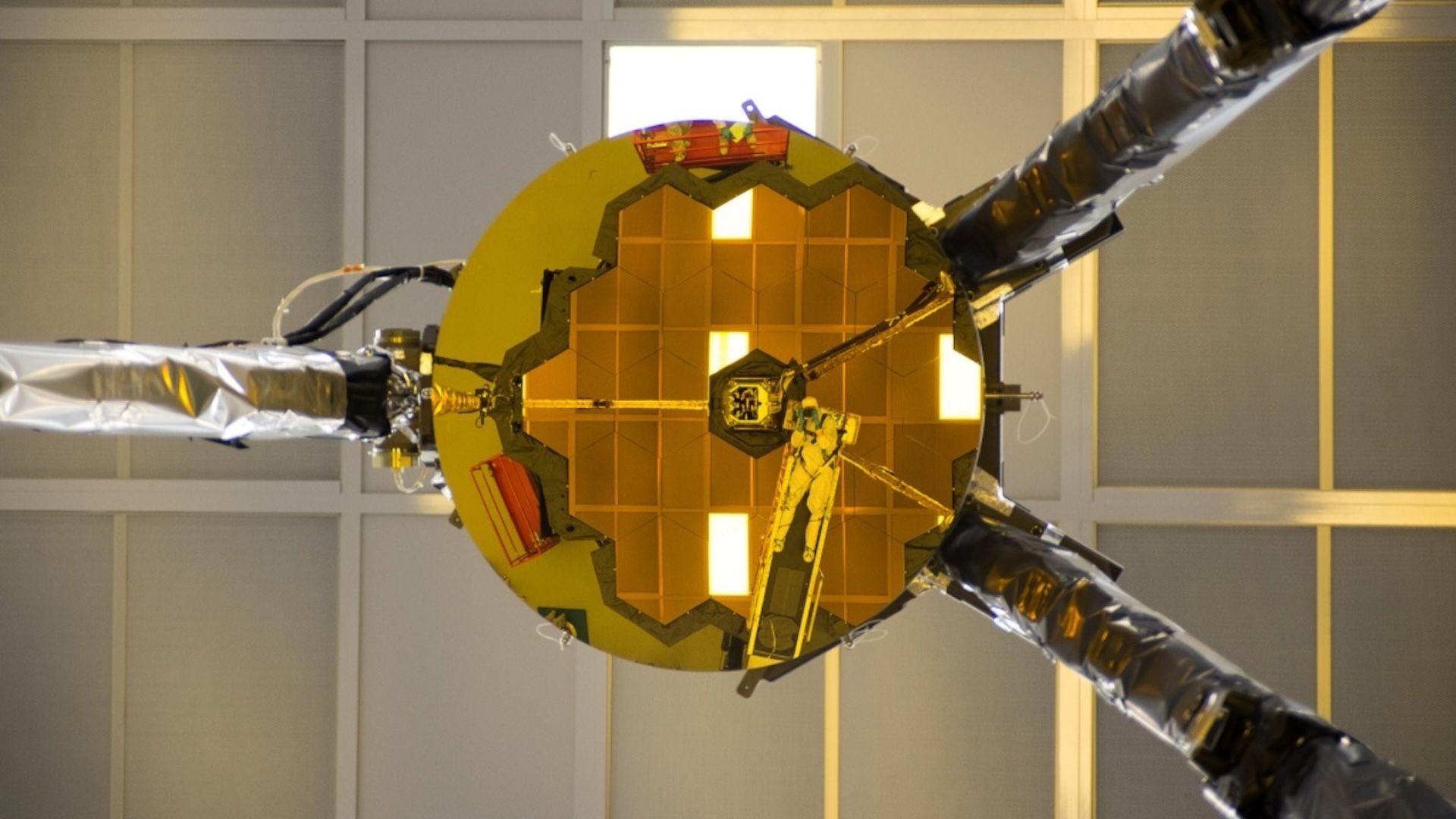
According to livescience.com, 2025-11-01T15:00:00+00:00, the telescope's primary mirror consists of 18 hexagonal segments made of beryllium coated with gold, each measuring 1.32 meters across. These segments must work in perfect harmony to function as a single 6.5-meter primary mirror. The alignment process required nanometer-level precision—adjustments smaller than the wavelength of visible light—to ensure the telescope could capture the faint infrared signals from the earliest stars and galaxies.
Wavefront Sensing and Control
The revolutionary alignment methodology
Engineers developed an intricate process called wavefront sensing and control to achieve the necessary optical precision. This technique involves analyzing how light waves behave as they travel through the telescope's optical system. By carefully measuring the distortions and imperfections in these light waves, controllers on Earth could calculate exactly how each mirror segment needed to be adjusted to achieve perfect focus.
The process began by pointing the telescope at a single bright star and capturing multiple images while deliberately moving specific mirror segments. These intentional movements created predictable distortions that helped engineers map the entire optical system's behavior. Through sophisticated algorithms and computational modeling, the team could then determine the precise adjustments needed to bring all 18 segments into perfect alignment.
The Seven-Phase Alignment Process
From coarse adjustment to nanometer precision
The mirror alignment occurred through seven distinct phases, each building upon the previous one's achievements. The initial phase involved segment identification, where engineers determined which mirror segments corresponded to which parts of the captured images. This was followed by segment alignment, where the 18 segments were roughly positioned to create a single focal point.
The subsequent phases included image stacking, where the multiple blurred images were combined into a single sharp image, and coarse phasing, which addressed larger optical errors. The process continued through fine phasing, where nanometer-level adjustments were made, followed by telescope alignment over the entire field of view, and finally, iterative alignment to refine the system across multiple instrument fields.
Groundbreaking Imaging Capabilities
Transforming blurred light into crystal-clear visions
Before alignment, the telescope produced 18 separate, blurry images of the same star—a visual representation of the disorganized mirror segments. The alignment process transformed these multiple distorted images into a single, sharply focused point of light. This transformation demonstrated that the mirrors were working together as a single, coherent optical system capable of unprecedented resolution.
The successful alignment meant the telescope could achieve diffraction-limited performance, meaning its resolution was limited only by the laws of physics and the mirror's size, not by optical imperfections. This level of performance enables the telescope to distinguish objects separated by incredibly small angular distances—equivalent to seeing a penny from 40 kilometers away or detecting the heat signature of a bumblebee at the distance of the Moon.
Remote Operation Complexities
Overcoming communication delays and technical constraints
Operating the telescope from Earth introduced significant communication challenges. The distance between Earth and the L2 point creates a communication delay of approximately five seconds each way, meaning commands took about ten seconds to receive confirmation. This delay required engineers to develop procedures that could operate autonomously once initiated, with multiple safety checks built into every command sequence.
The remote operation also meant that engineers had to account for thermal variations, mechanical stresses, and other environmental factors that could affect the mirror's position and shape. Every command had to consider how the spacecraft would respond in the vacuum of space, where temperature extremes and micro-meteoroid impacts could subtly alter the telescope's configuration over time.
Historical Context of Space Telescope Alignment
Learning from Hubble's experiences
The James Webb alignment process benefited significantly from lessons learned during the Hubble Space Telescope's deployment and repair missions. When Hubble launched in 1990, engineers discovered a flaw in its primary mirror that required a complex servicing mission to correct. This experience informed the James Webb team's approach to testing, verification, and contingency planning.
Unlike Hubble, which orbits relatively close to Earth at approximately 547 kilometers, James Webb's distant location made servicing missions impossible. This reality drove engineers to develop more robust alignment capabilities and multiple redundancy systems. The remote alignment technology represents a significant advancement over previous space telescopes, demonstrating how space instrumentation has evolved to become more autonomous and self-correcting.
International Collaboration and Expertise
Global partnership in precision engineering
The alignment process represented the culmination of work by thousands of scientists, engineers, and technicians from NASA, the European Space Agency (ESA), and the Canadian Space Agency (CSA). Each partner contributed specialized expertise and technology, with European providers delivering the launch vehicle and Canadian contributors providing the fine guidance sensor and near-infrared imager.
This international collaboration extended to the operational phase, with control centers in Baltimore, Maryland, and other locations worldwide working in coordination. The distributed nature of the operations required sophisticated communication systems and carefully orchestrated procedures to ensure that commands from different locations didn't conflict and that all teams had accurate, up-to-date information about the telescope's status.
Technical Innovations in Mirror Design
Engineering solutions for unprecedented precision
The mirror segments themselves incorporate multiple technological innovations that made remote alignment possible. Each segment is mounted on a complex system of actuators that can adjust its position in multiple directions with nanometer precision. These actuators can move the segments in piston (in-and-out motion), tip, and tilt orientations, providing complete control over each segment's alignment.
The mirror material—beryllium—was chosen for its stability at cryogenic temperatures. At the telescope's operating temperature of approximately -223 degrees Celsius, most materials would contract and distort, but beryllium maintains its shape and optical properties. The gold coating optimizes the mirror for reflecting infrared light, which is the primary wavelength range for the telescope's observations of distant galaxies and star-forming regions.
Continuous Monitoring and Maintenance
Ongoing alignment throughout the mission lifetime
The initial alignment was just the beginning of an ongoing process of monitoring and adjustment. Engineers continuously monitor the telescope's optical performance using reference stars and internal calibration sources. Regular alignment maintenance procedures are scheduled throughout the mission to compensate for gradual changes caused by thermal cycling, micrometeoroid impacts, and normal mechanical settling.
These maintenance activities are designed to be minimally disruptive to scientific observations while ensuring the telescope maintains its optimal performance. The alignment system includes multiple redundancy features, so if any single actuator or sensor were to fail, the telescope could still achieve acceptable alignment using alternative methods. This approach ensures that the substantial investment in the telescope is protected throughout its planned operational lifetime.
Scientific Impact of Precise Alignment
Enabling breakthrough astronomical discoveries
The successful alignment has enabled the telescope to make groundbreaking observations across multiple astronomical domains. In exoplanet research, the precise optics allow scientists to study the atmospheres of distant worlds by analyzing how starlight filters through their atmospheres during transits. In cosmology, the sharp vision helps detect the earliest galaxies that formed after the Big Bang.
The alignment precision also enhances the telescope's ability to study stellar nurseries—dense clouds of gas and dust where new stars are born. Infrared light penetrates these dusty regions better than visible light, and the telescope's sharp vision can distinguish individual protostars within these complexes. This capability provides new insights into star formation processes and the evolution of planetary systems.
Future Applications of Remote Alignment Technology
Beyond astronomy to broader space exploration
The technologies and methodologies developed for aligning the James Webb Telescope have potential applications beyond astronomy. The precise remote adjustment capabilities could benefit future space-based manufacturing, satellite servicing missions, and the construction of large structures in space. The wavefront sensing techniques might be adapted for medical imaging, industrial inspection, or other fields requiring precise optical measurements.
As plans develop for even larger space telescopes in the coming decades, the lessons from James Webb's alignment will inform their design and operation. Future observatories with segmented mirrors tens of meters in diameter will require even more sophisticated alignment systems, building on the foundation established by this pioneering mission. The success demonstrates that complex precision engineering operations can be conducted remotely across interplanetary distances.
Perspektif Pembaca
What aspects of remote space telescope operation do you find most challenging to comprehend, and what scientific discovery from James Webb has most captured your imagination?
As space exploration increasingly relies on remote operations and autonomous systems, how do you envision these technologies transforming our approach to studying the universe in the coming decades?
#JamesWebbTelescope #SpaceEngineering #Astronomy #NASA #CosmicDiscovery


