

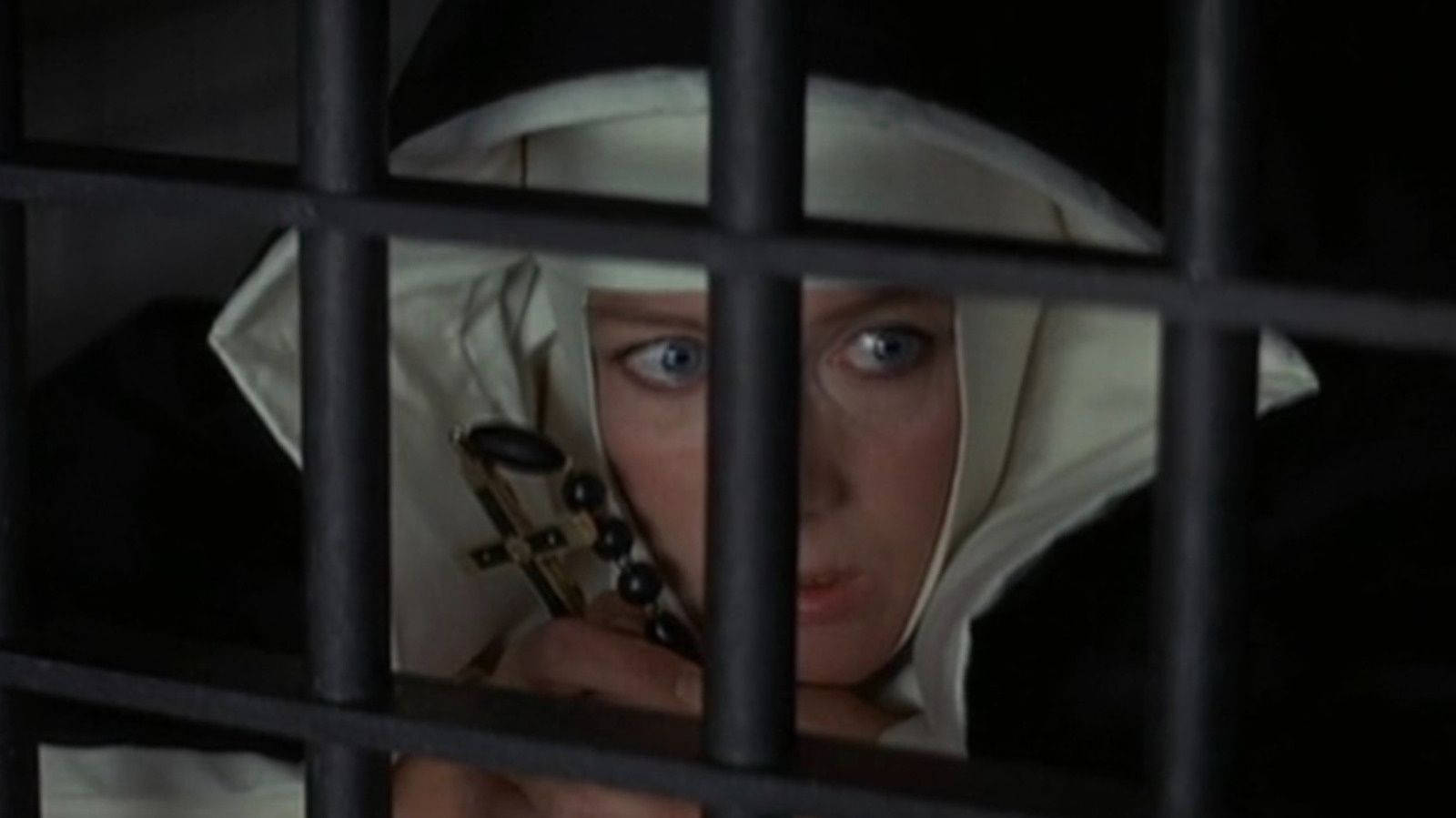
The Devils: How Ken Russell's 1971 Horror Masterpiece Shocked the World

📷 Image source: slashfilm.com
A Cinematic Molotov Cocktail
The enduring shockwaves of Ken Russell's controversial masterpiece
When Ken Russell's 'The Devils' premiered in 1971, it didn't just push boundaries—it obliterated them. According to slashfilm.com, this historical horror film remains one of the most provocative motion pictures ever created, a reputation that has only intensified over decades. The film's depiction of religious hysteria and sexual frenzy in 17th century France sparked immediate outrage, leading to censorship battles that would shape film history.
What makes a film maintain its power to disturb audiences more than fifty years after its release? The answer lies in Russell's uncompromising vision and the film's basis in historical events that remain troubling to this day. Unlike many horror films that rely on supernatural elements, 'The Devils' derives its terror from very human failings—fanaticism, power, and the dark intersection of religion and politics.
Historical Foundations of Horror
The true events behind the cinematic nightmare
According to slashfilm.com, 'The Devils' draws from actual historical accounts of mass hysteria in Loudun, France during the 1630s. The film centers on Urbain Grandier, a charismatic Catholic priest executed for witchcraft after challenging both religious and political authorities. Russell adapted his screenplay from Aldous Huxley's non-fiction book 'The Devils of Loudun' and John Whiting's stage play, creating a potent mixture of historical accuracy and theatrical intensity.
The real Urbain Grandier was burned at the stake in 1634, accused of conspiring with demons to possess an entire convent of nuns. These events occurred during the Counter-Reformation, when the Catholic Church vigorously defended its authority against Protestant challenges. Russell recognized that this historical moment contained all the elements of great drama—power struggles, sexual repression, and the terrifying speed at which reason can collapse into madness.
Ken Russell's Uncompromising Vision
A director willing to confront every taboo
British director Ken Russell had already established himself as a filmmaker unafraid of controversy before undertaking 'The Devils.' According to slashfilm.com, his earlier films had demonstrated a willingness to explore intense psychological states and challenge conventional morality. With 'The Devils,' Russell pushed his artistic approach to its logical extreme, creating what many critics considered his masterpiece and others denounced as blasphemous.
Russell's direction combined baroque visual style with raw, emotional intensity. He approached the material not as a dry historical recreation but as a visceral experience that would force audiences to confront uncomfortable truths about human nature. The film's production design by Derek Jarman created a stark, white-walled city that contrasted violently with the dark human passions unfolding within it, making the psychological decay visually manifest.
The Cast That Embraced the Madness
Performances that crossed into obsession
Oliver Reed delivered what many consider his career-best performance as Father Urbain Grandier, capturing both the character's charisma and his fatal flaws. According to slashfilm.com, Reed immersed himself completely in the role, bringing a physical intensity and emotional vulnerability that made Grandier's tragic arc profoundly moving. The actor's powerful presence anchors the film even as it descends into chaos.
Vanessa Redgrave's performance as Sister Jeanne des Anges, the hunchbacked mother superior whose sexual obsession with Grandier triggers the mass hysteria, remains equally unforgettable. Redgrave embraced the physical and psychological challenges of the role without reservation, creating a character both pitiable and terrifying. The supporting cast, including Murray Melvin as the sinister Mignon, added layers of complexity to the film's depiction of institutional corruption and mob mentality.
The Censorship Battle
A film too dangerous for its time
According to slashfilm.com, 'The Devils' faced immediate censorship challenges upon completion. The film's distributors, Warner Brothers, demanded significant cuts before release, particularly targeting the now-infamous 'rape of Christ' sequence and various nude scenes. These edits, made against Russell's wishes, removed approximately four minutes of footage that the studio deemed too inflammatory.
The controversy extended beyond studio interference. The British Board of Film Classification required additional cuts before granting an X certificate, and several local councils banned the film entirely. In the United States, the film received an X rating and faced restricted screenings. Perhaps most devastating for Russell was the destruction of original negative materials for the censored sequences, making complete restoration of his original vision impossible.
Architectural Nightmares
Derek Jarman's stark vision of Loudun
Production designer Derek Jarman, in his first major film credit, created a visual world that became integral to 'The Devils' unsettling power. According to slashfilm.com, Jarman conceived Loudun as a city of stark white walls and minimalist architecture, a conscious departure from historical realism that amplified the film's psychological intensity. This approach created what Jarman described as 'a white nightmare' where the characters' dark passions stood in violent contrast to their surroundings.
The architectural design served as both metaphor and prison—the clean lines and vast empty spaces reflecting the rigid structures of religious authority, while simultaneously suggesting the characters' psychological confinement. Jarman's background in painting and his future career as a groundbreaking filmmaker himself informed every aspect of the production design, making 'The Devils' as visually innovative as it was thematically challenging.
The Sound of Madness
Peter Maxwell Davies' avant-garde score
Composer Peter Maxwell Davies created a musical score that perfectly complemented the film's descent into chaos. According to slashfilm.com, Davies incorporated Renaissance-era melodies alongside dissonant modern compositions, mirroring the collision between historical setting and contemporary themes. The score shifts dramatically throughout the film, beginning with relatively conventional period music before fragmenting into atonal chaos as the hysteria consumes Loudun.
Davies understood that music could serve as the audience's guide through the film's psychological landscape. During calmer moments, the score provides emotional context and historical flavor. As the possession sequences intensify, the music becomes increasingly discordant and unsettling, using unconventional instrumentation and recording techniques to create what Davies called 'the sound of breaking minds.' This innovative approach to film scoring has influenced horror cinema for decades since.
Enduring Legacy and Restoration Efforts
Why The Devils still matters today
According to slashfilm.com, published on 2025-11-06T21:00:00+00:00, 'The Devils' has never been more relevant than in our current era of moral panics and ideological extremism. The film's exploration of how institutions manipulate mass hysteria for political gain feels increasingly prescient. Film scholars and historians continue to debate Russell's methods, but few question his achievement in creating a work that genuinely challenges audiences rather than simply entertaining them.
Restoration efforts have been complicated by the lost footage and the film's complicated rights situation. However, recent screenings of partially restored versions have introduced 'The Devils' to new generations of viewers who find its themes startlingly contemporary. The film's journey from condemned masterpiece to recognized classic demonstrates how artistic works once deemed too dangerous can eventually be understood as essential cultural documents. In an age of content warnings and trigger alerts, Russell's uncompromising vision serves as a powerful reminder that great art should sometimes make us uncomfortable.
Beyond Horror: The Devils as Social Commentary
A mirror held up to power and hypocrisy
What separates 'The Devils' from mere shock cinema is its sophisticated understanding of social and political dynamics. According to slashfilm.com, Russell uses the horror genre to explore how easily moral certainty can transform into fanaticism. The film systematically dismantles the authority figures it portrays—religious leaders, political operators, medical professionals—revealing how each uses the crisis in Loudun to advance personal agendas.
The real horror in 'The Devils' isn't the suggestion of demonic possession but the very human capacity for cruelty justified by ideology. Russell forces viewers to recognize that the distance between civilized society and violent mob is shorter than we'd like to believe. This psychological insight, combined with the film's historical basis, creates an experience that transcends genre classification. 'The Devils' remains provocative not because of what it shows, but because of what it forces us to acknowledge about ourselves and the systems we inhabit.
#TheDevils #KenRussell #HorrorFilm #CinemaHistory #Censorship


