

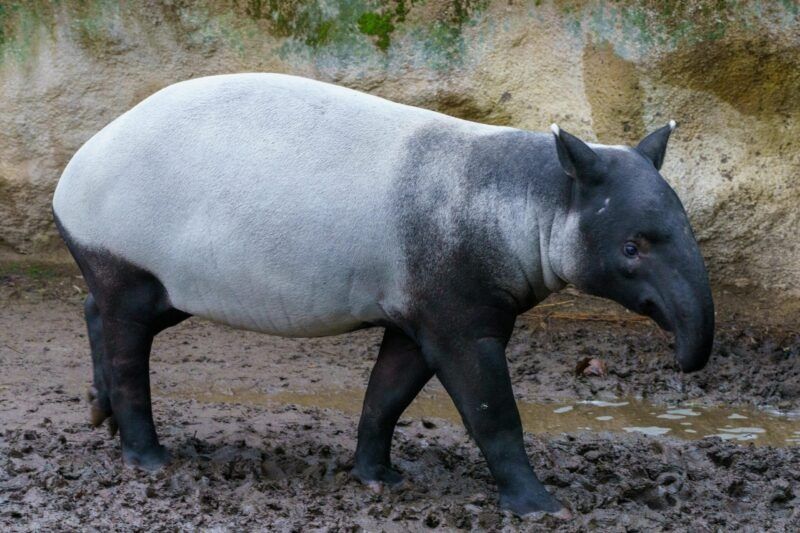
The Tapir: Nature's Unassuming Jungle Gardener

📷 Image source: earthsky.org
The Jungle's Secret Gardener
How an unassuming mammal shapes tropical ecosystems
Deep within the world's tropical forests, an unlikely gardener goes about its work under the cover of darkness. The tapir, with its distinctive prehensile snout and sturdy build, plays a crucial role that often goes unnoticed by casual observers. According to earthsky.org, these solitary creatures serve as vital seed dispersers across their habitats from South America to Southeast Asia.
What makes the tapir particularly effective in this role is its feeding behavior and digestive system. As they consume various fruits and vegetation, seeds pass through their digestive tract largely intact. This process not only helps distribute seeds across considerable distances but also provides them with natural fertilization that improves germination rates.
Anatomy of a Forest Engineer
Physical adaptations that make tapirs effective dispersers
The tapir's most recognizable feature—its flexible proboscis—serves as a remarkably versatile tool for foraging. This elongated nose allows them to grasp fruits and leaves that might otherwise be inaccessible. Combined with their robust teeth capable of processing tough vegetation, tapirs can consume a wide variety of plant materials that many other animals cannot.
Their substantial size, with some species reaching 300 kilograms, enables them to cover significant territory in search of food. According to earthsky.org, this movement pattern is crucial for their role as seed dispersers, as they transport seeds far from parent plants where competition for resources is less intense.
Nocturnal Habits and Secretive Nature
Why we rarely see these ecosystem engineers at work
Tapirs are predominantly crepuscular and nocturnal animals, conducting most of their activities during twilight hours and throughout the night. This behavioral pattern helps them avoid predators and human disturbance, but it also means their important ecological work happens largely out of human sight.
Their secretive nature presents challenges for researchers studying these animals in their natural habitats. According to earthsky.org, much of what we know about tapir behavior comes from camera trap data and careful tracking of their movements through forest environments. This elusiveness has earned them the description as 'the shy gardener' among conservation biologists.
Seed Dispersal Mechanisms
The science behind how tapirs spread plant life
The effectiveness of tapirs as seed dispersers lies in their digestive physiology and feeding patterns. When they consume fruits, the seeds undergo scarification during digestion—a process that slightly damages the seed coat without destroying the embryo inside. This mechanical action actually improves germination success rates for many plant species.
According to earthsky.org research, seeds that pass through a tapir's digestive system show significantly higher germination rates compared to seeds that haven't undergone this process. The natural fertilization provided by their feces gives these seeds an additional advantage when they eventually sprout in new locations throughout the forest.
Habitat Range and Regional Variations
Different species across tropical ecosystems
Tapirs inhabit tropical regions across multiple continents, with four recognized species occupying distinct geographical ranges. The Brazilian tapir ranges throughout much of South America, while Baird's tapir is found in Central America. In Southeast Asia, the Malayan tapir occupies forest areas, and the mountain tapir lives in Andean regions.
Each species has adapted to its specific environment, yet all share similar ecological roles as seed dispersers. According to earthsky.org observations, these regional variations demonstrate how tapirs have evolved to fill comparable niches in different forest ecosystems, maintaining the health and diversity of tropical vegetation across their respective ranges.
Conservation Challenges
Threats facing these essential ecosystem engineers
Despite their ecological importance, tapir populations face significant threats across their ranges. Habitat fragmentation due to deforestation and agricultural expansion has isolated populations and reduced their available territory. According to earthsky.org documentation, this habitat loss directly impacts their ability to perform their seed dispersal function across large forest areas.
Hunting pressure also affects some tapir populations, particularly in regions where they are sought for their meat or where they come into conflict with agricultural activities. The combination of these threats has led to declining numbers for several tapir species, raising concerns among conservation organizations about the long-term implications for forest ecosystems.
Ecological Impact Beyond Seed Dispersal
Additional ways tapirs shape their environments
While seed dispersal represents their most celebrated ecological function, tapirs contribute to forest health in other significant ways. Their feeding activities help shape understory vegetation structure, creating openings that allow light to reach the forest floor and enabling different plant species to establish themselves.
According to earthsky.org research, the paths tapirs create through dense vegetation serve as travel corridors for smaller animals. These trails become important navigation routes for various forest species, demonstrating how the tapir's movement patterns indirectly support broader ecosystem connectivity and function beyond their direct interactions with plants.
Research and Monitoring Techniques
How scientists study these elusive creatures
Given their nocturnal habits and preference for dense forest habitats, studying tapirs requires specialized approaches. Researchers increasingly rely on camera traps strategically placed along animal trails and near mineral licks where tapirs regularly visit. These remote cameras capture valuable behavioral data without disturbing the animals.
According to earthsky.org reporting, scientists also use GPS collaring to track tapir movements across large territories. This technology has revealed surprising information about their home range sizes and seasonal movement patterns. Genetic analysis of feces provides additional insights into population health and individual identification, creating a comprehensive picture of tapir ecology despite their elusive nature.
Cultural Significance and Local Knowledge
Human perceptions of tapirs across their range
In many indigenous cultures throughout tapir habitats, these animals hold significant cultural importance. Local knowledge often recognizes the tapir's role in forest regeneration, with some communities referring to them as 'gardeners' or 'planters' of the jungle long before scientific confirmation of this function.
According to earthsky.org documentation, this traditional understanding highlights how local ecological knowledge can complement scientific research. In some regions, tapirs feature prominently in folklore and creation stories, reflecting their distinctive appearance and mysterious habits. This cultural dimension adds another layer to conservation efforts, connecting scientific understanding with community values and traditional practices.
Future Conservation Directions
Protecting the jungle's quiet gardeners
Conservation strategies for tapirs increasingly focus on landscape-level approaches that address habitat connectivity. According to earthsky.org analysis, protecting and restoring wildlife corridors between forest fragments allows tapirs to maintain their traditional movement patterns and seed dispersal routes. These efforts benefit numerous other species that share their habitat.
Community-based conservation initiatives that involve local residents in monitoring and protection have shown promise in several regions. These programs recognize that successful tapir conservation requires addressing both ecological needs and human dimensions, creating solutions that work for both wildlife and people who share these landscapes. The continued survival of these unique ecosystem engineers depends on such integrated approaches that acknowledge their vital role in maintaining healthy, diverse tropical forests.
#Tapir #WildlifeConservation #SeedDispersal #Rainforest #Ecology


