

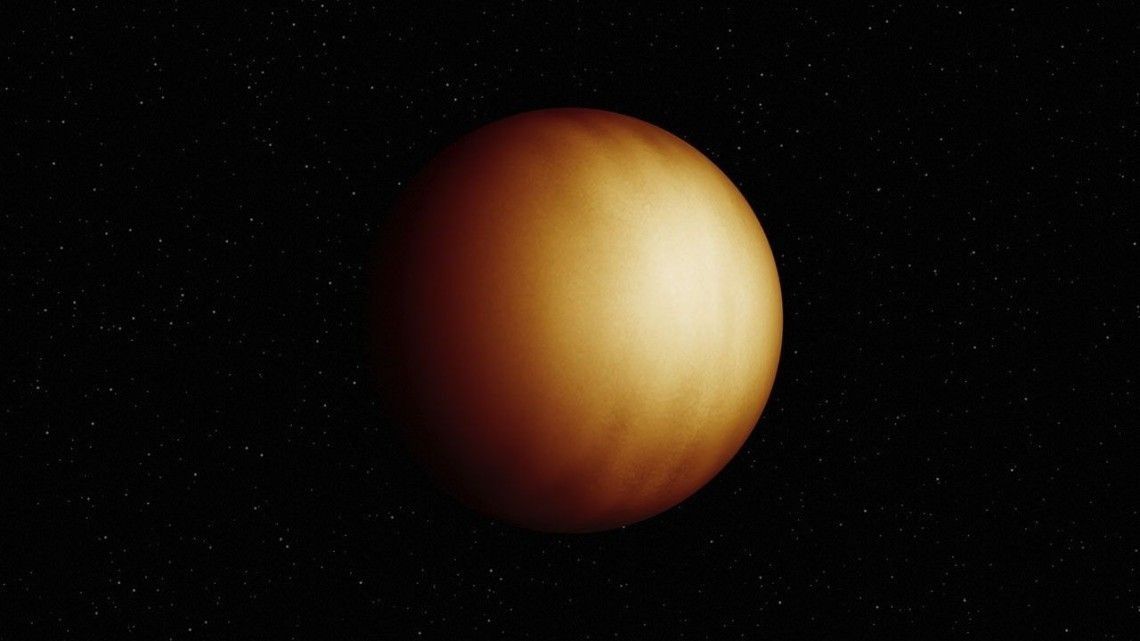
Webb Telescope's 3D Atmospheric Map Reveals Alien World's Hidden Structure

📷 Image source: cdn.mos.cms.futurecdn.net
A Pioneering Atmospheric Portrait
WASP-43b's global weather patterns come into focus
The James Webb Space Telescope has achieved what astronomers once considered impossible—creating the first three-dimensional map of an exoplanet's atmosphere. This groundbreaking observation of hot gas giant WASP-43b reveals a world of extreme contrasts, where scorching daysides meet dramatically cooler nightsides. According to livescience.com, the telescope's powerful infrared instruments detected how temperatures shift across different layers of the planet's atmosphere, providing unprecedented insight into alien weather systems.
The planet, located approximately 280 light-years from Earth, completes an orbit around its host star in just under 20 hours. This close proximity creates what astronomers call tidal locking, where one hemisphere permanently faces the star while the other remains in eternal darkness. The temperature differential between these two sides drives violent atmospheric circulation patterns that Webb has now mapped in three dimensions for the first time.
Technical Breakthrough in Exoplanet Science
How Webb's instruments captured atmospheric depth
Webb's Mid-Infrared Instrument (MIRI) played the crucial role in this discovery by measuring the planet's thermal emissions across multiple wavelengths. As WASP-43b orbits its star, astronomers observed how these emissions changed when different parts of the planet were visible. This technique, known as phase curve observation, allowed researchers to construct temperature profiles at various longitudes and altitudes.
The data revealed that temperatures on the dayside soar to approximately 1,260°C (2,300°F), hot enough to vaporize iron, while the nightside maintains a comparatively cooler 600°C (1,100°F). More significantly, Webb detected how these temperatures vary with altitude, creating the first vertical profile of an exoplanet's atmosphere. This three-dimensional mapping provides crucial information about how heat circulates between the planet's permanent day and night hemispheres.
Atmospheric Composition and Cloud Mysteries
Water vapor detection and missing methane
Webb's spectroscopic analysis confirmed the presence of water vapor throughout WASP-43b's atmosphere, but with a puzzling distribution. The data shows water is more abundant on the nightside than the dayside, suggesting complex atmospheric chemistry and circulation patterns. Even more surprising was what Webb didn't find—methane, which computer models predicted should be present in substantial quantities.
According to livescience.com, the absence of methane indicates extremely fast winds are transporting atmospheric gases from the dayside to nightside before chemical reactions can produce the compound. These winds, estimated to reach speeds of thousands of kilometers per hour, effectively mix the atmosphere so rapidly that methane doesn't have time to form in detectable amounts. This discovery challenges previous assumptions about atmospheric chemistry on hot Jupiter-type planets.
The Significance of 3D Mapping
Beyond two-dimensional observations
Previous exoplanet atmospheric studies could only provide two-dimensional information, essentially flat maps showing horizontal variations. Webb's three-dimensional mapping represents a quantum leap in understanding because atmospheric phenomena operate in three dimensions. Temperature, pressure, composition, and winds all vary with altitude, and now astronomers can study these vertical variations directly.
This breakthrough allows scientists to understand how energy transports through different atmospheric layers and how chemical reactions vary with height. The technique essentially lets researchers slice through an alien atmosphere layer by layer, examining conditions at each level separately. This approach has already revealed that the hottest point in WASP-43b's atmosphere isn't directly under the star but shifted eastward due to atmospheric circulation.
Comparative Planetology Applications
What WASP-43b reveals about other worlds
While WASP-43b itself is too hot to host life as we know it, the mapping techniques developed through studying it will prove invaluable for investigating potentially habitable worlds. Understanding how to construct three-dimensional atmospheric models from remote observations prepares astronomers for future studies of Earth-like exoplanets. The methods validated on this extreme world can now be applied to cooler planets where conditions might support liquid water and potentially life.
The research demonstrates that even planets with extreme temperature differences maintain complex atmospheric circulation patterns. This finding suggests that terrestrial planets in habitable zones, which typically have more moderate temperature variations, likely develop equally sophisticated weather systems. The detection methods refined through this study will help identify atmospheric biosignatures on future target planets.
Technological Achievement Behind the Discovery
Webb's unprecedented precision
Creating this three-dimensional map required extraordinary measurement precision. Webb had to detect minute variations in brightness as the planet orbited its star, measuring changes of less than 0.1% in total light output. This sensitivity, combined with the telescope's ability to observe in multiple infrared wavelengths simultaneously, enabled the breakthrough. Each wavelength probes a different atmospheric depth, allowing researchers to reconstruct the vertical structure.
The observations required continuous monitoring of WASP-43b throughout its complete 19.5-hour orbit, a challenging feat that pushed Webb's capabilities to their limits. According to livescience.com, the research team collected data for over 24 hours straight to capture a full orbit plus additional time for calibration. This extended observation period provided the comprehensive dataset needed to construct the three-dimensional model.
Future Implications for Exoplanet Research
Opening new avenues for atmospheric study
This successful three-dimensional mapping establishes a new standard for exoplanet characterization. Astronomers can now apply similar techniques to dozens of other planets within Webb's observational range, building comparative atmospheric models across different planetary types. The methodology provides a template for studying everything from super-Earths to ice giants, potentially revealing universal principles of planetary atmospheric physics.
The research, reported by livescience.com on November 5, 2025, demonstrates that three-dimensional atmospheric mapping is not only possible but practical with current technology. This opens the door for more ambitious mapping projects, including studies of multiple planets within the same system to understand how stellar radiation and planetary characteristics interact to shape atmospheric conditions. The success with WASP-43b suggests that within the coming decade, we may have detailed three-dimensional models of dozens of exoplanet atmospheres.
Understanding Extreme Weather Patterns
Violent winds and temperature extremes
The three-dimensional map reveals astonishing details about WASP-43b's global weather systems. The temperature difference between day and night hemispheres drives winds that race around the planet at incredible speeds, efficiently transporting heat from the dayside to the nightside. These winds create a thermal pattern where the hottest region of the atmosphere occurs not at the point directly facing the star, but significantly downwind.
This eastward displacement of the hotspot indicates super-rotating atmospheric jets similar to Earth's jet streams but operating at vastly different scales and speeds. The mapping shows how these winds mix the atmosphere vertically as well as horizontally, preventing chemical segregation between different atmospheric layers. This mixing explains why certain molecules appear uniformly distributed despite the extreme temperature variations across the planet's surface.
The Road Ahead for Exoplanet Science
From gas giants to potentially habitable worlds
While WASP-43b represents an important milestone, astronomers view it as just the beginning of three-dimensional exoplanet characterization. The techniques perfected with this hot Jupiter will now be applied to smaller, cooler planets where conditions might be more amenable to life. The ability to map atmospheric structure in three dimensions will be crucial for identifying biosignatures, as life-related gases often exhibit complex vertical distributions.
Future observations will target planets with diverse characteristics—different masses, orbital distances, and stellar environments—to build a comprehensive understanding of how planetary atmospheres evolve and function. Each new three-dimensional map will contribute to a growing database that reveals fundamental principles governing atmospheric physics across the galaxy. As Webb continues its mission, and with next-generation telescopes already in planning phases, the three-dimensional characterization of exoplanet atmospheres promises to become routine, transforming our understanding of worlds beyond our solar system.
#WebbTelescope #Exoplanet #SpaceDiscovery #Astronomy #AtmosphericMap


