

Nissan Integrates Qi2 Wireless Charging Directly into Vehicle Consoles, But Is It a Game-Changer?

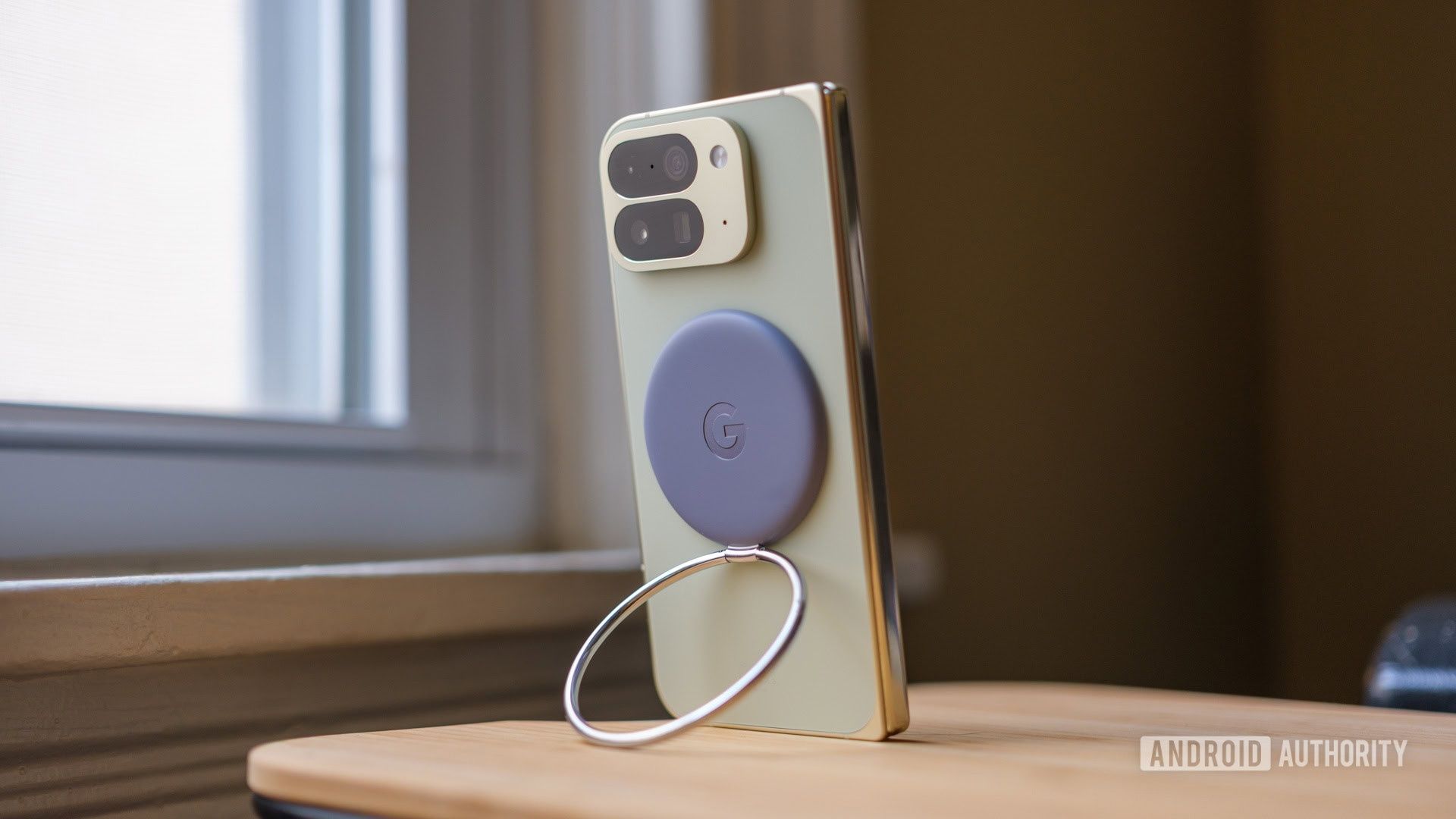
📷 Image source: androidauthority.com
The End of the Clunky Car Charger? Nissan's Built-In Qi2 Move
A direct integration promises convenience, but raises questions about vehicle upgrade cycles.
For years, wireless charging in cars has often been an afterthought—a plastic pad in the console that gets hot, charges slowly, and requires you to perfectly align your phone. Nissan is now attempting to redefine that experience by announcing it will be among the first automakers to integrate the new Qi2 wireless charging standard directly into the consoles of its future vehicles. According to a report from androidauthority.com, this move signals a shift from treating phone charging as an accessory to treating it as a core, built-in vehicle feature.
The promise is clear: ditch the bulky aftermarket charger cluttering your cup holder and enjoy seamless, faster wireless power for compatible devices. The integration, set to debut in upcoming Nissan models, aims to make the charging pad a seamless part of the interior trim. But this advancement arrives with a significant caveat tied to the rapid evolution of consumer technology. As androidauthority.com points out, this built-in approach essentially marries your car's charging capability to the hardware available at the time of the vehicle's manufacture. Given that cars are typically owned for years, while phone technology advances every 12 to 24 months, a critical question emerges: will your car's console be obsolete long before the vehicle itself?
Understanding Qi2: The Magnetic Promise of Faster, Smarter Charging
To grasp Nissan's bet, one must understand what Qi2 brings to the table. Qi2, or Qi v2.0, is the successor to the original Qi wireless charging standard that has been commonplace for nearly a decade. Its headline feature is Magnetic Power Profile (MPP), a technology pioneered by Apple's MagSafe. This uses an array of magnets to perfectly snap a compatible phone or device into optimal alignment with the charging coils every single time.
This magnetic alignment solves the perennial 'missed connection' problem of older Qi pads, where a slightly off-center placement could result in no charge or painfully slow charging. More than just convenience, this precise alignment allows Qi2 chargers to safely deliver higher power levels. While the original Qi standard often capped out at 5W or 10W for non-proprietary charging, Qi2 with MPP can support up to 15W of wireless charging power. For users, this translates to significantly faster top-ups without the fuss of plugging in a cable.
Nissan's Implementation: Seamless Design Meets Practical Reality
Nissan's plan involves embedding the Qi2 charging module directly into the vehicle's center console or dashboard area, rather than offering it as a removable accessory or a dealer-installed option. The goal is a clean, integrated look where the charging surface is flush with the surrounding materials. According to the androidauthority.com report, this design philosophy treats the charger as fundamental as the climate control system or the audio unit.
From an engineering standpoint, this integration requires careful thermal management. Wireless charging generates heat, and embedding the components means engineers must design passive or active cooling into the console itself to prevent overheating—a common issue with older, simpler pads. Furthermore, the console's design must accommodate the ring of magnets required for the MPP function without interfering with other electronic components or causing issues for items like credit cards or key fobs that might be placed nearby.
The Obsolescence Conundrum: A Car is Not a Smartphone
This is the core tension at the heart of Nissan's announcement. Consumer electronics, especially smartphones, operate on a relentless upgrade cycle. The Qi2 standard, while new today, will inevitably be succeeded by Qi3 or another technology that offers even faster speeds, better efficiency, or new features like bi-directional charging. A car, however, is a durable good with a lifespan measured in years, often over a decade.
By hardwiring the Qi2 technology into the console, Nissan is effectively freezing that component's capability at the 2026-2027 level for the life of that vehicle model year. A buyer in 2028 might purchase a new Nissan only to find its built-in charging technology is already a generation behind their latest phone. This creates a potential point of friction and dissatisfaction that removable accessories or updatable modules do not. The androidauthority.com report highlights this inherent conflict, questioning whether this move is truly future-proof or simply a new form of planned obsolescence for vehicle interiors.
Market Context and the Competitive Automotive Landscape
Nissan is not operating in a vacuum. The entire automotive industry is grappling with how to best integrate the personal device ecosystem into the vehicle cabin. Many competitors currently offer basic Qi charging, often as an optional extra. Nissan's push to be an early adopter of built-in Qi2 is a competitive differentiator, a selling point aimed at tech-savvy buyers for whom seamless device integration is a high priority.
However, other manufacturers may take different paths. Some might opt for modular systems where the charging pad can be physically replaced or upgraded via a service center. Others could develop proprietary solutions with higher power outputs, though this risks alienating customers with non-compatible phones. Nissan's bet on the open Qi2 standard is strategically sound for broad compatibility, but it locks them into the development timeline of the Wireless Power Consortium, the body that governs the Qi standard.
The User Experience: What Drivers Can Actually Expect
For the consumer with a Qi2-compatible phone—which includes recent iPhone models and a growing number of Android devices—the daily experience should be markedly improved. The magnetic snap provides satisfying, reliable placement. The 15W charging speed is a substantial upgrade, capable of delivering a meaningful charge during a commute. The clean, integrated look eliminates clutter.
Yet, the experience for users with older phones that only support the original Qi standard will be mixed. These devices will likely still charge on the Qi2 pad, but they will not benefit from the magnetic alignment and will be limited to lower, baseline Qi power levels (often 5W). This creates a two-tiered experience within the same car, potentially pushing users to upgrade their phones to fully utilize their car's feature—a dynamic that benefits phone manufacturers as much as the automaker.
Technical and Logistical Considerations for Widespread Adoption
The rollout of this technology presents several behind-the-scenes challenges. First is supply chain and cost. Integrating a more complex Qi2 module, with its magnet array and enhanced circuitry, is more expensive than a basic Qi pad. This cost will be absorbed into the vehicle's price, likely making it a feature for higher trim levels initially.
Second is durability. A console-integrated charger must withstand years of use, heat cycles, and potential spills. Its failure would require a more complex and costly repair than simply replacing a USB cable or a standalone accessory. Vehicle warranty terms for this specific component will be an important detail for early adopters to scrutinize. Finally, there is the question of backward compatibility and power delivery consistency, ensuring the system intelligently negotiates the correct power level with a wide array of devices to ensure safety and battery health.
Looking Down the Road: The Future of In-Car Power
Is built-in charging the final answer, or just a step toward a more flexible solution?
Nissan's commitment to built-in Qi2 is a significant vote of confidence for the standard and represents the current peak of integrated wireless charging. However, it may not be the endgame. The industry is already exploring concepts like ultra-wideband (UWB) for precise device location and charging anywhere in the cabin, or even conductive surfaces that can charge a device placed anywhere on a dashboard or armrest.
The fundamental challenge remains: how to keep a long-life vehicle's technology relevant in a short-life tech world. Future solutions may need to be software-updatable, hardware-swappable, or so fundamentally advanced that they remain sufficient for a longer period. For now, Nissan is steering into the Qi2 era with conviction. As the androidauthority.com report concludes, this move will make a new Nissan a compelling choice for someone investing in the Qi2 ecosystem today, but it also firmly plants a flag on the evolving battlefield of in-car tech integration, where convenience today must be weighed against relevance tomorrow. The success of this initiative will be measured not just by sales brochures, but by owner satisfaction surveys in 2030 and beyond.
#Nissan #Qi2 #WirelessCharging #AutomotiveTech #Innovation


