

Scientific Community Rallies as NASA's Mars Sample Return Faces the Axe

📷 Image source: cdn.mos.cms.futurecdn.net
A Mission in Peril
The scientific cornerstone facing cancellation
A cornerstone of planetary science is under threat. According to a report by space.com, NASA's ambitious Mars Sample Return (MSR) mission, a multi-billion dollar endeavor designed to bring pristine pieces of the Red Planet back to Earth, is facing potential cancellation. The project, a long-standing top priority for astrobiologists and geologists, has encountered severe budget overruns and scheduling delays, prompting the U.S. Congress to demand a drastic overhaul.
The situation has triggered a forceful and unified pushback from the scientific community. Experts argue that canceling or indefinitely delaying MSR would represent a catastrophic blow to our understanding of Mars and the potential for life beyond Earth. The mission is not merely another robotic explorer; it is the culmination of decades of incremental science, with the Perseverance rover currently acting as a robotic field geologist, carefully collecting and caching the very samples meant for return.
The Stakes of Bringing Mars to Earth
Why tubes of dirt and rock are worth billions
The core argument from scientists is one of analytical capability. Rovers like Perseverance are engineering marvels, but they are fundamentally limited by the instruments they can carry, their power supply, and the real-time commands sent from millions of miles away. The instruments in a terrestrial laboratory are orders of magnitude more sensitive, precise, and versatile.
As reported by space.com, researchers emphasize that only in Earth-based labs can scientists perform the exhaustive, repetitive, and destructive tests needed to search for definitive biosignatures—potential evidence of past or present life. They can slice rock samples thinner than a human hair, analyze minute isotopic ratios, and use techniques not yet invented. The scientific return, they contend, would dwarf that of any prior Mars mission, offering insights into planetary formation, climate history, and humanity's place in the cosmos that remote sensing simply cannot provide.
The Budgetary Quagmire
Soaring costs trigger congressional ultimatum
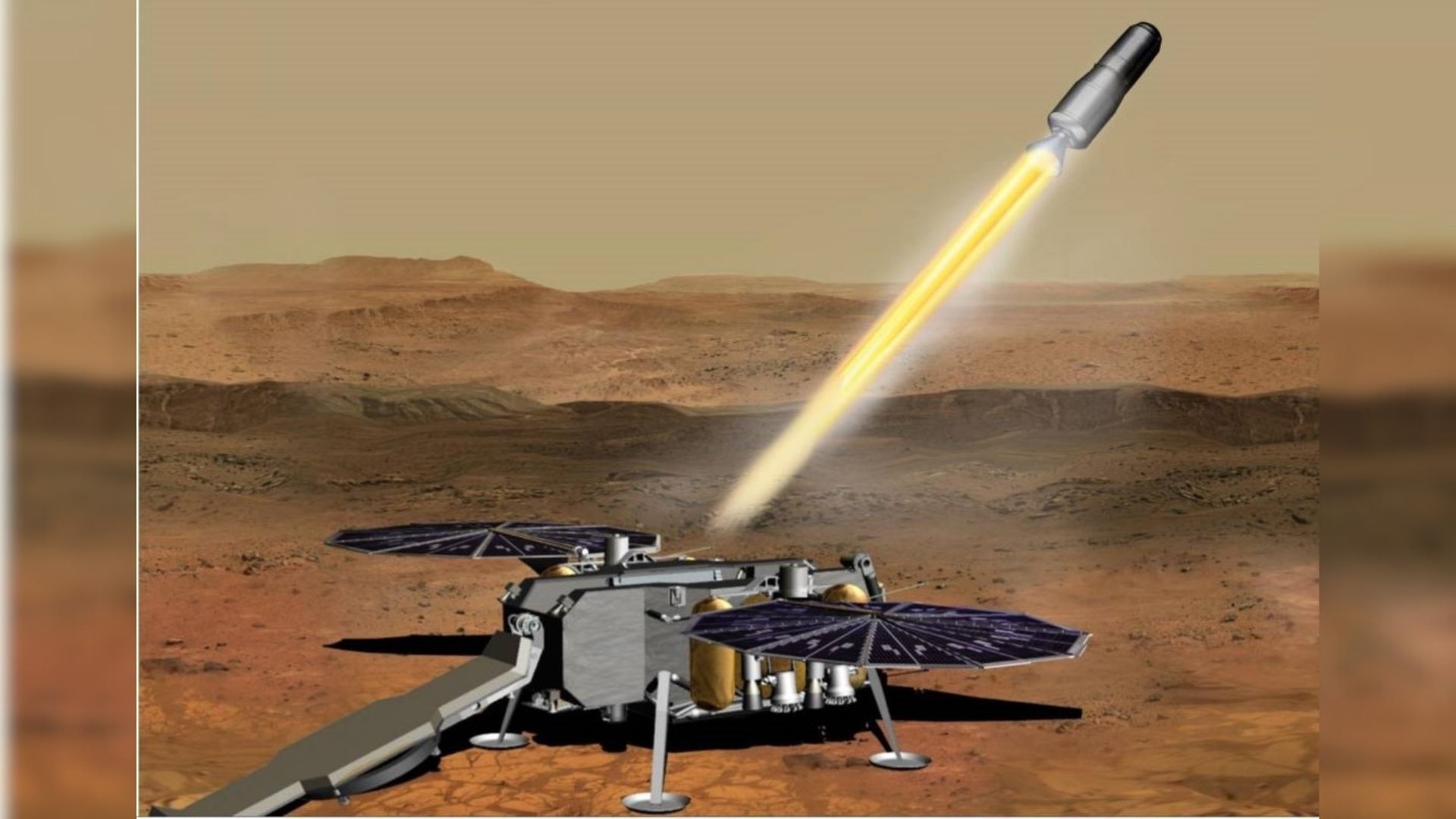
The mission's financial trajectory has become its greatest vulnerability. Independent reviews have projected the total cost of MSR could balloon to between $8 billion and $11 billion, a staggering increase from earlier estimates. The complexity is immense, involving a yet-to-be-built Mars ascent vehicle to launch the samples off the planet, an orbiting spacecraft to capture them, and a return capsule to safely land them on Earth.
This fiscal reality collided with political will in 2025. According to space.com, the U.S. Congress, through its annual appropriations bill, issued a stark directive: NASA must either develop a revised plan for MSR that caps the cost at $5 billion to $7 billion, or face outright cancellation. The agency was given until early 2026 to present this new architecture, placing the project in a state of profound uncertainty and forcing a complete reassessment of its design and partnerships.
A Unified Scientific Front
Planetary scientists and institutions voice their alarm
The response from the scientific community has been swift and unequivocal. Major institutions, including the Planetary Society and the American Geophysical Union (AGU), have publicly condemned the potential cancellation. In a powerful statement covered by space.com, the AGU warned that pulling the plug on MSR "would be a major step backwards for NASA's Mars exploration program and for solar system science more generally."
Individual researchers have been equally vocal. They frame the debate not as a choice about a single mission, but about the future direction of American space science. Canceling MSR, they argue, would waste the billions already invested in precursor missions like Perseverance, shatter international partnerships, and signal a retreat from one of the most profound scientific questions: did life ever arise on another world?
The Perseverance Rover's Lonely Cache
Sealed tubes waiting for a ride that may never come
Adding a poignant layer to the crisis is the hardware already on Mars. The Perseverance rover has been meticulously selecting, drilling, and sealing titanium sample tubes with cores of Martian rock, regolith, and atmosphere. These tubes are being deposited in a designated cache on the surface, a backup plan in case the rover itself fails before a fetch mission arrives.
These sealed cylinders now sit as both a monument to human ingenuity and a potential monument to a failed promise. Scientists point out that these samples were chosen from Jezero Crater, an ancient river delta environment considered one of the most likely places on Mars to have hosted microbial life. The thought that these pristine, contextually documented samples might remain stranded indefinitely is, for many, an unacceptable scientific tragedy.
International Partnerships at Risk
How a U.S. decision reverberates globally
MSR was conceived as a flagship international collaboration. The European Space Agency (ESA) is a critical partner, tasked with providing the Earth Return Orbiter and a key component of the sample capture system. The potential U.S. withdrawal throws these carefully laid plans into disarray and risks damaging diplomatic and scientific ties built over decades.
According to the space.com report, the uncertainty forces ESA and other partners into a holding pattern, unable to commit full resources or finalize their own designs. A cancellation would not only halt American ambitions but could derail the global Mars exploration strategy, leaving other space agencies to reconsider their own roadmaps and potentially seek alternative, independent paths to achieve sample return—a much more difficult and expensive prospect for any single nation or agency.
The Search for a New Architecture
NASA's scramble to meet the congressional mandate
Faced with the congressional deadline, NASA is actively exploring radically redesigned mission concepts. The goal is to strip the plan back to its essentials, seeking simplicity and cost-saving innovations. This could involve different landing platforms, a simplified sample retrieval method, or a revised launch schedule that spreads costs over more years.
Every potential change carries technical risk. A cheaper, faster mission might compromise the integrity or the quantity of the samples returned. The engineering challenge is monumental: achieving a feat never before attempted—launching a rocket from another planet—on a constrained budget. The agency's revised plan, due in 2026, will be scrutinized not only by Congress but by the scientific community judging whether the streamlined mission can still achieve its core, transformative objectives.
A Defining Moment for Solar System Science
The legacy of a decision decades in the making
The Mars Sample Return debate transcends budget lines. It represents a fundamental choice about ambition in space science. Proponents see it as the necessary, logical next step in a decades-long campaign of Mars exploration, a campaign that has been methodically building towards this exact goal. The orbiters, landers, and rovers that preceded it were, in many ways, scouts for this ultimate mission.
As space.com reports, the scientific community's pushback is a defense of that long-term vision. They argue that retreating from this challenge would cede leadership in planetary science and betray a generational investment. The coming months will determine whether the dream of holding a piece of Mars in our hands will move toward reality or recede into the realm of what might have been. The decision will echo through laboratories, launch sites, and history books for years to come.
#NASA #MarsSampleReturn #PlanetaryScience #SpaceExploration #ScienceFunding


