

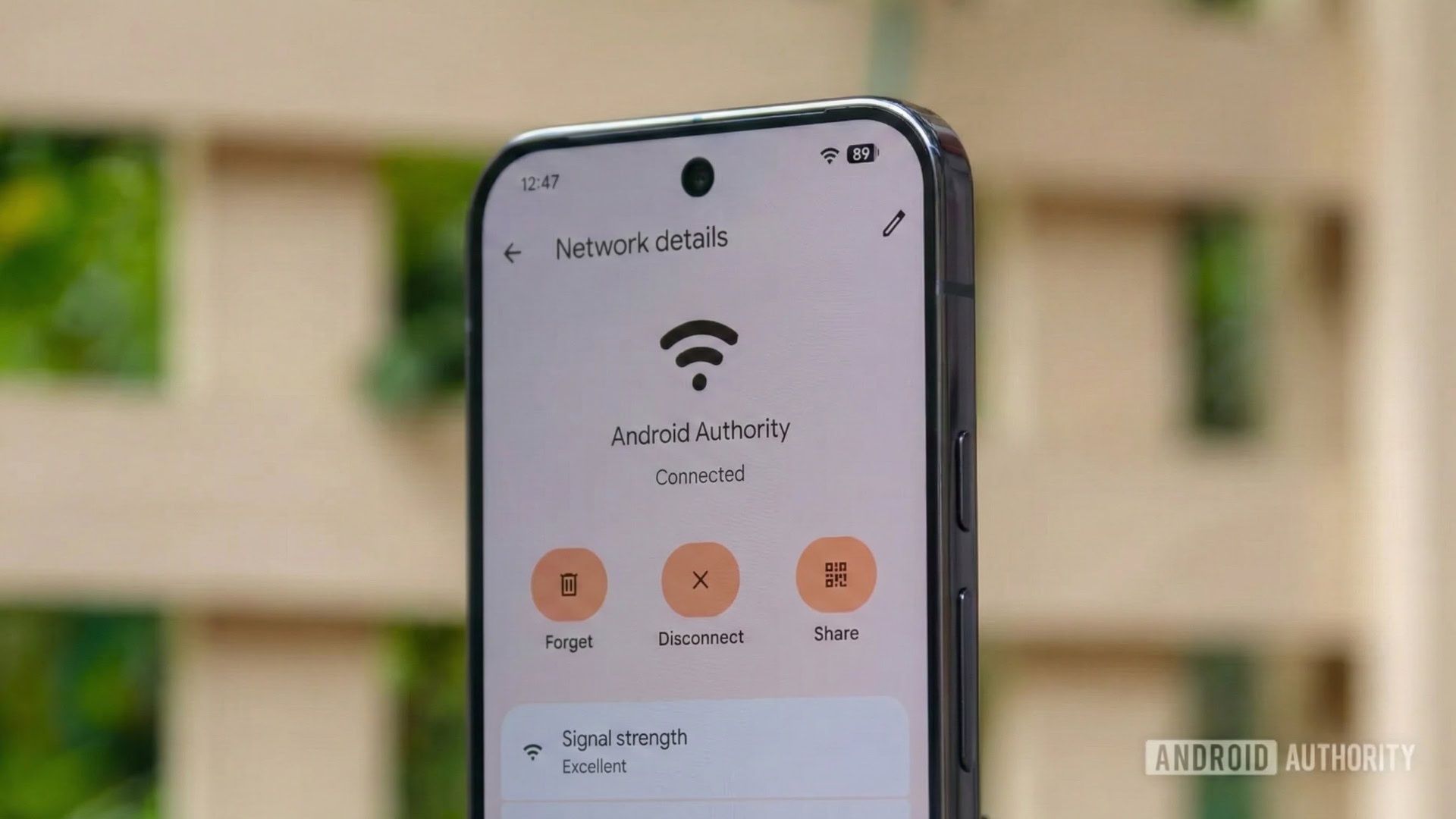
The FCC's New Geofenced Wi-Fi Rules: Unlocking the 6 GHz Band for Smarter, More Powerful Devices

📷 Image source: androidauthority.com
A New Frontier for Wireless Connectivity
Regulatory Shift Paves the Way for Advanced Wi-Fi
The Federal Communications Commission (FCC) has enacted a significant rule change that promises to reshape the landscape of wireless connectivity in the United States. According to a report from androidauthority.com, published on 2026-01-29T22:11:48+00:00, the FCC has voted to permit a new category of Wi-Fi devices to operate in the coveted 6 gigahertz (GHz) band. This band is a portion of the radio spectrum known for offering high speeds and low interference, making it ideal for next-generation Wi-Fi, known as Wi-Fi 6E and Wi-Fi 7.
The core of this decision involves allowing what the FCC terms 'variable power' devices. Unlike standard Wi-Fi routers or access points that transmit at a fixed power level, these new devices can dynamically adjust their signal strength. Crucially, their operation is contingent on a technology called geofencing, which uses location data—typically from GPS—to ensure the device only functions at higher power levels in authorized geographic areas. This regulatory loosening is designed to foster innovation while protecting incumbent users of the 6 GHz band, such as licensed microwave services used by utilities and public safety agencies.
Decoding the 6 GHz Band and Its Importance
Why This Slice of Spectrum Is a Game Changer
To understand the impact of the FCC's decision, one must first grasp what the 6 GHz band represents. The radio spectrum is divided into many frequency ranges, each with different properties. Lower frequencies, like 2.4 GHz, travel farther and penetrate walls better but are crowded and slower. Higher frequencies, like 5 GHz and now 6 GHz, offer much wider channels, which translates to dramatically faster data speeds and more capacity, but their signals have a shorter range and are more easily blocked by physical obstacles.
The 6 GHz band adds a massive 1,200 megahertz of new spectrum for unlicensed Wi-Fi use. For comparison, the previously available 2.4 GHz and 5 GHz bands combined offer less total contiguous space. This new bandwidth is the foundation for Wi-Fi 6E and Wi-Fi 7, technologies that can deliver multi-gigabit speeds, ultra-low latency, and support a dense number of devices simultaneously. It is essential for applications like high-fidelity virtual reality, instant cloud gaming, and seamless 8K video streaming within homes and enterprises.
The Mechanics of Geofencing and Variable Power
How Technology Enables Smarter Spectrum Sharing
The FCC's new rules are not a simple deregulation; they introduce a sophisticated, automated control mechanism. Geofencing is a virtual geographic boundary defined by coordinates. A device equipped with a certified geofencing system must constantly verify its location. If it determines it is inside a pre-approved zone where higher-power transmission is safe—areas carefully mapped to avoid interference with licensed 6 GHz operators—it can then activate its variable power capability.
Variable power allows the device to transmit at levels significantly higher than standard indoor Wi-Fi equipment, potentially boosting its effective range and performance. However, if the device moves outside the geofence or cannot reliably confirm its location, it must default to a much lower, restricted power mode or shut down its 6 GHz operations entirely. This automated enforcement is key to the FCC's confidence in allowing these more powerful devices to share the spectrum without causing harmful interference to critical infrastructure.
Potential Applications and Future Devices
From Rural Broadband to Industrial IoT
This regulatory change opens the door to a new class of Wi-Fi devices previously impractical or illegal. One of the most anticipated applications is for fixed wireless broadband in rural and underserved areas. A geofenced, high-power outdoor Wi-Fi access point could be installed on a farm or in a remote community, using the 6 GHz band's high capacity to deliver fiber-like internet speeds over several kilometers, all while automatically powering down if relocated to a prohibited area.
Beyond broadband, the rules could enable powerful wireless backhaul for networks, connecting buildings across a campus or city. In industrial settings, robust, low-latitude 6 GHz links could support massive sensor networks for automation and logistics. Even consumer devices like high-performance wireless VR headsets or drones that require immense data throughput could benefit from dedicated, high-power links established within a controlled geofenced environment, such as a living room or a designated flying field.
The Global Context of Spectrum Policy
The US Move in an International Landscape
The FCC's action places the United States in a leading, yet complex, position in global spectrum policy. Other regions, including the European Union and the United Kingdom, have also opened the 6 GHz band for Wi-Fi but often with different technical rules and power limits. Some countries have allocated only a portion of the band or have implemented stricter requirements to protect incumbent services. This lack of global harmonization poses a challenge for device manufacturers, who may need to produce different hardware versions or implement complex software locks for different markets.
However, the FCC's adoption of an automated geofencing model could serve as a template for other regulators grappling with the same challenge of sharing premium spectrum. It demonstrates a move towards more dynamic and software-defined spectrum management, a concept gaining traction worldwide. The success or failure of this approach in the U.S. will be closely watched by international bodies, potentially influencing future global standards for spectrum sharing in higher frequency bands beyond 6 GHz.
Technical Hurdles and Implementation Risks
The Challenges of a Geofenced Future
While promising, the geofencing model is not without its potential pitfalls and technical hurdles. The primary risk is location spoofing or failure. If a device's GPS or other location-determining system is hacked, malfunctioning, or deliberately tricked, it could theoretically operate at high power in an unauthorized location, causing interference. The FCC's rules will require robust, tamper-resistant systems, but the verification of these systems' real-world reliability remains an open question that will only be answered with widespread deployment.
Another challenge is the creation and maintenance of the geofence database itself. Determining the precise boundaries where high-power transmission is safe requires intricate radio propagation modeling and coordination with existing licensees. This database must be absolutely accurate and frequently updated. Furthermore, the requirement for constant location checking could impact device battery life for portable equipment and adds complexity and cost to hardware that must now include certified geofencing capabilities alongside traditional Wi-Fi chipsets.
Privacy Implications of Mandatory Location Tracking
The Trade-off for Enhanced Performance
A less technical but equally significant consideration is privacy. For a device to comply with the FCC's rules, it must inherently know its precise location at all times when its 6 GHz radio is active. This raises immediate questions about how this location data is handled, stored, and potentially transmitted. While the location check could be processed locally on the device, manufacturers might be tempted to use cloud-based verification services, creating a log of device locations.
The FCC's report, as noted by androidauthority.com, does not appear to delve deeply into data privacy mandates for these systems. It will be incumbent on the Commission and perhaps other bodies like the Federal Trade Commission to ensure that the geofencing requirement does not become a backdoor for pervasive location tracking. Clear rules on data minimization, user consent for non-regulatory location uses, and data security will be critical to maintain public trust in this new generation of Wi-Fi-enabled devices.
Impact on Consumers and the Wi-Fi Market
What Users Can Expect in the Coming Years
For the average consumer, the immediate impact of this ruling will be subtle. You will not see 'geofenced Wi-Fi' as a flashy feature on retail boxes overnight. Initially, the technology will likely be integrated into professional, enterprise, and service provider equipment. Internet Service Providers (ISPs) may use it to deploy new fixed wireless services. Over time, as the chipsets mature and costs decrease, the technology could trickle down to prosumer and eventually mainstream consumer products.
When it does, consumers may benefit from more flexible and powerful home networking solutions. Imagine purchasing a wireless mesh system that, upon detecting it is installed in a single-family home in a permitted zone, can legally boost its signal strength to blanket a large property with high-speed 6 GHz coverage. Conversely, the same product sold in an apartment building in a dense urban area might operate at lower power by default to avoid any risk of interference. This creates a potential for more context-aware and efficient Wi-Fi hardware.
The Road to Commercialization and Timeline
From Rulemaking to Real-World Products
The FCC's vote is a regulatory starting gun, not the finish line. The next step involves the detailed process of drafting and finalizing the exact technical standards that device manufacturers must follow to receive certification. Industry groups like the Wi-Fi Alliance will need to develop interoperability testing programs for geofenced variable power devices. Chipset designers, including major players like Qualcomm and Broadcom, must then design, produce, and certify new silicon that incorporates these capabilities.
Given these necessary stages, analysts suggest it could be two to three years before the first commercially available devices leveraging these rules hit the market. Early adopters will probably be wireless internet service providers (WISPs) and network infrastructure companies. The timeline underscores that this is a forward-looking decision by the FCC, aimed at stimulating innovation for the next wave of Wi-Fi technology, rather than providing an immediate boost to products on shelves today.
Balancing Innovation and Protection
The FCC's Evolving Regulatory Philosophy
This decision reflects a broader shift in spectrum management philosophy, moving from static, exclusive licenses towards more dynamic and shared access models. The FCC is attempting to walk a fine line: unleashing the innovative potential of unlicensed spectrum for the public good while upholding its fundamental duty to prevent harmful interference to vital licensed services. The geofencing and variable power approach is a technological compromise that attempts to serve both masters.
It represents a bet on automation and intelligence at the device level to enforce regulatory compliance. This is a departure from past models that relied more on rigid technical limits and manual enforcement. The success of this bet is not guaranteed. It will depend on the robustness of the technology, the diligence of manufacturers, and the FCC's own ability to monitor and enforce these new, more complex rules. The outcome will significantly influence how future spectrum bands, including those above 6 GHz, are managed for decades to come.
Perspektif Pembaca
The FCC's move to enable geofenced, high-power Wi-Fi devices presents a fascinating intersection of technology, regulation, and daily life. It promises better connectivity but introduces new questions about automation, privacy, and equitable access.
What is your primary concern or hope regarding this new direction for Wi-Fi? Is it the potential for finally getting high-speed internet in a remote area, anxiety about devices constantly tracking location for regulatory compliance, or curiosity about how it might enable a specific new application like wireless VR or smart city infrastructure? Share your perspective based on your own experiences with connectivity challenges or technological aspirations.
#WiFi #FCC #6GHz #Technology #Innovation


