

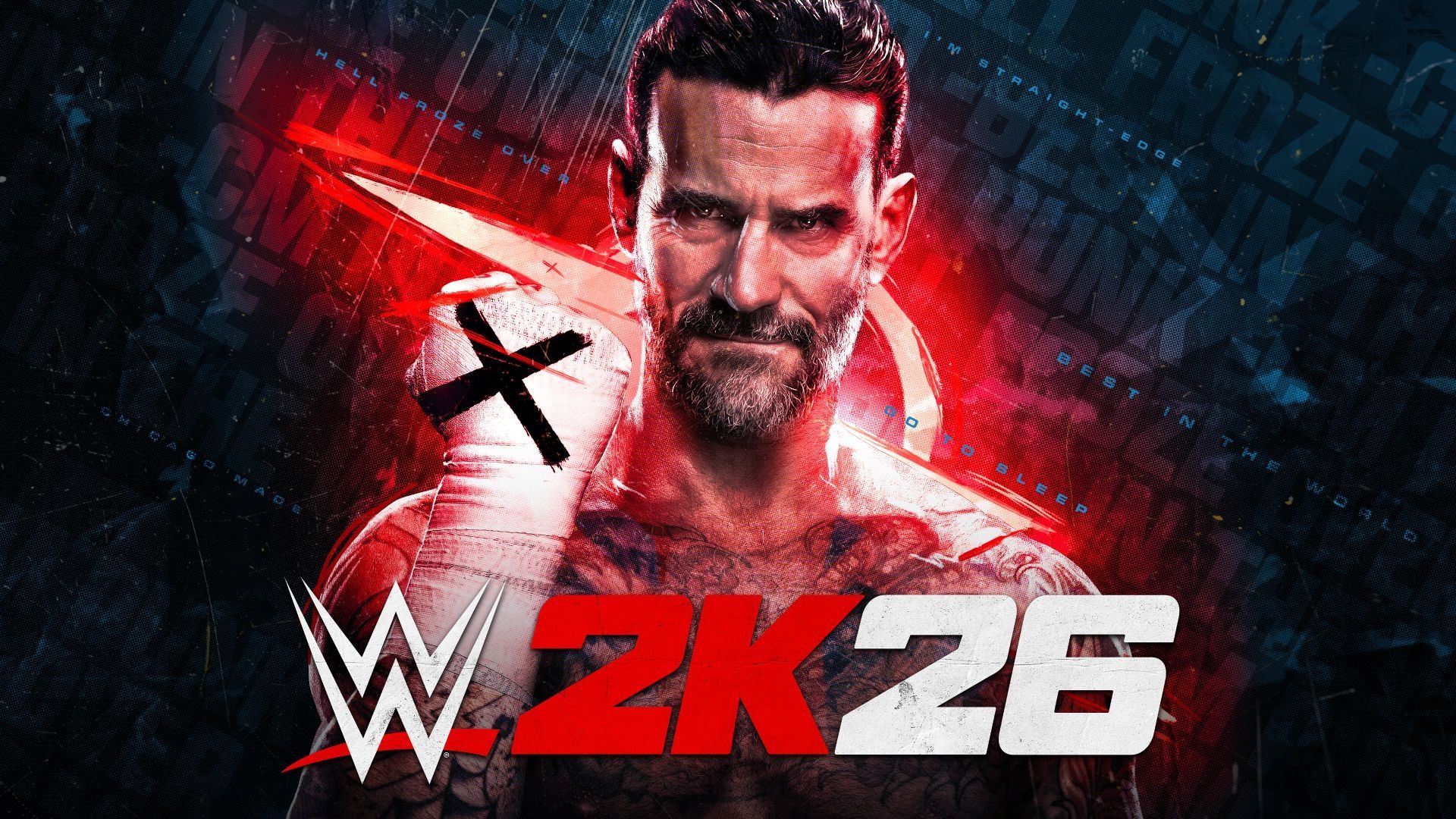
WWE 2K26 Sets March Release with CM Punk's Return as Cover Star, Promising Revamped Gameplay

📷 Image source: gamingbolt.com
The Announcement: A Date and a Face for the Next Generation
Official Confirmation from 2K and Visual Concepts
The next installment in the long-running wrestling simulation series has been officially unveiled. According to gamingbolt.com, WWE 2K26 is scheduled for a global launch on March 13, 2026. The announcement, made on January 30, 2026, confirms the widespread speculation and fan demand by featuring CM Punk as the game's cover superstar.
This marks a significant moment for the franchise, as CM Punk's return to WWE in late 2023 was one of the most shocking developments in recent professional wrestling history. His presence on the cover signals the developer's intent to capitalize on current storylines and fan enthusiasm, directly integrating the sport's real-world momentum into the virtual arena.
CM Punk: From Controversial Exit to Cover Star Return
The Journey of the 'Best in the World'
CM Punk, whose real name is Phil Brooks, is a polarizing yet iconic figure in sports entertainment. His initial departure from WWE in 2014 was acrimonious, followed by a nearly seven-year stint in All Elite Wrestling (AEW). His surprise return to WWE at Survivor Series 2023 re-ignited his mainstream popularity and made him a central figure in the company's programming.
Featuring him as the WWE 2K26 cover star is a strategic move that acknowledges his renewed star power. It directly appeals to both long-time fans who remember his initial WWE run and a newer audience familiar with his recent work. The cover art, described in the announcement, reportedly captures his defiant persona, a key element of his character's appeal across multiple promotions.
Core Gameplay Innovations: Beyond a Roster Update
Promised Overhauls to the In-Ring Experience
While annual sports titles often face criticism for being mere roster updates, the announcement for WWE 2K26 suggests more substantial changes. According to gamingbolt.com, developers at Visual Concepts are promising a 'revamped gameplay suite' designed to deliver the most realistic and fluid wrestling simulation to date. Specific mechanics mentioned include enhanced chain wrestling, more dynamic selling of moves, and a refined reversal system.
The goal appears to be closing the gap between scripted entertainment and unpredictable athletic competition. A more responsive physics engine could allow for emergent moments that feel unique to each match, moving beyond pre-scripted sequences. This focus on core mechanics indicates an effort to deepen the experience for dedicated players who spend hours in the ring beyond the story modes.
The MyRISE Evolution: Continuing the Solo Narrative Journey
Dual Campaigns for Men's and Women's Divisions
The popular MyRISE story mode will return, offering two distinct career paths. Players will be able to guide a custom male or female wrestler from the Performance Center training facility to the main roster of WWE. This mode has been praised in recent iterations for its branching storylines, voice acting, and integration of real WWE superstars.
For WWE 2K26, the narratives are expected to reflect the current era of the company, potentially incorporating elements like the brand split between Raw and SmackDown, the influence of social media, and the intense competition of the women's division. The mode serves as a crucial onboarding tool for new fans, teaching them the ropes through narrative context while providing seasoned players with a tailored, role-playing experience separate from the standard exhibition matches.
MyGM and Creation Suite: The Pillars of Longevity
Tools for Player Expression and Management
Two modes consistently highlighted by the community for their replay value are MyGM and the Creation Suite. MyGM tasks players with managing a WWE brand, drafting superstars, booking shows, and competing for ratings against a rival brand managed by the AI or another player. This mode appeals to the strategic mind, focusing on resource management, star development, and long-term storytelling from a booker's perspective.
Meanwhile, the Creation Suite is arguably the franchise's most powerful feature. It allows players to create custom wrestlers, arenas, championships, and even entrance music. This toolset has fostered a massive online community where fans share creations of legends, current stars from other promotions, and original characters. The depth of this suite directly contributes to the game's lifespan, as user-generated content provides near-infinite variety.
The Roster Challenge: Capturing a Moving Target
Free Agency, Injuries, and the Development Cycle
One of the most complex aspects of developing a licensed wrestling game is finalizing the roster. WWE's real-world landscape is fluid, with superstars being released, signing new contracts, suffering injuries, or undergoing character rebrands. The development cycle for a game like WWE 2K26, which locks content months before release, means the in-game roster is always a snapshot in time.
This can lead to discrepancies where a superstar prominently featured in the game may have been absent from television for months due to injury, or a major new signee may only appear as downloadable content (DLC) after launch. Developers must make difficult calls on who to include, often relying on projections of a performer's popularity and status months into the future, a process fraught with uncertainty according to industry analysts.
Visual Fidelity and Presentation: The Broadcast Feel
Aiming for Television-Quality Production
A key selling point for the WWE 2K series has been its commitment to replicating the look and feel of a WWE television broadcast. This involves meticulous scanning of superstar faces and bodies, accurate recreations of entrance gear and move-sets, and painstaking detail in arena environments. Commentary, while often critiqued for repetition, is recorded by WWE's actual broadcast team to enhance authenticity.
For WWE 2K26, expectations are for further refinements in lighting, crowd reactions, and superstar animations. Small details, like how sweat interacts with stage lights or how a wrestler sells exhaustion in the later stages of a match, contribute significantly to the immersion. The ultimate goal is to make a screenshot or video clip from the game momentarily indistinguishable from a real WWE broadcast, a high bar that drives continuous graphical investment.
The Online Ecosystem: Community and Competition
Servers, Modes, and the DLC Model
Online play forms a major component of the modern WWE 2K experience. Players can compete in ranked matches, collaborate in multi-person tag bouts, and share their custom creations in a central community hub. The stability and latency of these online servers are critical, as a laggy match can ruin the timing-based gameplay. Post-launch support typically includes balance patches and server maintenance.
Furthermore, the game operates on a live-service model through its DLC plans. These often include new superstar packs, attires, and moves released over several months following launch. This model helps keep the game updated with the evolving WWE product but also fragments the content, requiring additional investment from players who want the complete experience. The announcement did not specify DLC plans, leaving that information for a later date.
Historical Context: The Franchise's Road to Redemption
From Critical Failure to Renewed Acclaim
The WWE 2K franchise's current position is one of hard-won stability. The release of WWE 2K20 in 2019 was a notorious low point, plagued by game-breaking bugs, graphical glitches, and poor gameplay. The disaster was severe enough that publisher 2K took the unprecedented step of canceling the 2021 annual release to give developers a two-year hiatus for a comprehensive rebuild.
This reset led to the well-received WWE 2K22, which rebuilt core systems and restored fan confidence. Subsequent releases have focused on iterative improvement. The choice of CM Punk for the WWE 2K26 cover, a symbol of a major comeback, mirrors the franchise's own journey from the brink of irrelevance back to being a tentpole release in the sports simulation genre. This history underscores the pressure on each new installment to maintain this recovered quality.
The Global Wrestling Game Landscape
WWE 2K's Position in a Niche Market
While WWE 2K dominates the simulation-style wrestling game market, it does not exist in a vacuum. Other wrestling promotions, most notably New Japan Pro-Wrestling (NJPW), have their own licensed games, such as the 'King of Sports' series, which often emphasizes a different, more technical fighting style. Furthermore, the indie-developed 'Fire Pro Wrestling World' has a dedicated cult following for its deep, tactical gameplay and unparalleled customization, despite simpler graphics.
This global context means WWE 2K26 must appeal not only to WWE fans but also to wrestling enthusiasts at large who compare mechanics across titles. Its success hinges on delivering an accessible yet deep package that captures the specific spectacle of WWE while offering gameplay robust enough to satisfy purists who may follow multiple promotions. It operates in a niche where authenticity to the source material and quality of simulation are equally important.
Anticipated Challenges and Community Expectations
Balancing Realism with Fun
The development team faces inherent challenges in satisfying a diverse player base. Some players seek a hyper-realistic simulation that mirrors the pacing and strategy of a real wrestling match. Others prefer a faster, more arcade-style experience filled with dramatic finishers and high-flying moves. Striking a balance between these two poles is a perennial challenge for the series.
Community expectations, fueled by online forums and social media, are exceptionally high following the franchise's recovery. Players will scrutinize everything from the accuracy of a single superstar's taunt to the long-term support of online modes. The emphasis on a 'revamped gameplay suite' in the announcement directly responds to this, signaling that the developers are prioritizing the foundational feel of the game, which is the most frequent point of critique and praise among the core audience.
Perspektif Pembaca
The return of CM Punk to a WWE game cover is a powerful narrative, but the true test lies in the digital ropes. For players around the world, what defines a successful wrestling game? Is it the star power on the box, the depth of its creation tools, the competitiveness of its online play, or the authenticity of its in-ring physics?
How do you prioritize these elements? Share your perspective based on your experience with past wrestling games, whether you're a casual fan enjoying the spectacle or a dedicated player who spends hours perfecting custom championships and arenas. What single improvement would most enhance your personal experience with WWE 2K26?
#WWE2K26 #CMPunk #WrestlingGames #VideoGames #GameRelease


