

Artemis 2 Moon Rocket Returns to Hangar: A Technical Setback in NASA's Lunar Ambition

📷 Image source: cdn.mos.cms.futurecdn.net
A Strategic Retreat from the Pad
NASA's SLS Rocket Rolls Back for Repairs
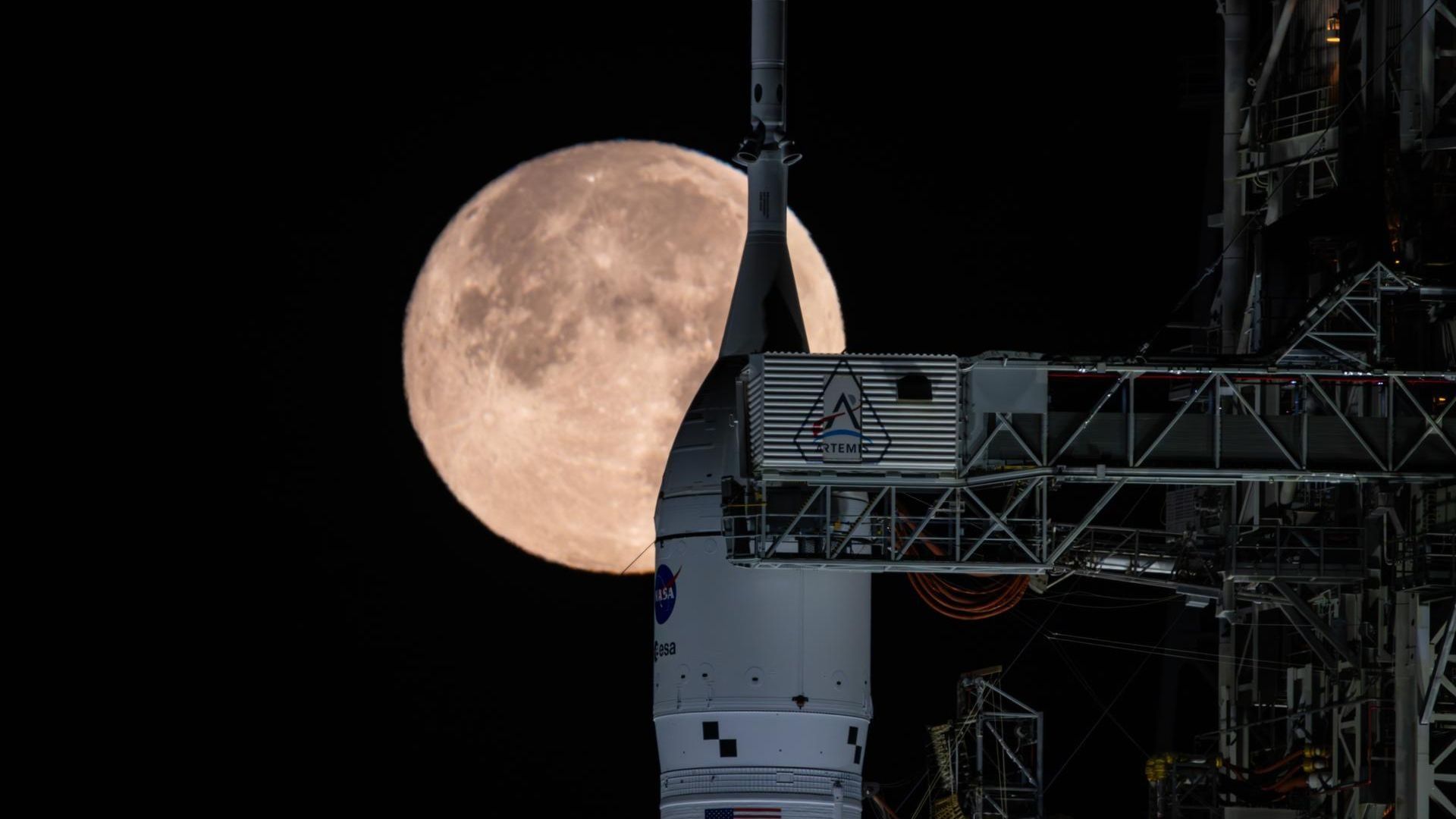
NASA's towering Space Launch System (SLS) rocket, destined to carry astronauts around the Moon on the Artemis 2 mission, began a slow journey away from its launch pad on February 25. This move, captured in live coverage by space.com, was not part of the original countdown but a necessary response to technical issues. The massive crawler-transporter carried the 98-meter-tall rocket and its mobile launch platform the 6.8 kilometers back to the safety of the Vehicle Assembly Building (VAB) at Kennedy Space Center in Florida.
This rollback represents a significant, though not unexpected, pause in pre-launch operations. According to space.com, the decision was driven by problems identified with the rocket's environmental control system (ECS) and a valve on its Orion crew capsule. Such logistical reversals are complex, involving meticulous planning to move a structure taller than the Statue of Liberty. The return to the VAB allows engineers to work in a controlled environment, away from the coastal weather at Launch Pad 39B.
The Glitches That Prompted the Move
Dissecting the Technical Faults
The primary issue centers on the rocket's environmental control system. This system is crucial for maintaining proper temperature and humidity levels within the rocket's compartments, especially for sensitive electronics and hardware while it sits on the pad. A failure here could expose critical components to Florida's humid, salty air, potentially leading to corrosion or other damage. NASA has not released detailed public data on the exact nature of the ECS malfunction.
A second, separate problem involves a valve on the Orion spacecraft's launch abort system. This system is designed to propel the crew capsule away from the rocket in an emergency during launch. A faulty valve in such a critical safety system cannot be ignored. According to space.com, addressing these issues at the pad was deemed less feasible than returning to the VAB, where technicians have full access to the stacked vehicle and can work under more stable conditions.
The Anatomy of a Rollback
Moving a Monumental Machine
Transporting the SLS is an engineering feat in itself. The crawler-transporter, a relic from the Apollo and Space Shuttle eras upgraded for Artemis, moves at a glacial pace of about 1.6 kilometers per hour when loaded. The journey from Pad 39B to the VAB takes approximately eight to twelve hours. The crawler must navigate a specially built gravel crawlerway, maintaining the rocket perfectly level to within a fraction of a degree.
This operation is a stark contrast to the dynamic spectacle of launch. It is a deliberate, cautious procedure where haste is the enemy. Every system on the rocket is monitored during the move, though it is largely powered down. The successful rollback, while signaling a delay, also demonstrates NASA's operational capability to handle the immense infrastructure required for deep space exploration, showcasing a different kind of mission-critical skill.
Historical Context of Launch Delays
Precision Over Haste in Human Spaceflight
Technical delays and rollbacks are a deeply ingrained part of human spaceflight history, not an anomaly. During the Apollo program, the Saturn V rocket for Apollo 10 was rolled back to the VAB after lightning strikes on the pad. The Space Shuttle program saw numerous rollbacks due to technical issues and hurricanes. Each decision, while frustrating to the public and teams eager to fly, prioritizes crew safety and mission assurance above schedule.
This historical perspective frames the Artemis 2 rollback not as a failure, but as a standard, prudent operation in high-stakes aerospace. It underscores a fundamental principle: it is far better to resolve known issues on the ground than to risk compounding them during a launch countdown. The process, while causing schedule slippage, is a testament to a methodical engineering culture that has been essential for success since the dawn of the space age.
Impact on the Artemis 2 Timeline
A Rescheduled Journey Around the Moon
The immediate consequence of this rollback is a delay to the Artemis 2 launch window. While NASA has not announced a new target date, such a return to the VAB typically adds several weeks to several months of delay. The mission, which will send four astronauts—three NASA and one Canadian—on a flyby of the Moon, was previously targeting a launch in late 2025. That timeline is now under review, according to information from space.com.
This delay has a cascading effect on the broader Artemis program. Artemis 2 is the critical pathfinder for the crewed elements of NASA's lunar return plan. Its success is required before Artemis 3, which aims to land astronauts near the lunar south pole. Any significant slip in Artemis 2 pushes subsequent missions, including the construction of the Lunar Gateway station and sustainable surface operations, further into the future.
The International Ripple Effect
Partner Missions and Global Coordination
Artemis is not solely an American endeavor; it is an international partnership. The Artemis 2 crew includes a Canadian Space Agency astronaut, a direct result of Canada's contribution of the robotic Canadarm3 to the Lunar Gateway. Major modules for the Gateway are being built by the European Space Agency and Japan's JAXA. Delays to the core SLS/Orion launch schedule can therefore impact the planning and integration schedules for these international partners.
Furthermore, the global landscape of lunar exploration is becoming increasingly crowded. Missions from China, India, Japan, and commercial entities are all targeting the Moon in this decade. NASA's schedule adjustments can influence the strategic timing of other nations' activities, particularly regarding claims of priority or the establishment of perceived norms of behavior in cislunar space. A delay, while technical in origin, carries diplomatic weight.
Technical Deep Dive: The Environmental Control System
Why Climate Control is Rocket Science
The malfunctioning Environmental Control System is far more than a simple air conditioner. For a rocket like SLS, the ECS is a complex network of ducts, fans, heaters, and chillers that manages the "purge" air flowing through the rocket's stages and the Orion spacecraft. It ensures that sensitive avionics bays are kept dry and within a specific temperature range, preventing condensation that could cause short circuits. It also provides conditioned air to the crew module before launch.
In the humid environment of Cape Canaveral, salt spray and moisture are constant threats. Without a functioning ECS, water intrusion could damage electrical connectors, corrode metal components, or degrade insulation. Repairing such damage after it occurs is vastly more difficult than preventing it. The decision to roll back indicates the issue was severe enough that temporary fixes at the pad were insufficient, requiring the full workshop environment of the VAB for a proper diagnosis and repair.
Risk Management in Real Time
The Calculus of Delay Versus Danger
NASA's decision matrix for a rollback involves weighing multiple risks. On one side is the risk of launching with a known, un-resolved issue, which is typically deemed unacceptable for crewed flight. On the other side are the risks associated with the rollback operation itself—the physical stress of moving the fully stacked rocket, the schedule delay, and the public perception of a setback. There are also programmatic risks, such as losing a favorable launch window or impacting workforce momentum.
The choice to roll back signifies that the engineering and safety leadership assessed the technical risks as paramount. It is a non-negotiable aspect of human-rating a launch vehicle. This process, while invisible to the public during smooth operations, becomes front and center during anomalies. It demonstrates that the protocols for mission assurance are active and functioning, even when they lead to a visually dramatic step backward.
The Human Element: The Artemis 2 Crew
Astronauts in a Holding Pattern
For the Artemis 2 crew—NASA astronauts Reid Wiseman, Victor Glover, Christina Koch, and Canadian astronaut Jeremy Hansen—this delay is a professional and personal adjustment. Their training flow, which intensifies as launch approaches, will now be recalibrated. While simulators and drills will continue, the psychological focus of an imminent launch date will shift. Astronauts are trained for such schedule volatility, but it undoubtedly requires resilience.
Their mission remains historic: the first humans to travel to lunar vicinity since 1972, and the first to journey there in the 21st century's spacecraft. A delay does not diminish the objective but reinforces the careful, step-by-step approach required to return humans to deep space. The crew's public statements have consistently emphasized safety and mission success over schedule, a mindset that aligns perfectly with the engineering decision to roll back.
Comparative Analysis: SLS and Commercial Alternatives
Divergent Philosophies in Launch Operations
The SLS rollback highlights a philosophical difference between NASA's traditional, government-developed exploration systems and newer commercial launch providers. Vehicles like SpaceX's Starship are designed with different operational concepts, including potential for rapid reuse and on-pad repairs. The SLS, derived from Space Shuttle heritage systems, relies on extensive ground infrastructure like the VAB and crawlerway, which dictates certain operational timelines and responses to issues.
This is not inherently a critique but a reflection of design choices. SLS is built for extreme reliability and power for a specific mission set—crewed deep space exploration—with less emphasis on rapid turnaround. The rollback to the VAB is a procedure born from this architecture. As NASA looks to a future where commercial vehicles may also carry Artemis astronauts to lunar orbit, these differing operational models will need to be harmonized, offering lessons in flexibility and robustness.
The Path Forward: Diagnosis, Repair, and Re-try
What Happens Inside the VAB
Inside the Vehicle Assembly Building, engineers will have full access to the rocket and spacecraft. The stack will be placed in one of the VAB's high bays, surrounded by work platforms that can encircle the entire vehicle. Teams will first conduct detailed diagnostics on the faulty ECS components and the Orion valve to determine the root cause of each issue. This forensic engineering is critical to ensure the fix is permanent and doesn't mask a deeper problem.
Once the causes are understood, repair plans will be developed and executed. This could involve replacing valves, pumps, or electronics assemblies. All work will be followed by rigorous testing to verify the systems function correctly. Only after NASA management is confident all issues are resolved will a new schedule for rolling back to the pad be set. This entire process is methodical and data-driven, with the goal of returning to the pad a more flight-ready vehicle.
Perspektif Pembaca
Given the technical and programmatic complexities of returning humans to the Moon, where do you believe the balance should lie between unwavering schedule adherence and absolute technical caution? Is the public and political patience for such meticulous, delay-prone processes sufficient to see the Artemis program through to a sustained lunar presence?
Alternatively, from a global standpoint, how should the international community navigate the interplay between inevitable technical delays in major programs like Artemis and the accelerating pace of lunar exploration activities by other nations and commercial entities? Does this dynamic necessitate new forms of diplomatic or programmatic coordination in cislunar space?
#NASA #Artemis2 #SpaceLaunchSystem #MoonMission #SpaceExploration


