

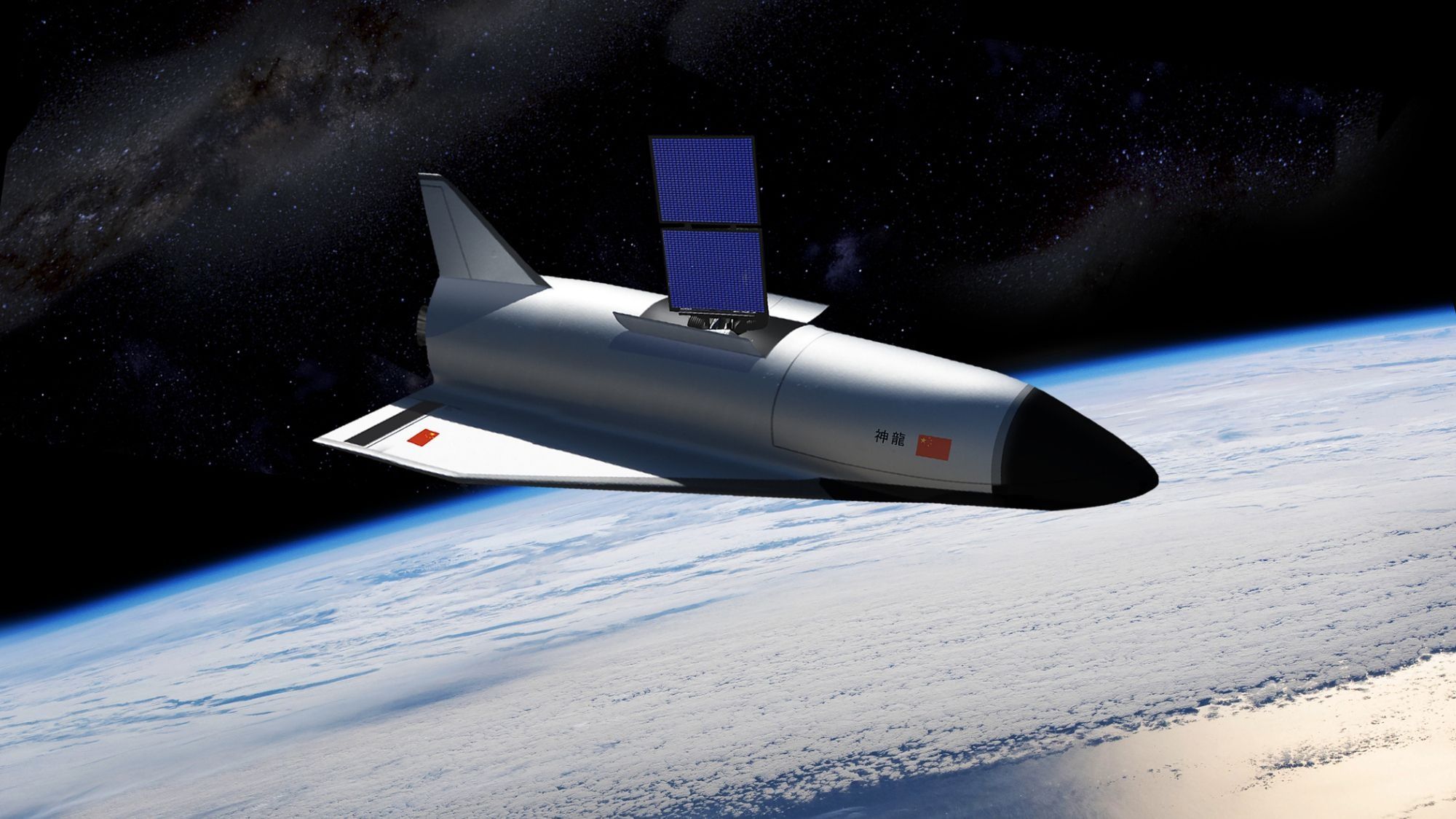
China's Shenlong Space Plane: The Silent Fourth Mission of a Mysterious Orbital Vehicle

📷 Image source: cdn.mos.cms.futurecdn.net
A Fourth Silent Ascent
The Latest Launch of China's Most Secretive Spacecraft
On December 14, 2023, a Long March 2F rocket lifted off from the Jiuquan Satellite Launch Center in the Gobi Desert, carrying China's reusable experimental spacecraft, known as Shenlong or 'Divine Dragon,' into orbit. According to space.com, this marked the vehicle's fourth mission, following previous flights in 2020, 2022, and a separate 2023 launch. The spacecraft's departure was announced by Chinese state media with characteristic brevity, offering no details about its intended orbit, mission duration, or specific objectives.
The launch itself is part of a declared Chinese space program to develop reusable spacecraft technologies, aiming to reduce the cost of space access. Unlike high-profile crewed missions or lunar probes, the Shenlong program operates under a profound veil of secrecy. International space observers, including the U.S. Space Force's space domain awareness teams, tracked the object's release into orbit, noting it deployed at least six smaller objects into nearby trajectories. The nature and purpose of these companion objects remain one of the mission's central mysteries.
What Is the Shenlong Space Plane?
Defining a Classified Aerospace Vehicle
Shenlong is China's robotic, reusable spaceplane. In aerospace terms, a spaceplane is a vehicle that can operate both in the vacuum of space and within Earth's atmosphere, often designed to land on a runway like an airplane. The Chinese vehicle is broadly considered a technological counterpart to the U.S. Space Force's Boeing X-37B Orbital Test Vehicle, though its exact dimensions and capabilities are state secrets. Analysts estimate it is smaller than the Space Shuttle but larger than many satellites, likely measuring roughly 8 meters in length.
Its primary stated purpose, per Chinese official releases, is to test reusable technologies and conduct peaceful scientific experiments in orbit. However, the complete absence of public details about these experiments, combined with the mission's clandestine nature, fuels widespread speculation about potential dual-use or military applications. The spacecraft represents a significant leap in China's advanced aerospace capabilities, demonstrating mastery over complex technologies like autonomous re-entry, thermal protection, and long-duration orbital operations.
The Mission Timeline and Observed Activities
Tracking the Unspoken Maneuvers in Orbit
Following its December 2023 launch, the Shenlong mothership and its accompanying objects were closely monitored by a global network of amateur and professional satellite trackers. According to observational data cited by space.com, the spaceplane released six objects into nearby orbits. These objects have been cataloged by the U.S. Space Force and designated with identifiers like OBJECT A, B, C, D, E, and F. Some of these objects have emitted intermittent radio signals, a behavior noted in previous Shenlong missions.
The signals, often repeating sequences of data, are a focal point for external analysts. While the transmissions could be benign—related to engineering tests or simple telemetry—their intermittent and patterned nature is unusual for standard satellite operations. The mothership itself has performed subtle orbital maneuvers, adjusting its path. This activity pattern, involving a reusable carrier vehicle deploying smaller subsatellites, mirrors operations conducted by the U.S. X-37B, suggesting a parallel development path in reusable orbital test platforms.
The Companion Objects: A Key to the Mystery
Deciphering the Purpose of the Deployed Payloads
The six objects released by Shenlong are central to understanding the mission. Satellite trackers have classified them based on their behavior. Some appear to be inert, possibly service modules or deployment adapters. Others, however, are active. Notably, OBJECT A and OBJECT D have emitted radio signals. These emissions are not continuous broadcasts but rather sporadic transmissions, sometimes described as resembling placeholder data or 'testing' patterns.
This behavior leads to several non-exclusive hypotheses. The objects could be small satellites (CubeSats or microsats) testing new technologies in proximity operations. They might be sensor packages or inspection devices, potentially used to monitor the Shenlong mothership itself or other objects in space. Another possibility is that they are targets for practicing rendezvous and proximity operations (RPO), a capability fundamental to satellite servicing, assembly, and—in a military context—inspection or counter-space operations. The lack of official Chinese commentary means these remain informed speculations.
Parallels and Divergences: Shenlong vs. X-37B
A Comparative Analysis of Secret Space Planes
The most frequent point of comparison for Shenlong is the United States' X-37B, operated by the U.S. Space Force. Both are robotic, reusable, winged spaceplanes that launch vertically on rockets and land horizontally on runways after missions lasting many months. Both deploy secondary payloads and conduct highly classified on-orbit experiments. The X-37B has flown six missions, with durations extending over 900 days, testing advanced propulsion, materials science, and space exposure experiments.
However, key differences are inferred from observed behavior. The Shenlong missions have, to date, been of shorter duration than the later X-37B flights. Furthermore, the radio emissions from Shenlong's companion objects have been more readily detected by amateur trackers than signals from X-37B payloads, which could indicate different technological maturation levels, different experimental goals, or simply less stringent signal masking. This parallel development underscores a new era of great-power competition in space, where reusable orbital vehicles are a prized capability for technological advancement and strategic positioning.
The Dual-Use Dilemma: Peaceful Science or Military Tool?
Navigating the Ambiguous Nature of Space Technology
The fundamental ambiguity of the Shenlong mission stems from the dual-use nature of nearly all space technology. The same capabilities required for autonomously rendezvousing with a satellite to refuel or repair it can also be used for close-in inspection or disabling of an adversary's satellite. Testing advanced materials for thermal protection during re-entry is essential for civilian space access but also for developing hypersonic glide vehicles. China consistently states its space activities are for peaceful purposes, but its military wing, the People's Liberation Army (PLA), oversees the nation's space program.
This structural integration makes separating civilian from military research inherently difficult. According to space.com, analysts like Andrew Jones, who tracks China's space program, note that while the spacecraft itself is likely a technology testbed, the experiments it carries could have broad applications. Without transparency, the international community, particularly strategic competitors, must assume a degree of military utility, which in turn drives their own counter-developments and contributes to a potential arms race in space.
The Broader Context: China's Accelerating Space Ambitions
Shenlong as One Piece of a Larger Strategic Puzzle
The Shenlong program cannot be viewed in isolation. It is a component of China's rapid and comprehensive expansion of its space capabilities. This includes a completed space station (Tiangong), a successful lunar sample-return mission, a Mars rover, and plans for a crewed lunar landing before 2030. Developing a reusable spaceplane fits logically into this portfolio, aiming to lower costs and increase launch tempo for future ambitions.
Strategically, mastering on-orbit servicing and operations provides significant long-term economic and security advantages. A country that can assemble large structures in orbit, refuel satellites to extend their lives, and maneuver spacecraft with precision holds a formidable position. The secrecy around Shenlong suggests China is treating these capabilities as strategically sensitive, akin to how nations treat advanced stealth aircraft or missile technology. This approach limits international scientific collaboration and fuels mistrust, but it also protects technological edge in a highly competitive domain.
The International Reaction and Space Domain Awareness
How the World Tracks and Interprets the Mission
The international response to Shenlong's missions is characterized by professional monitoring and official caution. The U.S. Space Force's 18th Space Defense Squadron publicly tracks the objects, adding their trajectories to the public catalog. U.S. military officials, including the head of U.S. Space Command, have repeatedly expressed concerns about China's development of counter-space capabilities, often citing the general class of Chinese spacecraft that includes Shenlong as potential threats due to their maneuverability and unclear intent.
This tracking is part of a broader field called Space Domain Awareness (SDA)—the ability to detect, track, identify, and characterize objects in Earth orbit. Missions like Shenlong's, which involve multiple maneuvering objects, test and improve the SDA capabilities of other nations. They highlight the growing congestion and complexity of the orbital environment, where distinguishing between a peaceful technology demonstrator and an anti-satellite weapon precursor is a monumental challenge with profound implications for global security and stability.
Technological Hurdles and Demonstrations
What Shenlong's Flights Reveal About Engineering Progress
Even without knowing its payloads, the Shenlong missions demonstrate concrete technological milestones. Successfully launching, operating in orbit for extended periods, and returning a winged vehicle intact requires solving immense engineering challenges. These include managing the extreme heat of atmospheric re-entry, which necessitates advanced thermal protection systems, and achieving a precise, autonomous landing on a remote runway.
The repeated flights indicate a progressing test program, likely moving from basic vehicle validation to more complex orbital operations involving payload deployment and manipulation. Each mission likely builds on data from the last, incrementally expanding the vehicle's operational envelope. The ability to recover and re-fly the spacecraft is the core economic and operational promise of reusability. While SpaceX has demonstrated this with rocket boosters, mastering it for an orbital spaceplane is a distinct and complementary achievement, pointing toward a future where access to space is more routine and affordable for state-level actors.
The Future of the Shenlong Program
Trajectories and Implications for Coming Years
Based on the program's cadence, a fifth Shenlong mission is plausible within the next two to three years. Future flights will likely focus on extending mission duration, testing more advanced payloads, and demonstrating increasingly complex on-orbit activities. A key benchmark will be if the spacecraft begins to demonstrate direct interaction with its deployed objects, such as recapturing them or performing close-proximity maneuvers that suggest inspection or servicing capabilities.
Longer-term, the technology validated by Shenlong could inform the design of larger, potentially crewed, reusable spaceplanes. China has shown interest in such concepts for space tourism or rapid point-to-point Earth travel. The program also solidifies China's position as one of only two nations operating a reusable orbital spaceplane, a symbolic and substantive marker of its arrival as a leading space power. Its continued development will be a key variable in the evolving dynamics of space security and international cooperation for decades to come.
Reader Perspective
The development of secretive technologies like the Shenlong spaceplane occurs in a landscape where national security concerns often eclipse public discourse and international transparency. This creates a knowledge gap filled by speculation, which can itself influence geopolitical perceptions and policy.
What single, verifiable piece of information from the Chinese authorities about the Shenlong's mission—short of full disclosure—would do the most to build international confidence that its activities are purely peaceful? Would a detailed list of the scientific instruments onboard, a public log of its orbital maneuvers, or an invitation for international observers to witness its landing be most meaningful in reducing tensions and mistrust in the space domain?
#Shenlong #Spaceplane #ChinaSpace #ReusableSpacecraft #SpaceTechnology


