

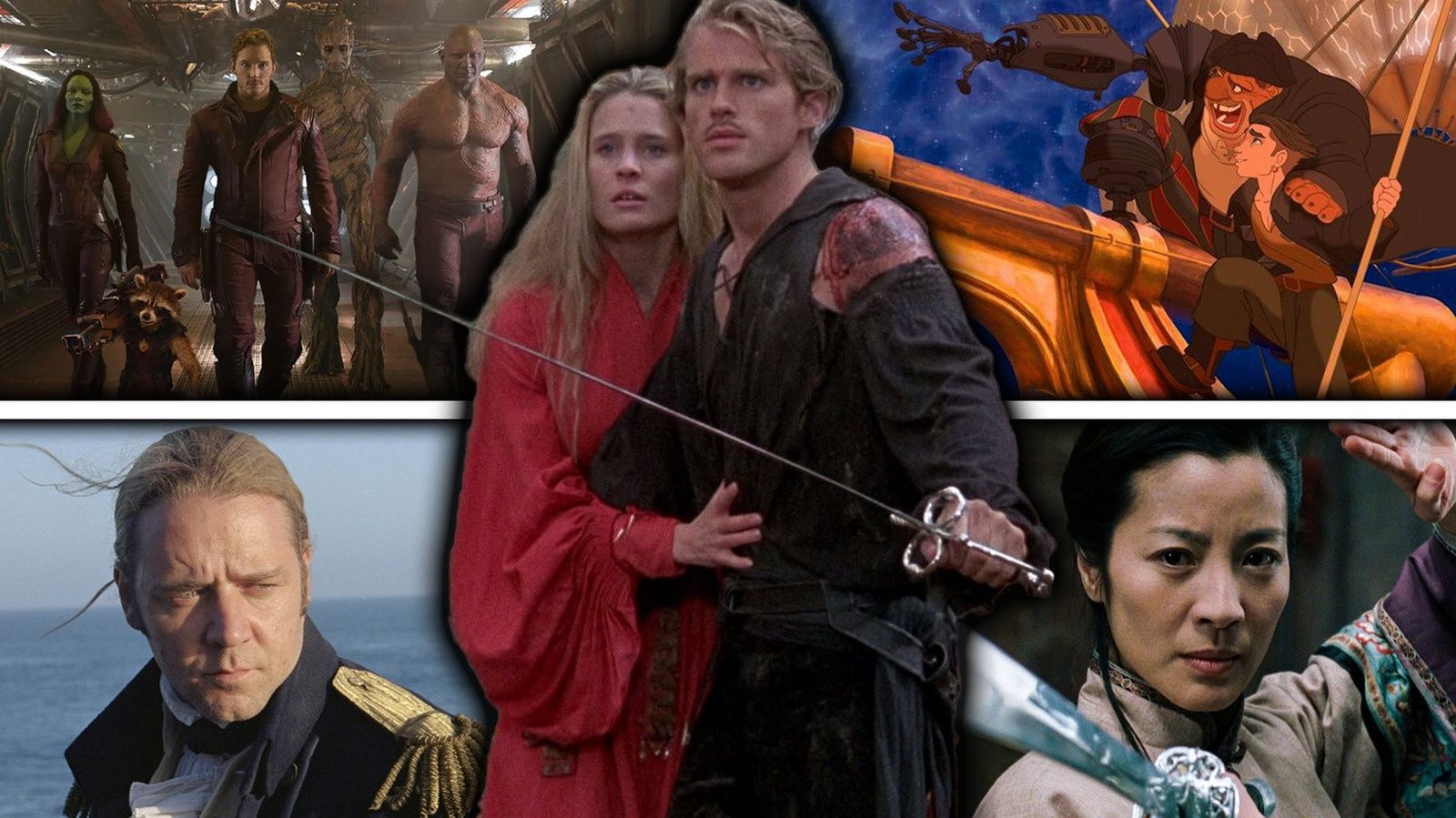
From Errol Flynn to Timothée Chalamet: The Evolution of the Swashbuckler on Screen

📷 Image source: slashfilm.com
Introduction: Defining the Swashbuckler
More Than Just Sword Fights
The term 'swashbuckler' conjures images of flashing blades, daring leaps, and heroes with a rakish grin. According to the ranking on slashfilm.com, the genre is a cinematic tradition built on a specific formula: a charismatic, morally-ambiguous hero, elaborate swordplay, a historical or pseudo-historical setting, and a clear sense of adventure and romance. It is a genre where style is as important as substance, and the hero's panache is their primary weapon.
This article, inspired by the list published on slashfilm.com on 2026-02-28T16:10:00+00:00, will not simply re-rank the 15 films cited. Instead, it will use that curated selection as a roadmap to explore the swashbuckler's journey across decades of film history. We will trace its evolution from the golden age of Hollywood to its modern reinterpretations, examining how the core tenets of the genre have been adapted, challenged, and preserved.
The Golden Age Foundation: Errol Flynn and the Archetype
Setting the Standard for Decades
Any discussion of swashbucklers must begin with Errol Flynn. His performances in the late 1930s and 1940s, particularly in 'The Adventures of Robin Hood' (1938), did not just define the genre—they became its blueprint. As noted by slashfilm.com, which ranks this film highly, Flynn's Robin Hood was the perfect swashbuckler: charming, rebellious, impeccably dressed, and possessing a seemingly effortless prowess with a sword. The film's vibrant Technicolor, grandiose sets, and rousing score established the aesthetic language for adventure.
This era, which also includes Flynn's 'Captain Blood' (1935) and 'The Sea Hawk' (1940), cemented key conventions. The heroes were often wronged aristocrats or commoners fighting corrupt nobility. The action was balletic and clean, with precise choreography that emphasized skill over brutality. The tone was overwhelmingly optimistic, a form of escapism that resonated deeply with audiences during the Great Depression and World War II, offering a world where good triumphed with style.
The Technicolor Spectacle: Mid-Century Flourish
Bigger Budgets and Broader Canvases
Following World War II, the swashbuckler evolved into a vehicle for grand, studio-produced spectacle. Films like 'Ivanhoe' (1952) and 'The Vikings' (1958), both featured on the slashfilm.com list, represented this shift. These productions boasted larger casts, expansive location shooting (or convincing studio recreations), and narratives drawn from classic literature or historical epics. The scope was international, covering crusades and Norse expeditions.
The heroes in this period, portrayed by actors like Robert Taylor and Kirk Douglas, often carried a heavier gravitas than Flynn's more playful rogues. The stakes felt higher, and the historical settings were treated with a degree of seriousness, even if historical accuracy was frequently sacrificed for drama. The swordplay remained central but was often integrated into large-scale battles, showcasing the increased budgets and technical capabilities of Hollywood studios in the 1950s.
The European Counterpoint: A Grittier Edge
Italy and France Offer a Different Duel
While Hollywood polished the genre, European cinema offered a grittier, more psychologically complex take. The slashfilm.com list acknowledges this with the inclusion of 'Le Bossu' ('On Guard') from 1997. This French film, based on a novel by Paul Féval, retains the elaborate plotting and swordplay but grounds them in a narrative of intense revenge and moral ambiguity. The production design feels more lived-in, the violence slightly more consequential.
This European sensibility provided a crucial alternative to the sometimes-sanitized Hollywood version. It proved that the core mechanics of the swashbuckler—the cloak-and-dagger politics, the masterful duels, the hidden identities—could support stories with darker emotional cores. This approach would later influence 21st-century revivals of the genre, which often sought to blend traditional adventure with more nuanced character motivation.
The Revisionist Wave: Deconstructing the Hero
Questioning the Swashbuckler's Code
The late 20th century saw a wave of films that actively deconstructed the swashbuckler mythos. 'The Princess Bride' (1987), ranked highly by slashfilm.com, is a prime example. It lovingly embraces every genre trope—the charming swordsman, the beautiful princess, the evil prince, Rodents of Unusual Size—while filtering them through a layer of postmodern wit and self-awareness. It celebrates the genre by simultaneously parodying it, affirming that the core appeal is timeless if viewed with a knowing smile.
A more radical deconstruction came with 'Rob Roy' (1995). While containing one of cinema's most brutally realistic sword duels, its hero, as slashfilm.com notes, is no grinning rogue. He is a struggling clan chief ground down by debt and betrayal. The film uses the historical framework of the swashbuckler to tell a grim story of honor, economics, and survival. This period demonstrated the genre's flexibility, showing it could be a vessel for meta-commentary or gritty historical drama.
The Disney Renaissance: Animation as Swashbuckler
Bringing Adventure to a New Generation
The early 1990s saw the swashbuckler successfully translated into the medium of animation. Disney's 'The Little Mermaid' (1989) and especially 'Aladdin' (1992) imported the genre's DNA into their musical frameworks. Aladdin himself is a classic swashbuckling hero: a 'diamond in the rough' street rat with charm, agility, and a good heart, navigating a fantastical version of the exoticized East common in older films.
These films proved the swashbuckler's core elements—the thrilling chases, the charismatic, resourceful hero, the romantic quest—were perfectly suited for animation's boundless visual possibilities. They served as a gateway for younger audiences to the genre, teaching its rhythms and pleasures through song and cartoon spectacle. The success of these films underscored the universal and ageless appeal of the adventurous, underdog protagonist, a cornerstone of the swashbuckler tradition.
The Millennial Blockbuster: Spectacle Reimagined
Pirates, Musketeers, and Digital Effects
The turn of the millennium brought the genre back to the forefront of global blockbuster cinema with two distinct approaches. 'The Mask of Zorro' (1998), featured on slashfilm.com, was a masterful throwback. It combined old-school stuntwork and sword choreography with a dual-generation story, passing the mantle from Anthony Hopkins's aging Zorro to Antonio Banderas's fiery successor. It respected the formula while updating its sensibilities for a modern audience.
Then, in 2003, 'Pirates of the Caribbean: The Curse of the Black Pearl' arrived, fundamentally altering the genre's chemistry. Johnny Depp's Captain Jack Sparrow was a swashbuckler deconstructed into a glorious, chaotic-neutral mess. The film fused supernatural horror with digital effects spectacle, yet its heart was the irreverent, rule-breaking spirit of the classic rogue. Its monumental success proved the genre could be a dominant global force when blended with high-concept fantasy and a star-making, character-driven performance.
The Modern Reinvention: Grit, Realism, and Legacy
New Century, New Challenges
Recent swashbucklers have grappled with modern demands for realism, complex morality, and inclusive storytelling. The 2011 'The Three Musketeers' adaptation, while flashy, struggled to find a consistent tone. In contrast, 2023's 'The Last Duel' used the framework of a judicial duel—the ultimate formalized swashbuckler conflict—to deliver a searing critique of medieval patriarchy and the subjectivity of truth. It weaponized the genre's structure for serious historical drama.
Perhaps the most telling modern entry is 2024's 'The Three Musketeers: Milady', part of a French two-part epic. According to slashfilm.com, which includes it in the ranking, it attempts to balance large-scale, traditional adventure with darker, more politically intricate storytelling and a focus on the often-marginalized female character of Milady de Winter. This indicates a current direction: retaining the grand adventure and choreography while deepening narrative and character complexity beyond the archetypes of the 1930s.
The Duel as Narrative Engine
How Swordplay Drives the Story
At the mechanical heart of every great swashbuckler is the duel. It is never mere action for action's sake; it is a narrative device. In classic films, duels are tests of character and skill, often the climax where the hero's righteousness is physically proven. The choreography communicates personality: Flynn's Robin Hood is fluid and mocking, while Basil Rathbone's Guy of Gisborne is rigid and furious.
In modern iterations, the duel's function has expanded. In 'Rob Roy', the final duel is a visceral, exhausting struggle for survival, stripping away any romanticism. In 'The Princess Bride', the duel between Westley and Inigo Montoya is a literal conversation fought with swords, revealing backstory and philosophy. The fight's purpose—revenge, justice, honor, survival, or even intellectual debate—defines the film's take on the genre. The swordfight is the genre's central metaphor, the moment where conflict becomes pure, kinetic expression.
Costume and Setting: The World of the Swashbuckler
Building the Escape
The visual world of the swashbuckler is a character in itself. The settings—whether the Sherwood Forest of 'Robin Hood', the taverns and palaces of Paris in 'The Three Musketeers', or the digital Caribbean of 'Pirates'—are designed for adventure. They feature high castle walls to scale, dense forests for ambushes, and grand halls for dramatic entrances. This geography facilitates the acrobatic, vertical action that defines the genre.
Equally crucial is costume. The hero's attire is a symbol of their identity. Zorro's black mask and cape create an iconic silhouette of mystery and rebellion. The Musketeers' cloaks and plumed hats signify their brotherhood and station. Captain Jack Sparrow's layered, tattered finery tells a story of faded grandeur and pragmatic chaos. These are not mere clothes; they are functional tools for disguise, dramatic flair, and character definition, allowing the hero to move through their world with a distinctive visual stamp.
The Global Legacy and Future Cuts
An Enduring Cinematic Language
The swashbuckler's influence extends far beyond its own genre. Its DNA is visible in the space operas of 'Star Wars', where lightsaber duels replace rapiers and the Force adds a mystical layer to the hero's journey. It is present in the superhero genre, where characters like Spider-Man swing through cities with acrobatic grace reminiscent of a pirate swinging from rigging. The charming, quippy hero facing overwhelming odds is a template used across action cinema.
Looking forward, the genre's future lies in continued reinvention. It must reconcile its romantic, often Eurocentric past with demands for authentic global perspectives and diverse heroes. The core appeal—the thrill of skillful combat, the triumph of wit over brute force, the joy of unapologetic adventure—remains potent. The challenge for future filmmakers, as evidenced by the evolving selections on lists like slashfilm.com's, is to weld that timeless appeal to stories that resonate with contemporary values, perhaps exploring untold historical adventures from around the world.
Perspektif Pembaca
The swashbuckler genre has navigated nearly a century of cinematic history, adapting to technological changes and shifting cultural tastes. Its evolution from straightforward heroic adventure to a vehicle for deconstruction, social commentary, and global spectacle reveals its remarkable flexibility.
Sudut Pandang Pembaca: The appeal of the swashbuckler often feels personal and generational. For our readers, which cinematic incarnation of the swashbuckler hero left the most lasting impression on you, and why? Was it the classic charm of a figure like Errol Flynn's Robin Hood, the chaotic energy of Johnny Depp's Jack Sparrow, or the gritty determination of Liam Neeson's Rob Roy? Share which interpretation best captured your imagination and defined what adventure means to you on the screen.
#Swashbuckler #FilmHistory #ErrolFlynn #AdventureMovies #Cinema


