

The Jacana's Secret: How Extraordinary Feet Defy Physics on Lily Pads

📷 Image source: earthsky.org
The Lily-Trotter's Paradox
A Bird That Seems to Walk on Water
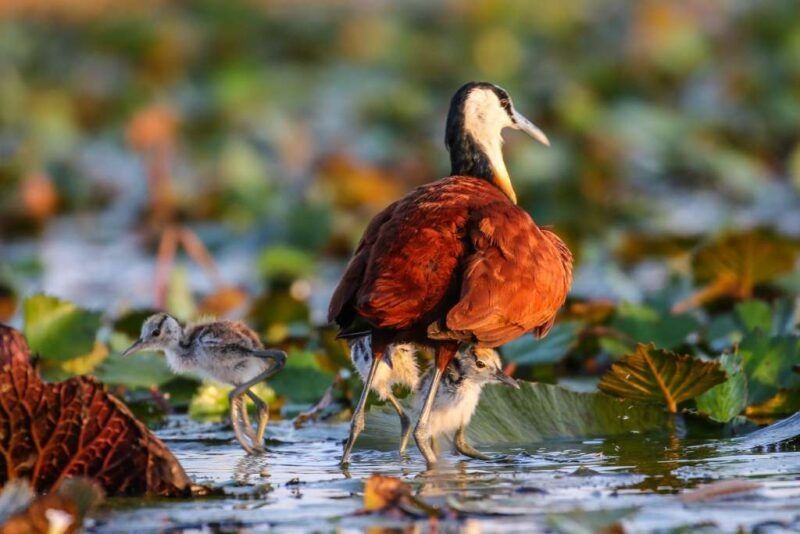
In the still waters of tropical wetlands across Africa, Asia, and the Americas, a bird performs a daily miracle that has captivated observers for centuries. The jacana, often called the 'lily-trotter' or 'Jesus bird,' glides across the surface of ponds and lakes with an impossible grace. Its party trick? Walking directly on the floating leaves of water lilies and other aquatic plants.
This isn't magic, but a spectacular feat of evolutionary engineering. According to earthsky.org, these birds possess a unique adaptation that allows them to exploit a niche few other creatures can touch: the unstable, green mat of vegetation covering calm waters. They live a life literally on the edge, balancing on a world that would sink beneath the weight of most animals their size.
Anatomy of a Floating Foot
The Astonishing Length of Jacana Toes
The secret lies entirely in their feet. Jacanas have evolved disproportionately long toes and claws, a feature so extreme it defines the bird. A report on earthsky.org highlights that these toes can measure up to 10 centimeters (nearly 4 inches) in length. To visualize that, imagine a bird roughly the size of a pigeon sporting toes as long as a human finger.
These aren't just elongated digits; they are precisely calibrated tools. The toes splay out widely, distributing the bird's weight over a much larger surface area. It's the biological equivalent of putting on a pair of snowshoes. By spreading its mass across several lily pads or a single large leaf, the jacana dramatically reduces the pressure it exerts, preventing it from breaking through the surface tension and sinking into the water below.
Physics on a Leaf
How Weight Distribution Defies Instability
The physics at play are a delicate balance between force, surface area, and buoyancy. A lily pad is not a solid platform; it flexes, dips, and can trap air underneath. The jacana's foot design masterfully navigates this instability. Each long toe acts as an independent point of contact, allowing the bird to adjust its stance dynamically as the vegetation shifts beneath it.
This adaptation is crucial for more than just walking. It allows the jacana to pause, forage, and even build nests in an environment free from many ground-based predators. The bird's entire lifestyle is a testament to this single, remarkable anatomical trait. Without those toes, its world—the vast, productive expanse of lily-covered water—would be completely inaccessible.
A Global Family of Specialists
Jacanas are not a singular oddity but a successful family of birds with eight different species found across the globe's tropical zones. From the Pheasant-tailed Jacana of Asia to the Wattled Jacana of South America, each has variations of the same fundamental design. This widespread yet specific distribution points to a highly successful evolutionary solution to a particular environmental challenge.
Their presence is often an indicator of a healthy wetland ecosystem, rich in the aquatic vegetation they depend on. Observing them requires patience and a keen eye on still backwaters, where their brown and chestnut plumage can blend surprisingly well with the floating vegetation, until they take a step and reveal their extraordinary locomotion.
Life on an Unsteady Nursery
Nesting and Breeding on Floating Vegetation
The jacana's reliance on lily pads extends to its most vulnerable life stage: reproduction. As reported by earthsky.org, these birds build their nests directly on floating vegetation. Imagine constructing a cradle on a raft of loosely connected leaves, subject to wind, waves, and the occasional hungry turtle. It's a precarious start to life.
This risky choice of real estate has driven another fascinating aspect of jacana society: role reversal. In most jacana species, the larger, more colorful females are polyandrous, mating with multiple males. After laying a clutch of eggs, she often leaves the male to handle the incubation and chick-rearing duties on that unstable nest. This allows her to produce more eggs with other partners, a strategy that makes evolutionary sense when the risk of losing an entire nest to a sinking or predation event is high.
The Foraging Advantage
So, what is the payoff for living such a high-wire act? Food. The mats of floating vegetation are rich hunting grounds teeming with insects, snails, and other invertebrates. While other wading birds stalk the muddy edges, jacanas have the entire inner surface of the lagoon to themselves. They use their long toes not just for walking, but for deftly turning over leaves and probing into the water to find hidden prey.
This exclusive access to an abundant food source with minimal competition is the ultimate reward for their specialized anatomy. It’s a classic evolutionary trade-off: a body highly specialized for one environment, granting a monopoly on its resources, but at the cost of being less adaptable to others.
Challenges of a Specialized Existence
Vulnerability in a Changing World
Such extreme specialization, however, comes with inherent risks. Jacanas are intimately tied to the health of specific freshwater habitats—shallow, vegetated wetlands. Pollution, drainage for agriculture, invasive plant species that choke out native lilies, and climate change-induced droughts pose direct threats to their floating world.
A bird that can walk on lily pads cannot easily adapt to a drained field or a polluted canal. Their survival is a barometer for the wetland ecosystems they inhabit. Conservation of these areas isn't just about protecting a curious bird; it's about preserving the complex, water-based food webs that countless species, including humans upstream, rely upon.
Beyond the Miracle
A Lesson in Evolutionary Ingenuity
The jacana’s 'walking on water' is more than a natural marvel; it's a profound lesson in adaptation. There was an ecological niche—a vast dinner table of insects on floating leaves—that was largely untapped because getting to it was so physically challenging. Evolution, through the slow process of natural selection, provided an elegant solution: radically elongated toes.
This bird breaks no physical rules; it simply exploits them with a unique biological tool. The next time you see a water lily pad, consider the invisible line of pressure it can bear, and the extraordinary bird whose entire life is built upon understanding that exact limit. As earthsky.org, 2026-02-02T13:45:38+00:00, illustrates, the jacana stands as a stunning reminder that nature's most astonishing feats are often the result of perfect, precise specialization.
#Jacana #Evolution #Wildlife #Biology #Wetlands


