

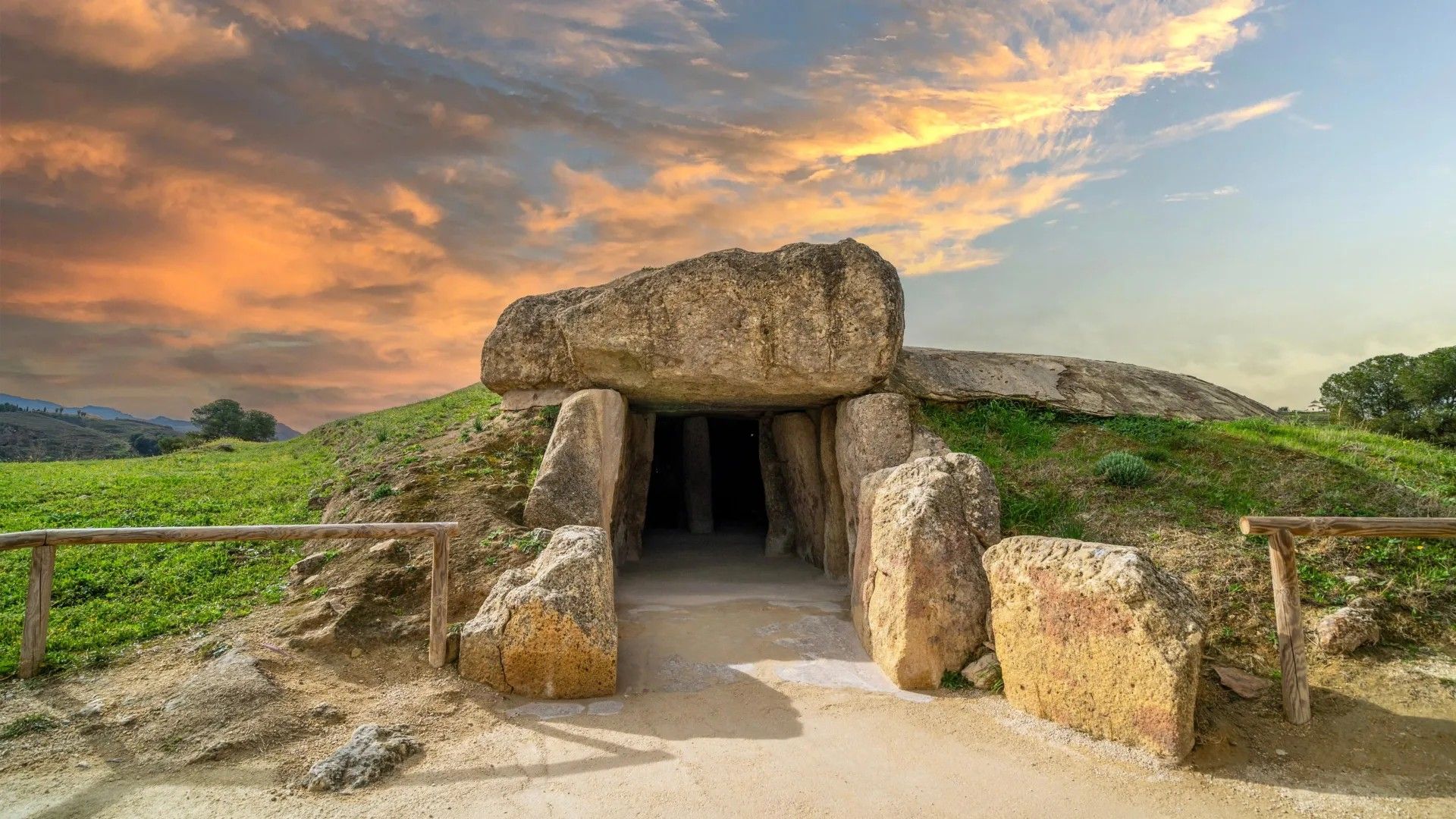
Image source: sciencedaily.com
Genetic Break in a Stone Age Tomb
A 5,000-year-old burial site near Paris reveals a dramatic population replacement.
A genetic study of 132 individuals buried in a large megalithic tomb near Bury, about 50 kilometers north of Paris, has uncovered evidence of a dramatic population collapse and replacement during the Stone Age. The findings, published in Nature Ecology & Evolution, show that the burial site was used during two separate periods, divided by a major population decline around 3000 BC.
DNA analysis revealed that the people buried before and after the collapse were not closely related, indicating that the original population largely disappeared and was replaced by newcomers. "We see a clear genetic break between the two periods," said Frederik Valeur Seersholm, assistant professor at the Globe Institute at the University of Copenhagen and one of the lead authors of the study. "The earlier group resembles Stone Age farming populations from northern France and Germany, while the later group shows strong genetic links to southern France and the Iberian Peninsula."
The results suggest that the local population shrank dramatically before new groups migrated north and settled in the region. This genetic discontinuity provides a rare glimpse into a prehistoric demographic upheaval that reshaped European societies.
Signs of Crisis: Disease and High Mortality
Ancient DNA reveals plague and other pathogens, but no single cause.
To investigate what may have caused the decline, the researchers used a DNA technique that examines all genetic material preserved in ancient bones. This allowed them to identify traces of several pathogens, including Yersinia pestis, the bacterium responsible for plague, and Borrelia recurrentis, which causes louse-borne relapsing fever.
Although plague was present, the researchers say it does not fully explain what happened. "We can confirm that plague was present, but the evidence does not support it as the sole cause of the population collapse," said Martin Sikora, associate professor at the University of Copenhagen and senior author of the study. "The decline was likely driven by a combination of disease, environmental stress, and other disruptive events."
The skeletal remains also point to an unusually severe crisis. Archaeologists found exceptionally high mortality during the earlier burial period, especially among children and young people. "The demographic pattern is a strong indicator of crisis," said Laure Salanova, research director at France's National Centre for Scientific Research (CNRS). The combination of genetic and skeletal evidence suggests a period of intense upheaval that wiped out local communities.
Social Transformation After the Collapse
Burial practices shifted from extended families to a single male lineage.
The genetic evidence also shows that the population replacement was accompanied by significant social changes. During the earlier period, the tomb contained multiple generations of the same extended families, suggesting closely connected communities that buried relatives together over time. In the later period, burials became much more selective and were dominated by a single male lineage, indicating a different social organization.
"This indicates that the population change was accompanied by a shift in how society was structured," Seersholm said. The transition from communal family burials to lineage-based selective interment reflects a fundamental reorganization of social hierarchies and kinship systems. Such changes likely had broad implications for land ownership, resource distribution, and cultural practices in the region.
A Clue to the End of Europe's Megalith Builders
The decline may explain why giant stone monuments stopped being built.
The findings add to growing evidence that the Neolithic population decline affected large parts of northern and western Europe, extending well beyond Scandinavia and northern Germany. The study may also help explain why the construction of megalithic tombs and other massive stone monuments came to an end across Europe during roughly the same period.
"We now see that the end of these monumental constructions coincides with the disappearance of the population that built them," Seersholm said. This suggests that the cultural tradition of megalith building was closely tied to the communities that vanished around 3000 BC. The newcomers who replaced them brought different customs and social structures, leading to the abandonment of these iconic structures.
For global readers, this research highlights how ancient DNA can unravel complex demographic events that shaped human history. The collapse of the megalith builders serves as a cautionary tale about the vulnerability of societies to combined pressures from disease, environmental change, and social disruption. It also underscores the importance of multidisciplinary approaches—combining genetics, archaeology, and paleopathology—to understand the past.
Based on reporting from sciencedaily.com

