

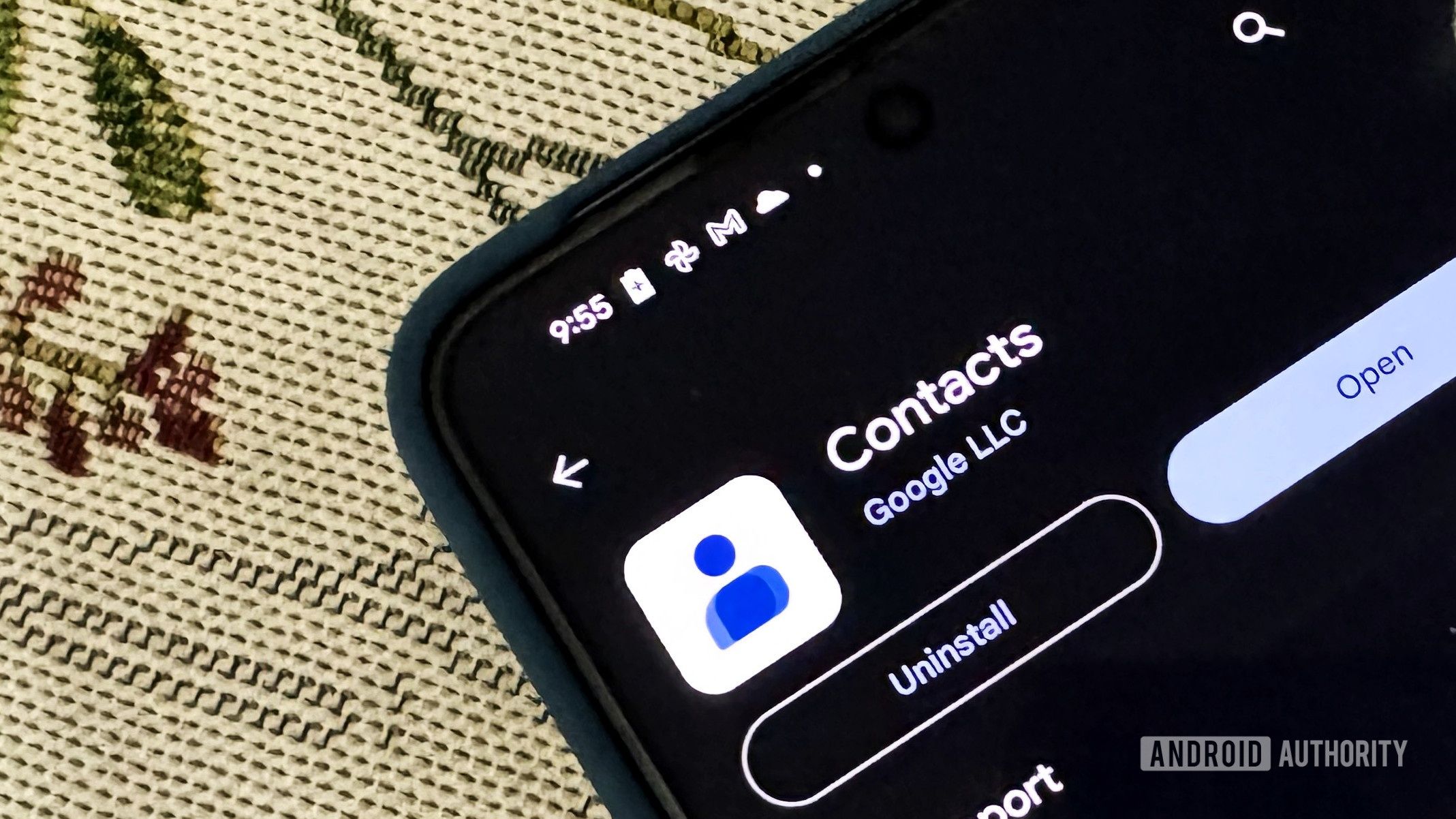
Android 17's New Contacts Picker: A Privacy-First Approach to Contact Sharing

📷 Image source: androidauthority.com
Introduction
The Privacy Revolution in Android Contact Management
Android 17 is reportedly developing a completely redesigned contacts picker that could fundamentally change how applications access your personal address book. According to AndroidAuthority.com's November 13, 2025 report, this new system aims to provide users with granular control over which contacts they share with third-party applications, addressing long-standing privacy concerns in the Android ecosystem.
The current Android contacts permission system operates on an all-or-nothing basis, forcing users to either grant full access to their entire address book or deny access completely. This binary approach has created significant privacy risks, as many applications request contact permissions that exceed their functional requirements. The new contacts picker represents Google's latest effort to implement privacy-by-design principles directly into the Android operating system.
The Current Contact Permission Problem
Why Android's All-or-Nothing Approach Fails Users
Under the existing Android permission model, when an application requests contact access, users face a difficult choice: either surrender their entire address book or lose the application's contact-related functionality entirely. This creates what privacy advocates call 'permission fatigue,' where users become desensitized to permission requests and often grant access without fully considering the implications. The system lacks nuance and fails to account for legitimate use cases where applications might only need access to specific contacts.
This blanket permission approach has led to numerous privacy scandals and data misuse cases over the years. Social media applications, gaming platforms, and even utility apps have been caught harvesting contact information for purposes beyond their stated functionality. Users have limited visibility into how their contact data is being used once permission is granted, and the current system provides no mechanism for partial or temporary access to contact information.
How the New Contacts Picker Works
Technical Implementation and User Interface Changes
The new contacts picker will function as an intermediary layer between applications and the device's contact database. Instead of granting blanket permission, users will see a dedicated interface where they can selectively choose which contacts to share with each application. This system-level picker will be mandatory for all applications requesting contact access, ensuring consistent user experience across the Android ecosystem.
From a technical perspective, the contacts picker will use Android's existing storage access framework but with enhanced privacy controls. Applications will receive access only to the specifically selected contacts rather than the entire address book. The implementation is expected to include search functionality, contact grouping options, and the ability to select multiple contacts simultaneously while maintaining a clean, intuitive user interface that doesn't compromise usability for privacy.
Privacy Benefits and User Control
Regaining Ownership of Personal Contact Data
The most significant advantage of the new contacts picker is the restoration of user control over personal data. Users can now share only the contacts relevant to an application's specific function—for example, sharing just family members with a family organizer app or only business contacts with a professional networking application. This minimizes data exposure and reduces the risk of unintended data sharing.
This granular control also addresses the problem of 'permission creep,' where applications initially request minimal permissions but later expand their data collection scope through updates. With the new system, even if an application's functionality changes, it cannot access additional contacts without explicit user approval through the picker interface. This creates a sustainable privacy framework that adapts to changing application requirements while maintaining user consent as the central governing principle.
Impact on Application Developers
Adapting to the New Privacy-Centric Paradigm
Application developers will need to redesign their contact integration strategies to work with the new selective permission model. While this may require initial development effort, it ultimately creates clearer boundaries for data access and could reduce developer liability for data misuse. Developers will need to be more intentional about why they need contact access and which specific contacts are necessary for their application's functionality.
The changes may also encourage developers to implement more efficient data handling practices, as they'll no longer receive entire contact databases by default. This could lead to performance improvements and reduced data storage requirements for applications that previously processed large contact lists. Developers will need to update their applications to properly interface with the new system-level picker and adjust their user onboarding flows to explain why contact access is needed.
Comparison with iOS Contact Management
How Android's Approach Differs from Apple's System
Apple's iOS has offered selective contact sharing through its contact picker interface for several years, providing users with similar granular control over which contacts applications can access. However, Android's implementation appears to be more deeply integrated at the system level and may offer additional features not currently available in iOS. The timing of this development suggests Google is responding to increasing consumer demand for privacy features comparable to those offered by Apple.
Unlike iOS, where the contact picker implementation can vary between applications, Android's system-level approach ensures consistency across all applications. This standardization benefits users by providing a familiar interface regardless of which application they're using. It also simplifies compliance for developers who need to adhere to privacy regulations across different markets and jurisdictions.
Global Privacy Regulation Compliance
Aligning with International Data Protection Standards
The new contacts picker helps Android applications comply with stringent privacy regulations like Europe's General Data Protection Regulation (GDPR) and California's Consumer Privacy Act (CCPA). These regulations require that data collection be limited to what is strictly necessary for the intended purpose—a principle known as data minimization. By enabling selective contact sharing, Android 17 provides built-in tools that help applications adhere to these legal requirements.
This proactive approach to privacy compliance could reduce the regulatory burden on application developers, particularly smaller developers who may lack extensive legal resources. The system provides a standardized method for obtaining valid user consent for specific data access, which is a core requirement under most modern privacy frameworks. This could potentially reduce privacy-related litigation and regulatory penalties for applications that properly implement the new contact sharing system.
Potential Limitations and Challenges
Balancing Privacy with Functionality
While the privacy benefits are significant, the new system may introduce usability challenges for applications that legitimately require access to large portions of a user's contact list. Productivity applications that need to sync entire business contact databases or social platforms that help users discover connections across their network might face friction if users must manually select hundreds of contacts. The interface design will need to accommodate both simple selections (a few contacts) and complex selections (many contacts) efficiently.
Another potential challenge involves dynamic contact scenarios where applications need to access newly added contacts automatically. Under the new system, users would need to revisit the contact picker each time they want to share additional contacts, which could become cumbersome for frequently updated contact lists. The implementation details regarding how the system handles contact updates and whether it supports any form of automated synchronization for specific use cases remain unclear based on the available information.
Adoption Timeline and Backward Compatibility
When Users Can Expect These Changes
According to AndroidAuthority.com's reporting from November 13, 2025, the new contacts picker is currently in development for Android 17, which suggests a potential release timeline aligned with Android's typical annual update cycle. However, the exact release date and availability across device manufacturers remains uncertain. Google typically announces major Android updates at its I/O developer conference, with final releases following several months later.
The implementation will likely include backward compatibility measures to ensure applications built for older Android versions continue to function. Google typically provides compatibility libraries and guidance for developers to transition their applications smoothly. The phased rollout approach common with Android updates means that widespread adoption across the diverse Android device ecosystem may take considerable time, potentially extending into 2026 or beyond for full market penetration.
Broader Implications for Android Privacy
Setting a New Standard for Mobile Data Protection
The contacts picker represents part of a broader trend in Android's evolution toward more granular privacy controls. In recent years, Android has introduced scoped storage, one-time permissions, and improved transparency around data access. The contacts picker continues this trajectory, suggesting that Google is systematically addressing each major permission category with enhanced privacy protections.
This development may signal future changes to other sensitive permission areas, such as location access, camera permissions, and microphone access. If successful, the contacts picker implementation could serve as a template for how Android handles other types of selective data sharing. The approach demonstrates a fundamental shift from treating permissions as application-level grants to treating them as user-controlled sharing decisions with clear boundaries and revocability.
User Education and Transition Strategy
Preparing Users for the New Contact Sharing Experience
Successful adoption of the new contacts picker will require effective user education about the changed permission model. Users accustomed to the all-or-nothing approach may initially find the selective sharing process unfamiliar or confusing. Google will likely need to implement clear onboarding experiences and educational prompts to help users understand both the benefits and operation of the new system.
The transition period may involve temporary compatibility measures to ensure a smooth user experience. Applications that haven't been updated to support the new system might continue using the legacy permission model temporarily, though this could create inconsistency in the user experience. Clear communication about which applications support the new selective sharing and which still require full access will be crucial during the transition phase to maintain user trust and comprehension.
Industry Response and Expert Opinions
Initial Reactions from Privacy Advocates and Developers
While specific expert reactions to this particular feature weren't detailed in the source material, privacy advocates have long criticized Android's current contact permission system as overly permissive. The move toward selective sharing aligns with recommendations from digital rights organizations that have advocated for more granular control over personal data. The development community's response will likely be mixed, with privacy-focused developers welcoming the changes while others may express concerns about implementation complexity.
The technology industry has been gradually shifting toward privacy-enhancing features across all platforms, driven by both regulatory pressure and consumer demand. Android's move to implement selective contact sharing places it more in line with industry best practices and consumer expectations. How other mobile platforms respond to this development and whether they introduce similar or enhanced features in response remains to be seen as the implementation progresses toward public release.
Perspektif Pembaca
Sharing Your Experience with Contact Permissions
How has your experience been with Android's current contact permission system? Have you ever denied an application access to your contacts because you were uncomfortable with the all-or-nothing approach? Share your perspective on whether selective contact sharing would change how you interact with applications that request access to your address book.
What types of applications do you believe genuinely need access to your entire contact list versus those that should only access specific contacts? How do you currently decide which applications to grant contact permissions to, and would a selective sharing system make those decisions easier or more complicated in your daily smartphone usage?
#Android17 #Privacy #ContactSharing #TechNews #Google


