

Beyond the Rainbow: Unlocking the Secrets of the Electromagnetic Spectrum

📷 Image source: earthsky.org
The Invisible Universe at Our Fingertips
Why what we see is just a fraction of reality
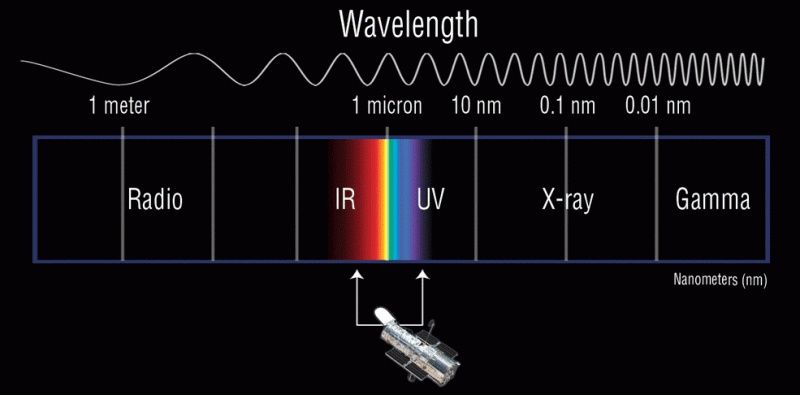
When you look up at a starry night sky, you're witnessing only a tiny sliver of the cosmic drama unfolding around us. According to earthsky.org, the visible light our eyes detect represents less than 0.0035% of the entire electromagnetic spectrum. This narrow band of rainbow colors—from violet to red—is just one small window into a much broader universe of invisible energy that shapes everything from medical imaging to cosmic discoveries.
The electromagnetic spectrum encompasses all possible frequencies of electromagnetic radiation, from the longest radio waves to the most energetic gamma rays. What makes this spectrum so fundamental? Every type of light, whether visible or invisible, travels at the same speed—approximately 299,792 kilometers per second through the vacuum of space. This constant speed, combined with varying wavelengths and frequencies, creates the diverse phenomena we observe and utilize in modern technology.
Radio Waves: The Gentle Giants
Long wavelengths that connect our world
At the longest wavelength end of the spectrum, radio waves can stretch from millimeters to hundreds of kilometers—longer than football fields or even entire cities. These gentle giants of the electromagnetic world carry everything from your favorite music stations to satellite communications that circle the globe. According to earthsky.org, radio waves have the lowest frequencies in the spectrum, typically below 300 gigahertz.
What makes radio waves particularly useful for communication? Their ability to travel long distances and penetrate through clouds, rain, and even some buildings makes them ideal for broadcasting. Radio telescopes on Earth capture these waves from distant galaxies, allowing astronomers to study cosmic phenomena that would otherwise remain hidden from optical telescopes. The Very Large Array in New Mexico, for instance, uses 27 radio antennas to create detailed images of celestial objects by detecting these invisible waves.
Microwave Mysteries Unveiled
More than just kitchen appliances
Moving up the spectrum, microwaves occupy the range between radio waves and infrared light. While most people associate them with reheating leftovers, their scientific applications prove far more profound. According to earthsky.org, microwave radiation plays a crucial role in astronomy, particularly through the cosmic microwave background—the afterglow of the Big Bang that still permeates the universe.
How do scientists use microwaves to understand cosmic history? The Planck space telescope, operated by the European Space Agency, mapped minute temperature variations in the cosmic microwave background with extraordinary precision. These temperature fluctuations, mere millionths of a degree different from the average 2.7 Kelvin (-270.45°C), provide a snapshot of the universe when it was just 380,000 years old. This relic radiation serves as compelling evidence for the Big Bang theory and helps cosmologists understand the universe's composition and evolution.
Infrared: The Heat We Feel
Beyond night vision goggles
Infrared radiation, often described as thermal radiation, occupies the portion of the spectrum just beyond visible red light. According to earthsky.org, everything with temperature emits infrared radiation—from the warmth of human skin to distant stars being born in cosmic dust clouds. The James Webb Space Telescope, NASA's revolutionary observatory, primarily observes in infrared wavelengths to peer through cosmic dust and study the earliest galaxies.
Why is infrared astronomy so transformative for our understanding of the cosmos? Dust particles that block visible light are largely transparent to infrared radiation. This allows astronomers to study regions of active star formation, planetary systems in the making, and the central regions of our Milky Way galaxy—all obscured at optical wavelengths. Infrared sensors in weather satellites also track global temperature patterns and help meteorologists predict storm development by monitoring heat distribution in Earth's atmosphere.
The Narrow Window of Visible Light
Why evolution gave us these particular wavelengths
The visible spectrum represents an astonishingly small portion of the electromagnetic continuum, spanning wavelengths from approximately 380 to 700 nanometers. According to earthsky.org, this specific range corresponds to the peak emission of our sun and the wavelengths that travel most effectively through Earth's atmosphere. Evolution likely favored detection of these particular wavelengths because they provide the most reliable information about our environment during daylight hours.
What makes visible light so special for biological organisms? The chemical bonds in organic molecules respond particularly well to these energies, making vision possible through photochemical reactions in retinal cells. Different colors correspond to specific wavelengths: violet light waves measure about 380-450 nanometers, while red light extends to approximately 620-700 nanometers. This narrow band allows us to distinguish approximately 7 million different colors, providing rich visual information about object properties, textures, and distances.
Ultraviolet: The Energetic Borderland
From vitamin D to DNA damage
Beyond violet light lies ultraviolet radiation, with wavelengths measuring 10 to 400 nanometers. According to earthsky.org, UV radiation carries enough energy to initiate chemical reactions, including both beneficial processes like vitamin D production in human skin and harmful effects like DNA damage that can lead to skin cancer. The Earth's ozone layer absorbs most of the sun's harmful UV-C and UV-B radiation, protecting life on the surface.
How do astronomers use ultraviolet observations? NASA's Hubble Space Telescope includes ultraviolet-sensitive instruments that study hot, young stars which emit strongly in this portion of the spectrum. These observations help scientists understand stellar evolution and the chemical enrichment of galaxies. Meanwhile, medical and industrial applications use controlled UV exposure for sterilization, fluorescence analysis, and even currency verification through hidden markings that only appear under ultraviolet light.
X-rays: Seeing Through Solid Matter
Medical miracles and cosmic phenomena
X-rays occupy the high-energy portion of the spectrum with wavelengths measuring approximately 0.01 to 10 nanometers. According to earthsky.org, their ability to penetrate soft tissues while being absorbed by denser materials like bones makes them invaluable for medical imaging. In astronomy, X-ray telescopes reveal some of the most violent events in the universe, including matter falling into black holes and the remnants of supernova explosions.
What cosmic phenomena produce X-rays? When material accelerates to extreme velocities or heats to millions of degrees, it emits X-ray radiation. NASA's Chandra X-ray Observatory has captured spectacular images of galaxy clusters where hot gas glows in X-rays, helping astronomers measure the mass distribution of these enormous structures. In medicine, computed tomography (CT) scans use rotating X-ray sources to create detailed cross-sectional images of the human body, revolutionizing diagnostic capabilities since their development in the 1970s.
Gamma Rays: The Universe's Most Violent Messengers
Where physics meets the extreme
At the most energetic end of the spectrum, gamma rays possess wavelengths shorter than 0.01 nanometers—smaller than atomic nuclei. According to earthsky.org, these photons carry millions to billions of times more energy than visible light photons, making them the signature of the universe's most cataclysmic events. Gamma-ray bursts, first detected accidentally by military satellites during the Cold War, represent the most energetic explosions since the Big Bang.
What natural processes create gamma radiation? The annihilation of matter with antimatter, the decay of radioactive elements, and particles accelerated by supernova remnants or black hole jets all produce gamma rays. The Fermi Gamma-ray Space Telescope monitors the entire sky for these high-energy events, mapping pulsars, active galactic nuclei, and even mysterious gamma-ray sources that defy current explanation. On Earth, gamma radiation finds applications in cancer treatment through targeted radiation therapy and in industrial imaging for inspecting dense materials.
The Technological Revolution Through Spectral Understanding
How mastering the spectrum transformed human civilization
Humanity's growing understanding of the electromagnetic spectrum has catalyzed multiple technological revolutions. According to earthsky.org, each portion of the spectrum has enabled specific applications that have transformed how we communicate, explore, and understand our world. From Guglielmo Marconi's first transatlantic radio transmission to the development of microwave ovens and medical MRI scanners, our ability to harness different wavelengths has defined technological progress.
What does the future hold for spectral technology? Emerging applications include terahertz imaging for security screening, improved radio astronomy arrays with unprecedented resolution, and advanced satellite communication networks that will connect remote areas of the planet. As our understanding deepens, new portions of the spectrum may reveal currently unimaginable applications, continuing the pattern of discovery that began when Isaac Newton first used a prism to separate sunlight into its constituent colors over three centuries ago.
#ElectromagneticSpectrum #Astronomy #Science #RadioWaves #CosmicDiscovery


