

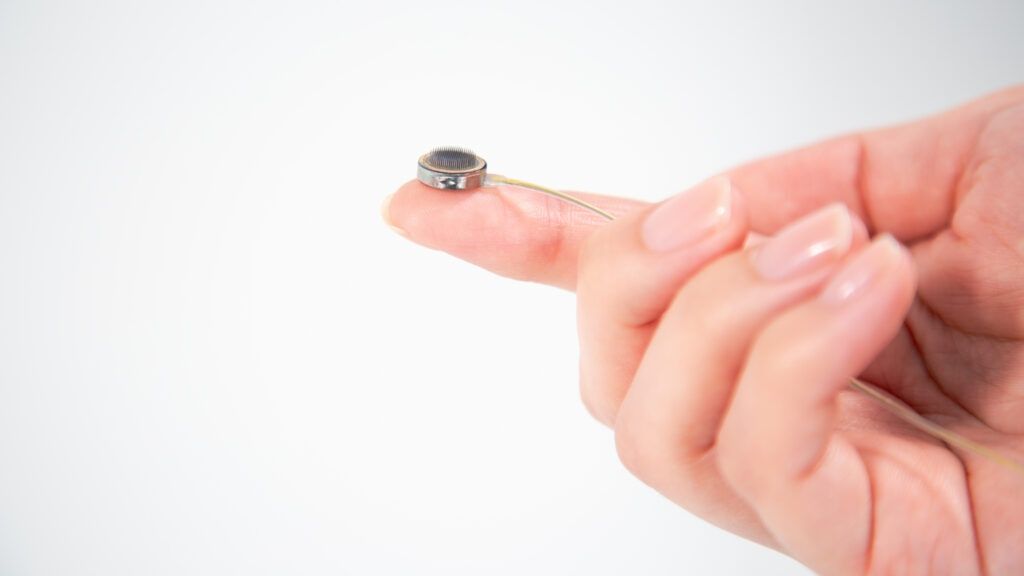
FDA Greenlights Groundbreaking Brain Implant Trial to Restore Speech

📷 Image source: statnews.com
Regulatory Breakthrough for Speech Neurotechnology
Paradromics receives FDA approval for first-in-human clinical trial
The U.S. Food and Drug Administration has approved Paradromics' application to begin human testing of its innovative brain-computer interface designed to restore communication abilities. This regulatory milestone, reported by statnews.com on November 20, 2025, marks a significant advancement in the field of neurotechnology and could potentially help people who have lost their ability to speak due to neurological conditions or injuries.
The approval represents one of the most anticipated developments in the brain-computer interface space, coming after years of preclinical research and development. Paradromics, a Texas-based neurotechnology company, now has the regulatory clearance to implant its device in human participants for the first time, moving beyond animal testing that previously demonstrated the technology's potential.
Technical Specifications of the Conductor BCI
High-density electrode array designed for speech restoration
According to the STAT News report, Paradromics' device, called the Conductor, features an impressive technical specification that sets it apart from existing brain-computer interfaces. The system utilizes a dense array of more than 1,600 microscopic electrodes that interface directly with the brain's surface. This high channel count enables the device to capture neural signals with unprecedented resolution and clarity.
The Conductor system is specifically engineered to decode speech-related neural activity from the brain's motor cortex, where signals controlling speech muscles originate. Unlike some other BCI approaches that use fewer electrodes or different recording methods, Paradromics' technology aims to capture the complex patterns of neural firing that correspond to attempted speech movements, even when patients cannot physically produce sound.
Clinical Trial Design and Participant Selection
Initial focus on patients with severe communication impairments
The FDA-approved trial will initially enroll a small number of participants who have lost their ability to speak due to conditions such as amyotrophic lateral sclerosis (ALS), brainstem stroke, or other neurological disorders that affect speech production. These individuals typically retain the cognitive ability to form words and sentences but lack the physical means to express them through normal speech pathways.
Clinical investigators will implant the Conductor device directly onto the surface of participants' brains in regions known to be involved in speech production. Following surgical implantation and recovery, researchers will work with participants to train the system to interpret their neural signals and translate them into computer-generated speech or text output. The trial design focuses on safety and initial efficacy measurements, with researchers monitoring participants closely for adverse events and tracking their communication accuracy improvements over time.
Neuroscientific Foundation of Speech Decoding
Building on decades of brain mapping research
The scientific approach behind Paradromics' technology draws from extensive research into how the brain controls speech production. Studies conducted over several decades have mapped the specific areas of the motor cortex responsible for coordinating the complex movements of the tongue, lips, jaw, and larynx during speech. When people think about speaking, even without producing audible sound, these brain regions generate distinctive patterns of electrical activity.
Research published in various scientific journals has demonstrated that these neural patterns contain enough information to reconstruct intended speech. The challenge has been developing technology sensitive enough to detect these signals at sufficient resolution and algorithms powerful enough to decode them accurately. Paradromics' approach represents a technological leap in both electrode density and signal processing capabilities compared to earlier systems.
Comparative Landscape of Speech BCIs
How Paradromics' approach differs from existing technologies
Several other research groups and companies are developing brain-computer interfaces for communication restoration, but Paradromics' technical approach distinguishes itself in key aspects. Unlike some systems that use non-invasive electrodes placed on the scalp, the Conductor requires surgical implantation but offers significantly higher signal quality. Other implanted systems typically feature far fewer electrodes—often numbering in the dozens or low hundreds rather than thousands.
The high channel count of Paradromics' device theoretically enables more detailed neural recording, which could translate to faster and more accurate speech decoding. However, this increased complexity also presents engineering challenges related to data transmission, power management, and long-term device stability. The clinical trial will provide crucial data on whether these technical advantages translate to meaningful communication benefits for participants.
Potential Impact on Quality of Life
Restoring communication as a fundamental human need
For individuals who have lost the ability to speak, the psychological and social consequences can be devastating. The inability to communicate thoughts, needs, and emotions can lead to social isolation, depression, and decreased quality of life. Current assistive communication technologies often rely on eye tracking, head movements, or other physical capabilities that may deteriorate as neurological conditions progress.
A brain-computer interface that directly translates thought to speech could provide a more natural and efficient communication method for people with severe speech impairments. Rather than laboriously spelling out words letter by letter using alternative access methods, users might eventually be able to communicate at near-normal speech rates. This could fundamentally transform social interactions, medical decision-making, and personal autonomy for those affected by communication disorders.
Safety Considerations and Risk Management
Balancing potential benefits against surgical risks
Any brain implant procedure carries inherent risks, including surgical complications, infection, and potential damage to brain tissue. The FDA approval indicates that regulators have determined the potential benefits of Paradromics' device justify these risks for the initial participant population—individuals with severe communication impairments who have limited alternative options.
The trial protocol includes rigorous safety monitoring and stopping rules if unexpected adverse events occur. Researchers will track participants for signs of inflammation, device failure, or other complications over the study period. Long-term considerations include the stability of the brain-device interface over time and whether the body's natural healing processes might gradually degrade signal quality, a challenge that has affected other implanted neural devices.
Future Directions and Broader Applications
Beyond speech restoration to other neurological conditions
While the initial focus is on speech restoration, the underlying technology could potentially be adapted for other applications if proven successful. The same basic approach of reading detailed neural signals from the motor cortex might eventually help restore control of arm and hand movements for people with paralysis. The high-density recording capability might also provide new insights into basic brain function and neurological disorders.
The success of this trial could accelerate the entire field of clinical brain-computer interfaces, potentially leading to approved treatments within the coming years rather than decades. However, significant challenges remain in making such technology widely accessible, including reducing costs, simplifying implantation procedures, and ensuring long-term reliability. The Paradromics trial represents an important step toward addressing these challenges while maintaining focus on the immediate goal of restoring communication.
Regulatory Pathway and Commercialization Timeline
From clinical trial to potential clinical application
The FDA approval for human testing places Paradromics' device in the Investigational Device Exemption category, meaning it can be used in clinical studies but is not yet available for commercial use. The company will need to demonstrate both safety and effectiveness through rigorous clinical testing before seeking approval for broader clinical use.
Based on typical regulatory pathways for novel neural devices, successful initial trials would likely be followed by larger, multi-center studies involving more participants. The complete path from first-in-human testing to commercially available treatment typically takes several years, assuming positive results at each stage. The statnews.com report indicates that Paradromics has secured substantial funding to support this development pathway, though specific commercialization timelines remain dependent on trial outcomes and subsequent regulatory reviews.
#BrainImplant #Neurotechnology #FDA #SpeechRestoration #MedicalInnovation


