

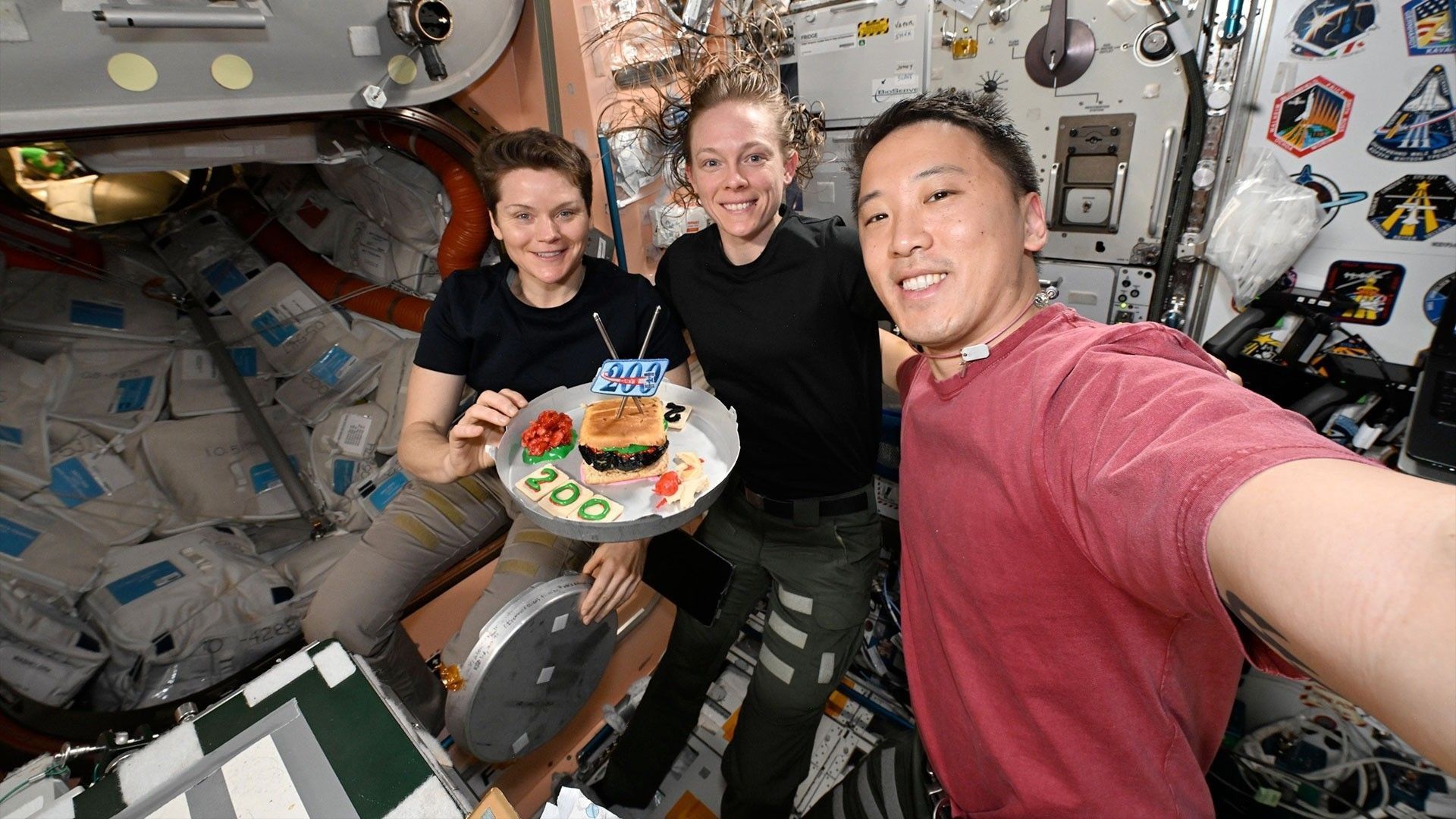
Life Aboard the ISS Continues Uninterrupted Despite Government Shutdown on Earth

📷 Image source: cdn.mos.cms.futurecdn.net
Orbital Operations Proceed Unaffected
How daily life 400 kilometers above Earth continues normally
While political gridlock paralyzes Washington, 400 kilometers above Earth's surface, the International Space Station hums with uninterrupted activity. According to space.com, the crew of seven astronauts continues their regular schedule of scientific experiments, maintenance tasks, and exercise routines completely unaffected by the government shutdown occurring below. The station's operations remain fully funded through existing international agreements and contingency plans that ensure continuous support regardless of terrestrial political disputes.
NASA's Johnson Space Center mission control continues normal operations with staff deemed essential for crew safety and station operations. 'The astronauts are continuing their work as planned,' reports space.com, indicating that the station's $150 billion laboratory remains fully functional. With solar arrays providing power and life support systems maintaining the station's environment, the orbital outpost operates as a self-sufficient scientific facility independent of Earth's political cycles.
Critical Scientific Research Continues Unabated
Ongoing experiments that can't wait for political resolutions
The space station serves as a unique microgravity laboratory where time-sensitive research continues without interruption. According to space.com, current experiments include materials science investigations, biological studies on cell growth, and Earth observation monitoring that provides crucial data about our planet's changing climate. These investigations represent years of preparation and cannot simply be paused when government funding becomes contentious on Earth.
One particularly time-sensitive experiment involves monitoring how prolonged spaceflight affects the human body, essential data for future missions to the Moon and Mars. The astronauts themselves serve as test subjects for these studies, with regular medical checkups and sample collections that must continue on schedule regardless of political developments 400 kilometers below. The continuity of this research ensures valuable data isn't lost to political squabbles back on Earth.
International Partnerships Ensure Continuity
How global cooperation maintains station operations
The International Space Station's truly global nature provides operational stability during national political challenges. According to space.com, partners including Roscosmos (Russia), ESA (Europe), JAXA (Japan), and CSA (Canada) continue their normal contributions to station operations. These international agencies maintain their own control centers and supply chains, creating a resilient network that can withstand temporary disruptions from any single partner nation.
Cargo missions from multiple international providers continue on schedule, ensuring the station remains stocked with supplies. The collaborative framework established through intergovernmental agreements means that even if one nation experiences political turmoil, the others can maintain essential operations. This distributed responsibility model has proven effective during previous government shutdowns, with all partners understanding that human spaceflight requires consistent support regardless of terrestrial politics.
Daily Life in Microgravity Continues Normally
The unchanged rhythm of existence aboard the orbital laboratory
For the astronauts living aboard the station, daily routines proceed exactly as planned. According to space.com, the crew follows a carefully structured schedule that includes two hours of daily exercise to combat muscle and bone density loss in microgravity. Their days are filled with scientific research, maintenance tasks, and communication with ground control teams that continue operating despite the shutdown.
The crew's schedule includes regular meals, sleep periods, and even leisure time for looking at Earth or communicating with family members. These human elements of space station life remain completely unaffected by political developments on the ground. The psychological support systems that help astronauts cope with isolation and distance from Earth continue operating normally, ensuring the crew's mental wellbeing during their months-long mission.
Station Maintenance Cannot Wait for Politics
Essential systems requiring continuous attention
The space station's complex systems demand regular maintenance that cannot be deferred for political reasons. According to space.com, astronauts continue monitoring and servicing critical systems including life support, power generation, and thermal control. These systems keep the station habitable and must be maintained regardless of what's happening in Washington.
Recent maintenance tasks have included replacing components in the station's carbon dioxide removal system and troubleshooting minor issues with exercise equipment. The microgravity environment presents unique challenges for equipment longevity, requiring vigilant monitoring and prompt repairs when necessary. With the station representing a $150 billion investment and the only permanent human presence in space, these maintenance activities continue with undiminished priority during the government shutdown.
Earth Observation Activities Provide Uninterrupted Data
Continuous monitoring of our planet from orbit
One of the station's most valuable functions continues without interruption: observing Earth. According to space.com, astronauts regularly photograph natural disasters, environmental changes, and urban development patterns. These observations provide crucial data for scientists studying climate change, disaster response coordination, and ecological monitoring.
The station's unique orbit takes it over 90 percent of Earth's populated areas, providing perspectives impossible from traditional satellites. During their approximately 16 daily orbits, crew members capture images of hurricanes, wildfires, and other significant events that help emergency responders on the ground. This continuous monitoring service operates independently of political developments, delivering valuable environmental data to researchers worldwide.
Educational Outreach Continues Orbiting Classroom
Inspiring future generations despite terrestrial challenges
The space station's role as an orbiting classroom continues unabated during the government shutdown. According to space.com, astronauts maintain their schedule of educational activities, including live video conferences with students and demonstrations of physics principles in microgravity. These outreach efforts inspire future scientists and engineers, representing one of NASA's most valuable long-term investments.
Recent educational activities have included demonstrations of fluid dynamics in weightlessness and explanations of how plants grow in space. These sessions reach thousands of students worldwide, many of whom may never realize that the government supporting these activities is currently shut down. The continuity of these educational programs demonstrates the station's value beyond immediate scientific returns, serving as a beacon of international cooperation and human achievement.
Preparations for Future Missions Move Forward
Building toward Moon and Mars despite political uncertainty
Research conducted aboard the station directly supports future exploration goals that continue progressing regardless of political developments on Earth. According to space.com, current investigations include testing new life support technologies, studying radiation protection methods, and developing improved exercise protocols—all critical for future missions to the Moon and eventually Mars.
The knowledge gained from continuous human presence in space provides irreplaceable data for mission planners designing future long-duration expeditions. While political debates rage about space exploration budgets and timelines, the actual work of preparing humans for these missions continues uninterrupted 400 kilometers above Earth's surface. This disconnect between political processes and practical space operations highlights how once infrastructure is established in space, it develops a momentum of its own that transcends terrestrial political cycles.
The Unbreakable Chain of Human Space Presence
Two decades of continuous occupation weathers another political storm
The International Space Station has maintained continuous human presence for over twenty years, surviving multiple government shutdowns and political transitions without interruption. According to space.com, this resilience stems from careful planning and international cooperation that prioritizes human safety and scientific investment above political considerations. The station represents one of humanity's most significant engineering achievements precisely because it can operate independently of the inevitable political fluctuations that occur on Earth.
As one astronaut reportedly commented during a previous shutdown, 'We have a job to do up here regardless of what's happening down there.' This perspective captures the station's role as both a scientific facility and a symbol of what humanity can achieve when we focus on common goals rather than political differences. While politicians debate funding back on Earth, the station continues its silent orbit, a testament to human ingenuity and international cooperation that transcends terrestrial disputes.
#ISS #SpaceStation #NASA #SpaceResearch #GovernmentShutdown #InternationalCooperation


