

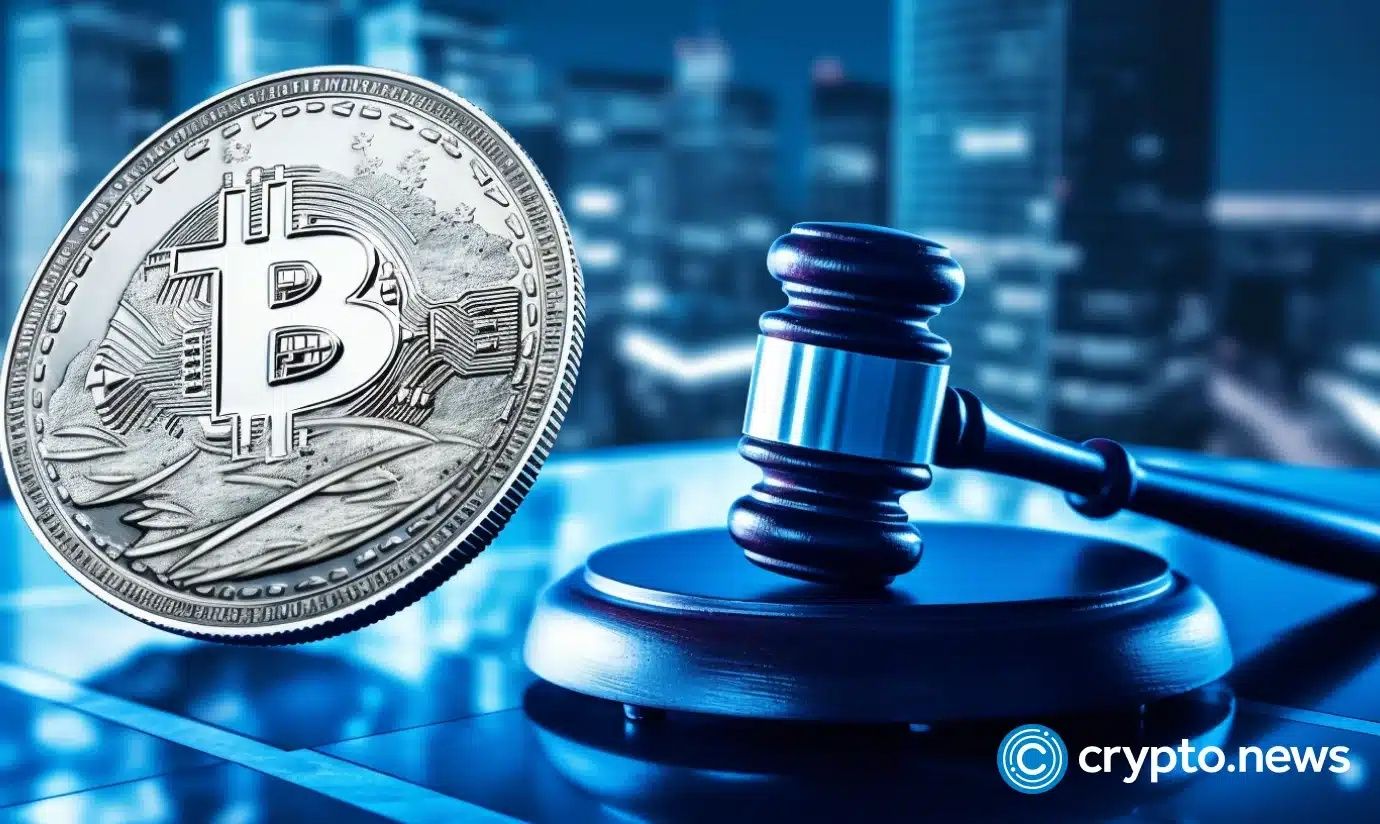
The Bitcoin-to-Silver Ratio: A New Gauge for Global Market Sentiment

📷 Image source: crypto.news
Introduction: A New Metric Emerges
Beyond Traditional Indicators
Financial markets are constantly searching for reliable signals amidst the noise. A new metric, the ratio between the price of Bitcoin and the price of silver, is gaining attention as a potential barometer for shifting global risk appetite. According to crypto.news, analysts are observing this cross-asset correlation to gauge whether investors are leaning towards high-risk, high-growth assets or seeking traditional safe havens.
The ratio itself is a simple calculation: the price of one Bitcoin divided by the price of one troy ounce of silver. A rising ratio suggests Bitcoin is outperforming silver, which can indicate a growing appetite for speculative, digital risk. Conversely, a falling ratio implies silver is gaining relative strength, potentially signaling a flight to more conservative, tangible assets. This dynamic offers a unique lens through which to view the tug-of-war between innovation and preservation in modern portfolios.
Decoding the Signals: What the Ratio Tells Us
Interpreting the Peaks and Troughs
When the Bitcoin-to-silver ratio climbs, it typically reflects a market environment where confidence in technological disruption and monetary experimentation is high. Investors are willing to allocate capital to assets perceived as future-oriented, despite their volatility. This scenario often coincides with periods of loose monetary policy, rampant liquidity in financial systems, and a general 'risk-on' mood across equities and other growth sectors.
A declining ratio tells a different story. It suggests a pivot towards caution, where the enduring, industrial, and monetary properties of precious metals regain favor. Silver, with its dual role as both a precious metal and an industrial commodity, becomes a hedge against economic uncertainty or inflationary fears. This shift can precede or accompany broader market pullbacks, as capital retreats from speculative frontiers to more grounded stores of value.
The Historical Context: From Barter to Bitcoin
The Evolution of Value Storage
To understand why this ratio is significant, one must consider the millennia-long history of silver as money. For centuries, silver and gold formed the backbone of global trade and value storage. The 20th century saw a shift to fiat currencies, but precious metals retained their status as crisis hedges. Bitcoin, born from the 2008 financial crisis, represents a digital challenge to this ancient monetary order, proposing a decentralized, algorithmically scarce alternative.
This sets the stage for a profound narrative clash. The ratio pits a digital asset with a 15-year history against a physical commodity with a 5,000-year pedigree. Their price relationship is more than a financial metric; it's a real-time referendum on trust in digital versus physical systems, in code versus commodity. Observing this ratio is like watching the latest chapter in the long story of what humanity considers 'money.'
Mechanisms in Motion: How the Ratio Reacts
The Forces Driving Change
The ratio's movement is not random; it responds to specific macroeconomic and geopolitical currents. Major catalysts include central bank policy announcements, changes in interest rate expectations, and significant regulatory news concerning digital assets. For instance, signals of aggressive monetary tightening can simultaneously dampen enthusiasm for speculative crypto assets while boosting the appeal of non-yielding but stable silver, causing the ratio to contract.
Conversely, breakthroughs in Bitcoin adoption, such as a country declaring it legal tender or a major institution adding it to its balance sheet, can cause the ratio to spike independently of silver's price action. The ratio's sensitivity lies in its components reacting to different, though sometimes overlapping, investor impulses. Silver often moves on industrial demand forecasts and real interest rates, while Bitcoin is swayed by network adoption, regulatory sentiment, and its narrative as 'digital gold.'
Global Perspectives: A Ratio Without Borders
Divergent Reactions in Different Economies
The interpretation of this ratio can vary significantly across the world. In emerging markets with volatile local currencies or capital controls, Bitcoin's borderless nature might give it a permanent premium, making the ratio structurally higher. In these regions, Bitcoin isn't just a speculative bet; it can be a practical tool for wealth preservation and cross-border transfer, competing directly with the traditional role of gold and silver.
In developed Western markets with strong currencies and deep financial systems, the ratio might be more sensitive to pure risk sentiment. For European or North American institutional investors, a move into silver might be part of a standard rebalancing into commodities, while a move into Bitcoin represents a more deliberate, and often controversial, strategic allocation. This geographical lens adds depth, showing the ratio reflects a composite of global, yet locally nuanced, investment decisions.
Limitations and Risks: Reading the Fine Print
Why the Ratio Isn't a Crystal Ball
While insightful, the Bitcoin-to-silver ratio is not a standalone forecasting tool. Both assets are subject to unique supply-side shocks that can distort the signal. A major new solar panel manufacturing initiative, which uses silver extensively, could drive its price up unrelated to risk-off sentiment. Similarly, a technical network upgrade or a security incident specific to Bitcoin could cause its price to plummet outside of broader market trends.
Furthermore, the correlation implied by the ratio is dynamic and can break down. During periods of 'risk-off' sentiment, both assets could theoretically fall if investors flee to the ultimate safe haven: cash or short-term government bonds. The ratio also has a relatively short historical track record, lacking data from multiple full market cycles. Investors should use it as one piece of a much larger analytical puzzle, not as a definitive guide.
The Institutional Impact: When Wall Street Watches
Mainstream Adoption Changes the Game
The entrance of large-scale institutional investors into the crypto space has altered the dynamics captured by this ratio. When pension funds or asset managers make an allocation, they often frame Bitcoin within a portfolio context, comparing its volatility and correlation to other assets like gold or commodities. Their movements, often slower and more deliberate than retail traders, can create sustained trends in the ratio that reflect a gradual normalization of digital assets.
This institutional lens also brings new scrutiny. Analysts at major banks may publish reports specifically analyzing Bitcoin's performance relative to traditional hedges, thereby influencing the very sentiment the ratio measures. The creation of regulated financial products like Bitcoin Exchange-Traded Funds (ETFs) further bridges the worlds of digital and traditional finance, making cross-asset comparisons like the Bitcoin-silver ratio more relevant to a broader class of professional money managers.
Privacy and Sovereignty: The Underlying Narrative
More Than Just Price
The competition between Bitcoin and silver transcends finance, touching on themes of privacy and individual sovereignty. Physical silver offers a form of financial privacy that is tangible and offline. Its ownership can be completely detached from the digital financial system. Bitcoin, while pseudonymous, creates a permanent, public ledger of all transactions—a trade-off for its digital, portable nature.
This dichotomy appeals to different philosophies. A preference for silver in the ratio could subtly reflect growing concerns over digital surveillance and central bank digital currencies (CBDCs). A preference for Bitcoin might signal a greater trust in cryptographic security and a desire for an asset that can be self-custodied and transmitted globally without intermediaries. Thus, the ratio occasionally captures a cultural and ideological shift regarding how people wish to interact with their wealth.
Comparative Analysis: Bitcoin/Silver vs. Gold/Silver
A Tale of Two Ratios
The traditional precious metals community has long watched the gold-to-silver ratio, which measures how many ounces of silver it takes to buy one ounce of gold. This ratio, often analyzed for mean reversion, is viewed through the lens of mining economics, industrial use, and monetary history. The Bitcoin-to-silver ratio introduces a disruptive, non-physical element into this classic framework.
Comparing the two ratios can be revealing. A scenario where both the gold/silver and Bitcoin/silver ratios are falling would strongly indicate a powerful, broad-based rush into silver. However, if the gold/silver ratio is stable while the Bitcoin/silver ratio plummets, it suggests a targeted move away from Bitcoin specifically, perhaps due to crypto-sector fears, rather than a blanket embrace of precious metals. This layered analysis provides a more textured understanding of capital flows across the entire defensive asset spectrum.
Future Trajectories: Potential Paths Forward
Scenarios for the Next Decade
Looking ahead, several paths could redefine the Bitcoin-silver relationship. One scenario is 'convergence,' where Bitcoin becomes so mainstream and regulated that its volatility decreases, and it trades more like a standard commodity or digital gold, causing its ratio with silver to stabilize within a predictable band. Another is 'divergence,' where Bitcoin's technological evolution and adoption create a value proposition completely decoupled from any commodity, making the ratio less meaningful.
A third, more complex path involves global macroeconomic shifts. A prolonged period of high inflation, debt crises, or currency devaluations could see both assets rise dramatically, but at different paces, constantly resetting the ratio based on which is perceived as the more effective hedge. The ratio's future utility will depend entirely on whether Bitcoin and silver continue to compete for the same 'alternative asset' capital in the minds of investors, or if their narratives fundamentally part ways.
Perspektif Pembaca
The debate between digital and tangible value storage is deeply personal and shaped by individual experience. For some, the ability to hold a physical asset like silver provides irreplaceable psychological security. For others, the efficiency and programmability of a digital asset like Bitcoin represent the undeniable future.
We want to hear from you. Based on your own financial philosophy and view of the global landscape, which asset do you believe will serve as a more crucial pillar for preserving wealth and navigating economic uncertainty over the next five years? Share your perspective and the core reasoning behind your choice.
#Bitcoin #Investing #FinancialMarkets #Silver #Crypto


