

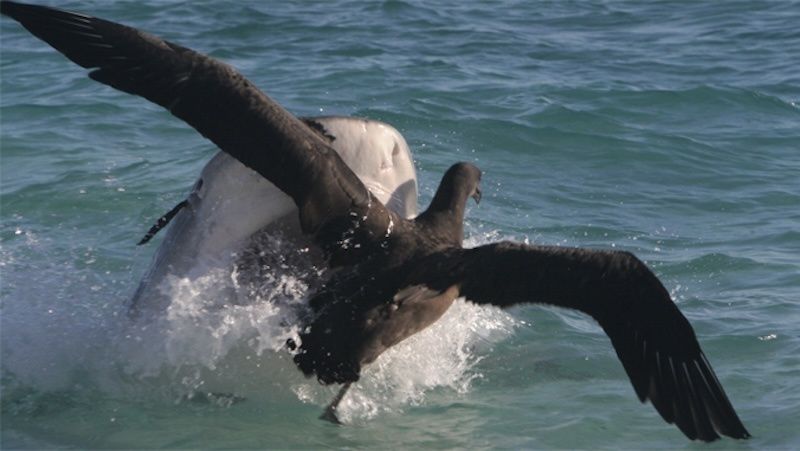
Tiger Sharks Feast on Vulnerable Seabird Fledglings in Hawaiian Waters

📷 Image source: earthsky.org
A Seasonal Banquet for Tiger Sharks
How young seabirds become a critical food source
In the remote atolls of the Northwestern Hawaiian Islands, a dramatic and grisly ecological event unfolds each summer. According to earthsky.org, fledgling seabirds, taking their first, often clumsy flights from nest to sea, become easy prey for tiger sharks. This phenomenon, detailed in a study published in the journal Ecology, reveals a crucial seasonal food source for the sharks that was previously underestimated.
The research, led by marine scientist Carl Meyer from the University of Hawaiʻi at Mānoa, focused on the French Frigate Shoals. The atoll is a major breeding colony for seabirds like the black-footed albatross and Laysan albatross. Meyer's team discovered that tiger sharks make predictable, long-distance migrations to these islands specifically to exploit the bounty of inexperienced young birds. The sharks' arrival coincides perfectly with the fledging period, turning the waters around the colonies into a hunting ground.
Tracking the Predators' Journey
Satellite tags reveal precise migratory patterns
The study's findings hinge on sophisticated tracking technology. Researchers fitted eight tiger sharks with satellite tags to monitor their movements. The data showed a clear pattern: the sharks, which spent much of the year scattered across the archipelago, would consistently swim to the French Frigate Shoals during the summer months.
This migration isn't a short hop. According to the report, some sharks traveled over 1,000 kilometers (more than 600 miles) to reach the atoll. The precision of their timing is remarkable. They arrive just as thousands of young albatrosses, having never fed at sea before, leave their nests and land on the ocean's surface for the first time. This convergence creates a temporary but highly concentrated pulse of available prey.
The Vulnerable First Flight
Why fledglings are such easy targets
The term 'easy prey' is a stark biological reality in this context. A fledgling albatross is ill-equipped for its initial encounters with the marine environment. After launching from land, these young birds must rest on the water's surface. They are exhausted, unfamiliar with foraging, and lack the skills to evade predators.
Carl Meyer explained the scene to earthsky.org, stating, 'They’ll land in the water and they’ll sit there, and they’ll rest. They’re easy to catch.' This period of extreme vulnerability on the water can last for hours or even days as the birds build confidence and learn to feed. For the waiting tiger sharks, it represents a low-effort, high-reward feeding strategy. The sharks are not selectively hunting; they are capitalizing on an abundant, naive resource concentrated in a small area.
A Dietary Shift Revealed by Stomach Contents
Scientific analysis confirms the seabird connection
To confirm that the sharks were actively eating the birds, the research team employed stomach lavage, a method of safely flushing out stomach contents. The results were conclusive. During the summer fledging season, seabird remains were frequently found in the sharks' stomachs.
Outside of this seasonal window, the sharks' diets reverted to more typical fare, including fish, seals, and sea turtles. This dietary shift underscores the importance of the seabird pulse. It's not a casual snack but a significant, predictable component of their annual nutritional intake. The study suggests that for some tiger shark populations, these fledgling birds may constitute over 25% of their diet during the summer, a figure that highlights the interaction's ecological significance.
Ecological Ripple Effects
Connecting ocean predators and island breeders
This predator-prey relationship creates a direct ecological link between remote island ecosystems and the open ocean. The health of the seabird colonies on land directly influences the foraging success of wide-ranging marine predators. A successful breeding season for the albatrosses translates to a more abundant food source for the sharks.
Conversely, any threats to the seabird populations—such as plastic pollution, habitat loss, or changes in fish stocks that parent birds rely on—could have downstream effects on the tiger sharks that depend on their young. This connection exemplifies how marine food webs are often more interconnected and land-dependent than they appear. The sharks are not just ocean wanderers; they are integral components of a system that bridges air, land, and sea.
Beyond the French Frigate Shoals
Could this behavior be widespread?
While the study focused on a specific location, it raises questions about similar interactions elsewhere. The Northwestern Hawaiian Islands are a protected sanctuary, but seabird colonies exist throughout the Pacific and other oceans. The research suggests that wherever large seabird colonies and tiger shark ranges overlap, similar seasonal feasting may occur.
Scientists now wonder if this behavior is a cultural tradition passed down through shark populations or a learned hunting strategy. The consistent, long-distance migration implies a strong evolutionary advantage. Understanding the full geographic scope of this behavior is a next step for marine biologists, as it would reveal more about the energy flows that sustain large shark populations in otherwise nutrient-poor open oceans.
Implications for Shark Conservation
Understanding the full life history of tiger sharks
The findings, published by earthsky.org on 2025-12-26T12:46:24+00:00, have practical importance for conservation. Tiger sharks are a near-threatened species, facing pressures from fishing and habitat degradation. Effective protection requires a complete understanding of their life history, including their critical feeding grounds and times.
This research identifies the French Frigate Shoals as a seasonal hotspot of immense importance. Conservation policies that protect these sharks must account for these predictable migrations. Safeguarding the sharks also means indirectly protecting the seabird colonies that sustain them, highlighting the need for integrated ecosystem management. The study moves tiger sharks from being viewed as generalist wanderers to animals with specific, vital dependencies on fragile island ecosystems.
A Natural Cycle of Life and Death
The phenomenon, while brutal from the perspective of an individual fledgling, is a classic and efficient natural process. The high mortality rate of young seabirds is factored into the life history of these long-lived species. The tiger sharks are not causing population declines; they are utilizing a natural surplus.
This interaction is a powerful reminder of the raw mechanics of ecology. Energy from the ocean, harvested by parent seabirds, is transferred to land to produce chicks. That energy is then returned to the marine system via the fledglings, where it fuels one of the ocean's apex predators. The clumsy first flight of an albatross, therefore, is more than a solo journey; it is a key transfer in a vast, interconnected cycle that has shaped these species for millennia.
#Wildlife #MarineBiology #Ecology #Sharks #Conservation


