

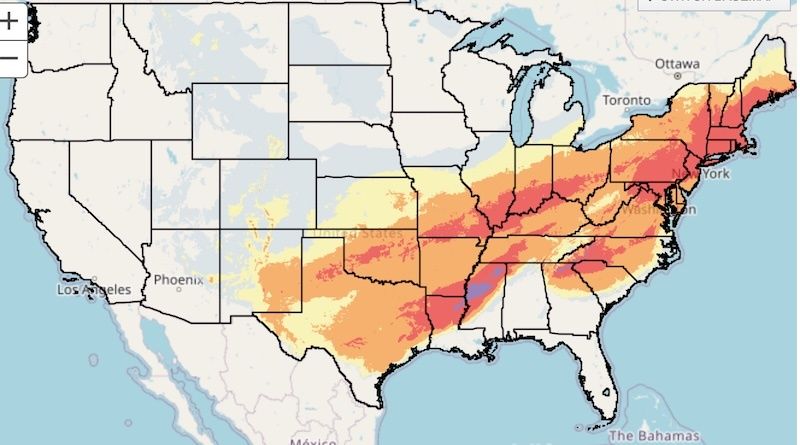
A Continental Deep Freeze: Anatomy of the January 2026 North American Winter Storm

📷 Image source: earthsky.org
Introduction: A System of Unusual Scale
A major winter storm is poised to impact a vast portion of the United States, according to forecasts detailed on earthsky.org. The system, expected to develop and move across the continent from January 25, 2026, is notable not for a single record-breaking element, but for its sheer geographic scope and the combination of multiple severe weather hazards.
Meteorological models indicate the storm will form from the interaction of a deep dip in the jet stream, known as a trough, pulling Arctic air southward, and moisture from the Gulf of Mexico. This classic setup is predicted to unleash heavy snow, ice, and high winds from the southern Plains through the Great Lakes and into the Northeast. The event underscores the complex dynamics of mid-latitude cyclones that can paralyze regions accustomed to winter weather.
The Forecast Timeline and Expected Impacts
From Genesis to Dissipation
The initial phase of the storm is forecast to begin on Sunday, January 25, 2026, over the central United States. The first significant impacts are expected in the southern Plains, including parts of Oklahoma and Texas, where a mix of freezing rain, sleet, and snow could lead to hazardous travel conditions and potential power outages. This early ice threat is a critical component often preceding the heavier snow bands.
As the low-pressure system intensifies and tracks northeastward, the primary band of heavy snow is predicted to develop from the central Plains into the Midwest and Great Lakes region by Monday, January 26. Concurrently, strong winds are forecast to develop, leading to blizzard conditions in open areas. The storm is then expected to continue its march toward the Northeast, with significant snow and wind impacts likely persisting into Tuesday, January 27, before moving off the Atlantic coast.
Geographic Reach: Who is in the Path?
A Swath from Texas to Maine
The term 'large swath' used in the earthsky.org report accurately describes the storm's projected path. Forecasts suggest a zone of impactful weather stretching over 2,400 kilometers (approximately 1,500 miles) from the southern states to the Canadian border. This includes metropolitan areas like Chicago, Illinois; Detroit, Michigan; Cleveland, Ohio; and potentially cities in the Interstate 95 corridor of the Northeast.
Different regions will face distinct threats. The southern fringe, including northern Texas and Oklahoma, is more likely to contend with ice accumulation, which poses a severe risk to tree limbs and power lines. Areas farther north, through Kansas, Missouri, Iowa, Illinois, Indiana, and into Michigan and Pennsylvania, are in the zone for the heaviest snowfall, potentially exceeding 30 centimeters (12 inches) in many locales, especially where lake-effect snow enhances totals downwind of the Great Lakes.
The Science Behind the Storm: How It Forms
Jet Streams, Clashing Air Masses, and Cyclogenesis
The development of such a significant storm is a textbook example of cyclogenesis, the process by which a cyclone forms and intensifies. It begins with a pronounced southward plunge of the jet stream, which acts as a steering current and a zone of intense winds high in the atmosphere. This dip allows dense, frigid Arctic air to spill southward across the central Plains and Midwest.
Simultaneously, warmer, moisture-laden air from the Gulf of Mexico is drawn northward. Where these two vastly different air masses meet, a boundary called a front forms. The contrast in temperature and density causes the warmer air to rise over the colder, denser air. This rising motion, coupled with the spinning effect of the Earth's rotation (the Coriolis force), causes the surface pressure to drop, forming a low-pressure center. As more air rises and condenses, releasing latent heat, the storm system further intensifies, leading to the widespread precipitation and strengthening winds now forecast.
Potential Hazards: More Than Just Snow
Ice, Wind, and Travel Disruption
While snowfall totals capture headlines, the compound hazards posed by this storm system present the greatest risks. Freezing rain, which occurs when snow melts in a warm layer aloft and then refreezes upon hitting a sub-freezing surface, can deposit a clear, heavy glaze of ice. According to the forecast context, this is a primary concern for areas on the storm's southern edge. Even a thin coating of ice can make roads and sidewalks treacherously slick and add destructive weight to infrastructure.
Strong winds, forecast to accompany the heavy snow, will create blizzard or near-blizzard conditions, significantly reducing visibility and causing considerable drifting. This combination makes travel extremely dangerous, if not impossible, and can lead to whiteout conditions. Furthermore, the weight of wet snow and the stress of high winds increase the risk of downed trees and power lines, leading to widespread and potentially long-duration power outages in affected communities.
Historical Context and Comparison
How This Storm Stacks Up
Major winter storms are not uncommon in North America, but their impacts vary based on track, intensity, and population density. Storms like the 'Blizzard of 1978' in the Northeast and the 'Great Blizzard of 1993' (often called the 'Storm of the Century') serve as historical benchmarks for scale and severity. The 1993 storm, for instance, affected an enormous area from the Gulf Coast to Canada, similar to the projected path of the January 2026 system.
While it is too early to definitively rank this upcoming event against historical giants, its forecast characteristics—a wide swath of heavy snow, significant ice potential, and strong winds—suggest it has the ingredients to be a high-impact event for the modern era. The main differentiating factor from past storms may be societal preparedness and the advanced warning provided by contemporary forecasting models, which have improved dramatically since the late 20th century.
Societal and Economic Impacts
Beyond School Closures
The ripple effects of a major cross-country winter storm are profound. Immediate disruptions include the closure of schools and businesses, the cancellation of thousands of flights and Amtrak services, and the suspension of public transit in major cities. Ground and air freight movement can be severely delayed, impacting supply chains for days after the storm passes. The economic cost, from lost productivity, infrastructure damage, and recovery efforts, often runs into the billions of dollars for significant events.
Vulnerable populations, including those experiencing homelessness and individuals reliant on electrically powered medical equipment, face acute risks during prolonged power outages and extreme cold. Community warming centers and emergency services become critical lifelines. Furthermore, the strain on municipal resources is intense, requiring coordinated efforts for snow removal, salting operations, and emergency response, often stretching personnel and budgets thin.
Preparedness and Response: Official Guidance
What Authorities Are Advising
In anticipation of the storm, the National Weather Service (NWS) and local emergency management agencies are expected to issue a suite of watches, warnings, and advisories. These range from Winter Storm Watches, indicating the possibility of severe winter weather, to more urgent Blizzard Warnings or Ice Storm Warnings, which are issued when hazardous conditions are imminent or occurring. The precise timing and type of alerts depend on the latest forecast data.
Standard preparedness advice, as echoed in reports like the one from earthsky.org, includes assembling an emergency kit for home and vehicle. This kit should contain non-perishable food, water, medications, flashlights with extra batteries, and a battery-powered radio. For those in the predicted path, officials likely advise against all non-essential travel once conditions deteriorate, as even short trips can become hazardous quickly. Ensuring alternative heating sources are used safely is also a key message to prevent carbon monoxide poisoning.
The Role of Modern Forecasting
Predicting the Unpredictable
The ability to forecast a storm of this scale several days in advance is a testament to advances in meteorological science. Forecasters rely on an ensemble of computer models, such as the Global Forecast System (GFS) and the European Centre for Medium-Range Weather Forecasts (ECMWF) model, which simulate atmospheric physics. By running these models multiple times with slightly different starting conditions, meteorologists can gauge forecast confidence and identify potential scenarios.
Despite these tools, uncertainties remain, particularly regarding the exact track of the low-pressure center. A shift of just 80 kilometers (50 miles) can mean the difference between heavy snow and a mix of rain and snow for major population centers. Therefore, forecasts for precipitation type and accumulation totals are often refined in the 24 to 36 hours before the event begins. The public is generally advised to monitor local National Weather Service forecasts for the most precise, location-specific information as the storm approaches.
Climate Context: A Complicated Relationship
Does a Warming World Mean Fewer Cold Snaps?
The occurrence of a severe winter storm inevitably raises questions about its relationship to climate change. It is a common misconception that a warming climate eliminates cold weather. According to climate scientists, the relationship is more nuanced. A warming Arctic may be linked to more frequent disruptions of the polar vortex, the large area of low pressure and cold air surrounding the North Pole, allowing frigid air to spill southward into mid-latitudes.
Furthermore, a warmer atmosphere can hold more moisture. This means that when storm systems do develop in favorable cold-air setups, they potentially have more atmospheric 'fuel' to produce heavier precipitation, whether that falls as rain or snow. Therefore, while the overall frequency of cold days may decrease in a warming world, the potential intensity of individual winter storms, driven by increased moisture and complex jet stream behavior, may not see a corresponding decline. This storm will be analyzed within this broader, ongoing scientific discussion.
Looking Ahead: The Recovery Phase
The Challenge After the Snow Stops
The end of the snowfall is only the beginning of the recovery challenge. Clearing major highways and secondary roads is a massive logistical undertaking for state departments of transportation. In dense urban areas, finding places to put plowed snow becomes a significant issue. Melting snow can also lead to localized flooding, especially if storm drains are blocked by ice or debris.
For utilities, restoring power is the immediate priority, but crews often face difficult travel conditions to reach damaged lines and substations. The duration of outages can vary from hours to days depending on the extent of the damage. The economic and social recovery continues for days or weeks as businesses restock, travel schedules normalize, and communities assess the total cost of the storm's impact on infrastructure and local budgets.
Reader Perspective
How prepared do you feel your local community is for a winter storm of this predicted scale? What lessons from past weather events do you think are most important for individuals and city planners to remember?
For those with experience in regions regularly affected by severe winter weather, what practical advice beyond the standard checklist would you offer to someone facing their first major ice or snowstorm? Your insights on community response, personal preparedness tricks, or the long-term impacts of such events can provide valuable perspective beyond the forecast.
#WinterStorm #WeatherForecast #Snowstorm #USWeather #Cyclogenesis


