

Beyond the Sun: A New Survey Maps the Most Promising Stellar Neighborhoods for Alien Life

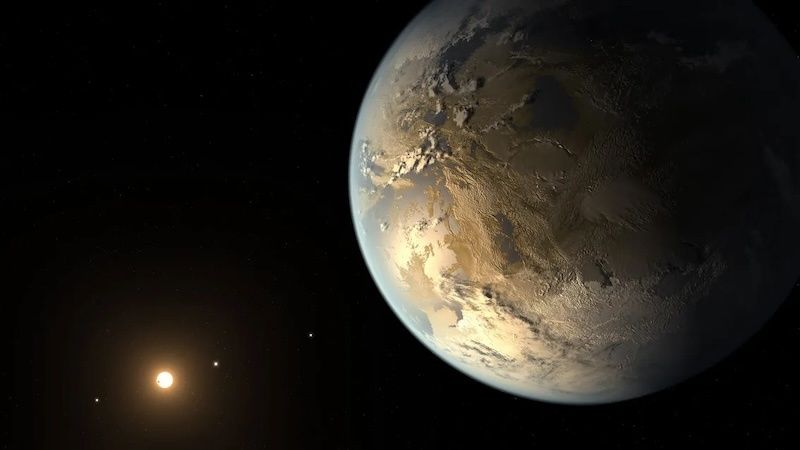
📷 Image source: earthsky.org
Introduction: Redefining the Cosmic Search for Habitability
Why Our Sun May Not Be the Ideal Template
For decades, the search for life beyond Earth has been guided by a simple principle: find another Earth. This has meant looking for rocky planets orbiting Sun-like stars at just the right distance for liquid water. However, a comprehensive new analysis suggests this stellar archetype might not be the best place to look. According to a survey published on earthsky.org on 2026-01-21T13:45:47+00:00, a different, more abundant class of stars offers a more stable and long-lived environment for life to potentially arise and evolve.
This survey systematically examined the stars closest to our solar system, creating a new priority list for astronomers. The findings shift the focus away from brilliant, short-lived stars and toward quieter, more enduring ones. This represents a significant strategic pivot in astrobiology, the study of life's potential in the universe, suggesting that the most promising real estate for life may have been in our galactic backyard all along, orbiting under a different kind of sun.
The Stellar Candidates: Meet the K-Type Stars
Characteristics of a Potentially Ideal Host
The stars identified as prime candidates in this survey belong to the K-type category, often called orange dwarfs. They are distinct from both our Sun, a G-type yellow dwarf, and the smaller, more volatile M-type red dwarfs. K-type stars are cooler, dimmer, and less massive than the Sun, with surface temperatures ranging from approximately 3,500 to 5,000 Kelvin (about 3,227 to 4,727 degrees Celsius). This relative coolness has a direct impact on the location of their habitable zones, the regions where temperatures could allow liquid water on a planet's surface.
Crucially, K-type stars have extraordinarily long lifespans, estimated at 15 billion to 30 billion years, compared to the Sun's 10-billion-year main sequence lifetime. This extended stability provides a vastly longer window for life to develop and reach complexity. Furthermore, they are less magnetically active than younger, feistier red dwarfs, which are prone to emitting sterilizing flares. According to earthsky.org, this combination of longevity and relative calm makes them 'Goldilocks stars'—not too hot, not too cold, and just right for fostering life over cosmic timescales.
The Survey Methodology: Scanning Our Stellar Neighborhood
How Astronomers Compiled the New Priority List
The survey focused on creating a detailed catalog of the stars nearest to our solar system, specifically those within a distance of 100 light-years. This proximity is key, as it places these systems within the observational reach of current and upcoming telescopes, like the James Webb Space Telescope and future giant ground-based observatories. The researchers did not just catalog the stars; they evaluated them based on a set of criteria critical for planetary habitability and our ability to study them.
These criteria included the star's spectral type, age, metallicity (the abundance of elements heavier than hydrogen and helium, which are needed to form rocky planets), and its level of magnetic activity. By cross-referencing data from missions like Gaia and TESS, the team ranked these nearby stars. The goal was to identify which ones are most likely to host rocky planets in their habitable zones and, simultaneously, which of those planets could be most amenable to atmospheric characterization—the process of analyzing starlight filtered through a planet's air to search for biosignatures, or signs of life.
Top Targets for Future Observation
Specific Stars Now Moving to the Forefront
The survey's analysis produced a ranked list of specific stellar systems that should become primary targets for the next generation of life-hunting instruments. While the earthsky.org article does not provide an exhaustive list from the full scientific paper, it highlights the type of stars that feature prominently. These are primarily nearby K-type stars that are known or strongly suspected to host planets. Their proximity, stability, and favorable properties elevate them above other candidates.
For example, a star like 61 Cygni, a binary system of two K-type stars just 11.4 light-years away, becomes a high-priority target. Although no planets have been confirmed there yet, its characteristics make it an ideal laboratory. The survey essentially provides a roadmap for astronomers, telling them where to point their most powerful tools first. This prioritization is essential because telescope time is an incredibly scarce resource, and strategic targeting maximizes the chance of a groundbreaking discovery.
The Limitations of Sun-Like Stars
Why G-Type Stars Are a Riskier Bet for Long-Term Life
This new focus on K-type stars inherently questions the assumed superiority of Sun-like, or G-type, stars. While our own solar system demonstrates that life can arise around such a star, the survey underscores potential drawbacks. G-type stars have shorter lifespans and a more rapid evolution. As they age, they brighten significantly, which can cause a planet's habitable zone to migrate outward, potentially leading to a runaway greenhouse effect on a once-temperate world like Earth, billions of years from now.
Furthermore, the shorter main-sequence lifetime of a G-type star may compress the timeline available for intelligent life to evolve. On Earth, it took nearly 4 billion years for complex, multicellular life to appear. A star with a shorter stable period might not offer that same lengthy, undisturbed incubation window. According to the perspective presented by earthsky.org, while G-type stars are certainly capable of hosting life, K-type stars may offer a more durable and forgiving cosmic home, reducing the risks associated with stellar volatility and limited timelines.
The Perils of Red Dwarf Systems
Why M-Type Stars Present Formidable Challenges
The survey also reinforces known concerns about the most common stars in the galaxy: M-type red dwarfs. Their extreme abundance initially made them attractive targets in the search for exoplanets. However, their nature poses severe challenges for habitability. Red dwarfs are notoriously flare-active, especially in their youth. These stellar eruptions can bathe orbiting planets in intense X-ray and ultraviolet radiation, potentially stripping away atmospheres and sterilizing surfaces.
Another critical issue is tidal locking. Because the habitable zone around a dim red dwarf is very close-in, planets there are likely gravitationally locked, with one side in perpetual daylight and the other in endless night. This creates extreme temperature contrasts that could make global climate stability and the existence of liquid water difficult, though not impossible according to some atmospheric models. The survey's prioritization of calmer K-type stars reflects a strategic choice to investigate environments where these extreme physical challenges are less pronounced.
The Technical Hunt for Biosignatures
How We Will Search for Signs of Life on These Worlds
Identifying a promising star is only the first step. The ultimate goal is to analyze the atmospheres of planets within their habitable zones. This is done through a technique called transmission spectroscopy. When a planet transits, or passes in front of its host star from our viewpoint, a tiny fraction of the star's light filters through the planet's atmospheric rim. Molecules in the atmosphere absorb specific wavelengths of this light, creating a chemical fingerprint that our telescopes can, in theory, detect.
Searching for biosignatures involves looking for atmospheric imbalances that suggest biological activity. The classic example is the simultaneous presence of oxygen and methane, which react quickly and destroy each other unless continuously replenished. Other potential biosignatures include certain ratios of gases or the presence of chemicals like nitrous oxide. According to earthsky.org, the stable light of K-type stars makes this delicate measurement slightly easier than for more active stars, as it provides a cleaner, less variable background signal against which to detect these subtle atmospheric fingerprints.
The Challenge of False Positives and Planetary Context
Why Finding a Biosignature is Not a Simple Declaration of Life
A major theme in modern astrobiology is the critical importance of planetary context. Detecting a potential biosignature gas like oxygen is not, on its own, proof of life. Abiotic processes—geological or photochemical—can also produce these gases under certain conditions. For instance, a planet with extensive water vapor high in its atmosphere can be photolyzed by stellar radiation, creating oxygen without any biology involved. Therefore, the interpretation of any signal must be holistic.
This means astronomers will need to characterize not just the atmosphere, but also the planet's orbit, the activity of its star, and potential surface conditions. Is the planet tidally locked? Does it have a magnetic field that could protect its atmosphere from stellar winds? The survey's focus on stable K-type stars helps mitigate some context challenges, such as extreme stellar activity, but it does not eliminate them. The path from detecting an interesting atmospheric component to making a credible claim of life will be long and require multiple lines of corroborating evidence.
Global Implications and the Future of Astrobiology
Shifting Resources and International Collaboration
This survey has concrete implications for how global astronomical resources are allocated. Major space agencies and international consortia planning future flagship missions will use such prioritized target lists to define their scientific goals. A consensus that K-type stars are optimal targets could influence the design specifications of instruments, favoring those optimized for the specific light output and planetary orbital periods associated with these stars. It represents a strategic unification of effort in the field.
Furthermore, this reframing invites a broader philosophical perspective. If life is indeed more probable or longer-lived around K-type stars, then our own existence around a G-type star might be somewhat atypical. This challenges anthropocentric assumptions in the search for life and encourages a more universal, physics- and chemistry-based approach. The search becomes less about finding Earth 2.0 and more about understanding the full spectrum of environments where complex chemistry can transition into biology, a fundamental shift with wide-ranging scientific and cultural repercussions.
Unanswered Questions and the Road Ahead
What the Survey Cannot Tell Us
While the survey provides a powerful new targeting strategy, it leaves several profound questions unanswered. A key uncertainty is the actual occurrence rate of Earth-sized planets within the habitable zones of these nearby K-type stars. Current exoplanet statistics suggest they are common, but a precise census for our immediate neighborhood is still underway. Furthermore, the presence of a planet in the habitable zone is a necessary but not sufficient condition for life; we know nothing yet about the geology, atmospheric evolution, or potential for water on these specific worlds.
Another major unknown is the potential for life on moons orbiting giant planets within the habitable zone. The survey focuses on stellar properties, but a gas giant's large moon, like a scaled-up version of Jupiter's Europa, could also be a habitable environment. Our current technology is far from capable of detecting such exomoons, but they remain a compelling possibility. The road ahead, as outlined by the research highlighted on earthsky.org, is one of targeted observation, technological refinement, and patient data collection, with no guarantee of a quick answer but a much clearer map of where to look.
Perspektif Pembaca
The search for life beyond Earth is one of humanity's most profound endeavors, blending science, technology, and deep philosophical questions. As this new survey redirects our gaze to orange dwarf stars, it invites personal reflection on our place in the cosmos.
Do you believe the discovery of even simple microbial life on an exoplanet would be the most significant scientific discovery in human history, or would its impact be more nuanced, depending on the context and nature of that life? How do you think such a discovery would fundamentally alter human perspective on our own planet, our society, and our future?
#Astrobiology #SpaceScience #Exoplanets #Astronomy #KTypeStars


