

The Collaborative Choreography: How New AI Models Are Teaching Robots to Multitask in Real Time

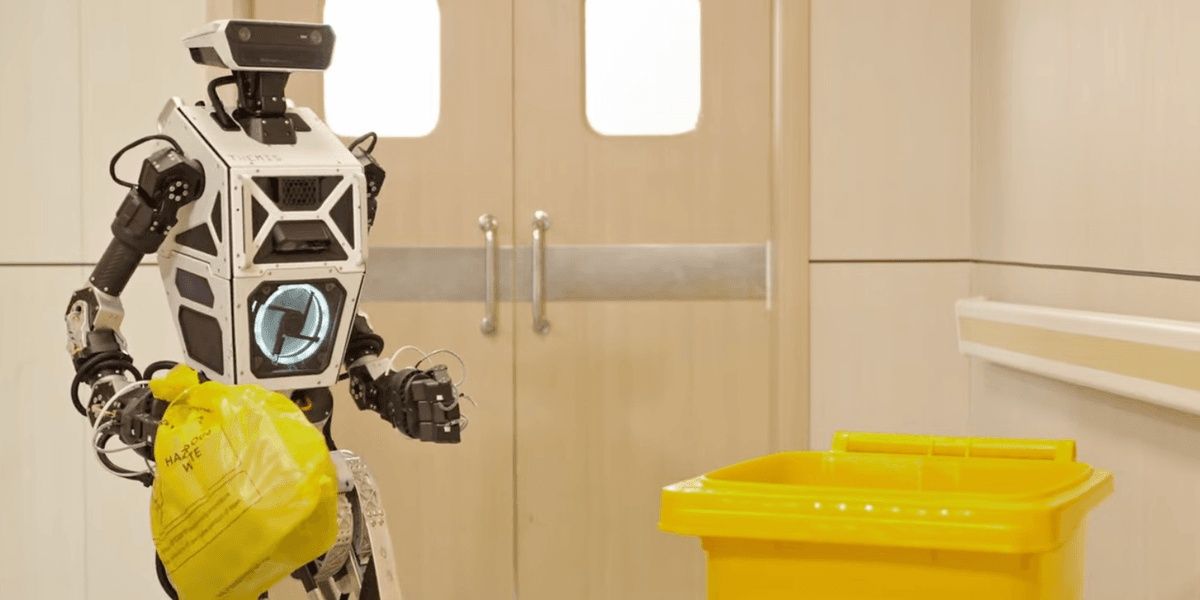
📷 Image source: spectrum.ieee.org
Introduction: Beyond Solo Acts
The Shift from Single-Task to Multi-Agent Robotics
For decades, the image of a robot has often been a solitary unit, meticulously programmed for a single, repetitive job. The frontier of robotics is now shifting dramatically toward collaboration. According to spectrum.ieee.org, published on 2026-01-30T18:30:02+00:00, new research is demonstrating robots that can smoothly perform multiple tasks together in real time, moving like a coordinated team rather than isolated machines.
This evolution represents a fundamental change in how artificial intelligence governs physical action. It moves beyond pre-scripted sequences and into the realm of dynamic, adaptive teamwork. The implications stretch from factory floors to disaster response, where the ability to divide, share, and synchronize labor could redefine efficiency and capability.
The Core Breakthrough: Shared Neural Networks
How a Single AI Model Manages Multiple Bodies
The technical heart of this multitasking capability lies in the use of unified AI models. Instead of each robot running its own isolated control algorithm, a single, shared neural network—a type of machine learning system loosely inspired by the human brain—is trained to direct multiple robotic bodies simultaneously. This model processes a combined stream of sensory data from all agents and outputs coordinated actions.
This approach allows the system to develop an inherent understanding of collaboration during its training phase. It learns not just how to perform a task, but how to perform it while accounting for the movements, positions, and actions of its teammates. The result, as shown in the source material, is fluid interaction without the stuttering pauses typical of machines waiting for explicit signals from one another.
A Glimpse at the Mechanics
From Sensor Data to Synchronized Motion
The process begins with perception. Each robot is equipped with cameras and sensors that feed environmental data into the shared AI model. This creates a common operational picture. The model then calculates the optimal sequence of actions for the entire group to achieve a joint goal, such as moving a long object or assembling a structure.
The AI must solve complex problems of timing, trajectory, and force distribution in real time. For instance, if two robots are carrying a table, the model continuously adjusts each one's grip strength and walking speed to prevent tilting or dropping. This requires a deep, predictive understanding of physics and leverage, all computed on the fly. The source does not specify the exact computational hardware used, but such systems typically require significant processing power, often handled by centralized servers or high-performance onboard computers.
The Chosen Frame: Analysis of Impact
Why Collaborative Multitasking is a Game Changer
Adopting an 'Analysis of Impact' frame allows for a structured examination of how this technology reshapes various domains. The primary impact is on scalability and flexibility. A fleet of robots governed by a single, adaptable brain can be reconfigured for new tasks through software updates alone, reducing the need for physical retooling or individual reprogramming of each unit.
Furthermore, this architecture potentially lowers the barrier to deploying complex robotic systems. Instead of engineering perfect coordination from the ground up for each new application, developers can train a general collaborative model on a wide range of scenarios. The model then applies these learned principles to novel situations, a technique known as generalization. This could accelerate automation in unpredictable environments like construction sites or warehouses handling diverse goods.
Impact on Manufacturing and Logistics
Redefining the Assembly Line and Warehouse Floor
In manufacturing, the impact is profound. Traditional assembly lines are linear and sequential. Collaborative multitasking robots could work on a product simultaneously from multiple angles, drastically reducing cycle time. Imagine one robot holding a car door in place while another instantly aligns and installs the hinges, with a third applying sealant—all in one fluid motion without handoffs.
For logistics, the technology promises a revolution in material handling. In a shipping hub, a swarm of robots could collaboratively lift irregularly shaped or heavy packages, sort them into containers, and load trucks with minimal human guidance. The system's ability to dynamically reassign roles means peak efficiency; if one robot's path is blocked, others can instantly compensate. The source material from spectrum.ieee.org highlights this smooth, uninterrupted workflow as a key visual demonstration of the technology's potential.
Impact on Hazardous Environments and Healthcare
Teamwork Where Humans Cannot or Should Not Go
The implications for dangerous work are significant. In disaster zones, teams of robots could enter unstable structures, communicating through their shared model to map debris, locate survivors, and carefully clear pathways together. Their collaborative strength could move heavy rubble while a smaller unit provides precise sensor data, all coordinated in real time without vulnerable communication links.
In healthcare settings, particularly in sterile environments or during highly infectious disease outbreaks, robotic teams could perform complex logistical tasks. They might collaboratively transport patients, manage supplies, or even assist in tele-operated surgery by providing steady, coordinated support to a human surgeon's commands. The source does not detail specific medical applications, but the core capability of safe, synchronized physical assistance directly translates to this high-stakes field.
The Trade-Offs and Technical Hurdles
Balancing Power with Vulnerability
The centralized model architecture, while powerful, introduces a single point of failure. If the main AI controller is disrupted, the entire collaborative system could falter. Decentralizing some intelligence to individual robots, creating a hybrid approach, is a likely area of ongoing research to build resilience, though this is not explicitly mentioned in the source material.
Another major hurdle is sim-to-real transfer. These AI models are often trained extensively in detailed virtual simulations before being deployed on physical robots. Bridging the gap between the perfect physics of a simulation and the messy, unpredictable real world remains a significant engineering challenge. Imperfect sensors, friction, and wear-and-tear can cause actions that were flawless in simulation to fail in practice, requiring robust error-correction routines.
Privacy and Security in a Networked Physical World
When Coordination Becomes a Liability
As with any networked system, collaborative robots raise substantial privacy and security concerns. The vast amount of sensor data they process—potentially including video of workspaces, homes, or public areas—must be secured. A breach could expose sensitive operational details or visual records of private activities. The source material does not address specific data governance protocols, leaving this as a critical area of uncertainty for future deployment.
Furthermore, the system itself becomes a high-value target for cyber-attacks. Malicious actors could hijack the shared AI model to cause deliberate physical collisions, sabotage manufacturing, or steal intellectual property embedded in the robots' movements. Ensuring the cybersecurity of these physically embodied AI networks will be as important as refining their collaborative algorithms.
Global Context and Historical Progression
From Industrial Arms to Adaptive Teams
Historically, industrial robotics, since the first Unimate arm was installed in a General Motors plant in 1961, has focused on precision and repetition in isolation. The concept of 'cobots' or collaborative robots designed to work alongside humans emerged later, but they typically followed pre-defined safety zones and simple interactive scripts. This new wave of multi-agent, multitasking AI represents a third phase: machines collaborating primarily with each other, with a level of autonomy and mutual awareness that was previously the domain of science fiction.
Globally, research in this area is highly competitive. While the spectrum.ieee.org report does not specify the originating institution, similar advanced work is underway in labs across North America, Europe, and East Asia. The drive is fueled by a universal need for greater productivity and the desire to automate tasks in demographics facing labor shortages. The nation or company that robustly solves the challenges of secure, reliable robot teamwork could gain a substantial economic and strategic advantage.
Limitations and the Path Forward
What These Robots Still Cannot Do
It is crucial to note the current limitations. The demonstrations, while impressive, likely occur in controlled environments with clearly defined tasks and objects. The robots' 'understanding' is narrow, focused on specific physical interactions rather than general common sense. They cannot negotiate, improvise with unconventional tools, or understand abstract verbal instructions beyond their training data. Their world is defined by geometry, force, and immediate task completion.
The path forward involves scaling up both complexity and environment robustness. Researchers will work to increase the number of agents a single model can control, introduce more diverse and unpredictable tasks, and improve the system's ability to recover from errors autonomously. Another key frontier is human-in-the-loop collaboration, where these robotic teams can seamlessly understand and integrate commands from human supervisors into their shared action plan.
Perspectif Pembaca
Your Take on the Future of Work
The rise of collaborative, multitasking robots presents a complex future for the workforce. While they promise to take over dangerous, dull, and physically demanding tasks, their integration will inevitably reshape job markets and required skills. This transition is not merely a technical challenge but a societal one.
We want to hear your perspective. In your view, what is the most pressing societal challenge that must be addressed as collaborative robot teams become more common? Is it the need for large-scale worker retraining programs, the establishment of new safety and liability regulations, the ethical design of human-robot interaction, or another issue entirely? Share your thoughts on which priority deserves the most immediate focus from policymakers, educators, and industry leaders.
#AI #Robotics #CollaborativeRobots #MachineLearning #Automation


