

Vintage NASA Training Jet Destroyed in Fiery Texas Runway Accident, Grounding Key Artemis II Support Aircraft

📷 Image source: cdn.mos.cms.futurecdn.net
A Fiery End for a Historic Workhorse
NASA's aging T-38N Talon crashes during landing, removing a critical asset from astronaut training
A 50-year-old NASA jet, a veteran of countless training missions for America's astronauts, met a dramatic and fiery end on a runway in Texas. The T-38N Talon, a key aircraft used to prepare crews for high-performance flight, crashed and burned while attempting to land at Houston's Ellington Field on January 28. According to livescience.com, the incident has immediate and significant repercussions for NASA's human spaceflight program, forcibly removing this specific aircraft from its planned role in supporting the upcoming Artemis II mission.
The two crew members, both NASA personnel, managed to escape the wreckage and were transported to a nearby hospital. Officials reported they were in stable condition. The jet, however, was consumed by flames, resulting in a total loss. This accident sidelines a critical piece of infrastructure at a pivotal time, as NASA prepares to send astronauts back to the Moon for the first time in over half a century.
The T-38 Talon: NASA's Classroom in the Sky
Understanding the aircraft's irreplaceable role in astronaut readiness
For decades, the sleek, twin-engine T-38 has been far more than just transportation for NASA astronauts. It serves as an essential airborne classroom. Piloting these high-performance jets allows astronauts to hone critical skills in a high-stakes, dynamic environment. They practice communication, decision-making under pressure, and the precise execution of procedures—all within a cockpit that demands constant situational awareness.
The training focuses on building what pilots call 'the right stuff': the sharpened reflexes and calm judgment needed when things go wrong, whether in the atmosphere or in the vacuum of space. Flying in formation, practicing emergency scenarios, and simply managing the aircraft's speed and altitude provide a unique physiological and psychological workout. Losing an aircraft from this fleet isn't just a loss of hardware; it represents a reduction in available flight time and training opportunities for the astronaut corps, a precious commodity.
Direct Impact on Artemis II Moon Mission Preparations
How the crash disrupts the roadmap for lunar flight training
The timing of this crash is particularly consequential. According to the report from livescience.com, this specific T-38N was slated for a direct support role in the Artemis II mission. Artemis II is the program's first crewed flight, a milestone voyage that will send four astronauts on a journey around the Moon and back to Earth, testing all systems ahead of a planned lunar landing.
While the core astronauts for Artemis II—Reid Wiseman, Victor Glover, Christina Koch, and Jeremy Hansen—were not onboard, the aircraft was an integral part of the mission's support ecosystem. NASA utilizes its T-38 fleet for proficiency flying, allowing astronauts to maintain their piloting skills, and for transportation between key facilities like Johnson Space Center in Houston and the Kennedy Space Center in Florida. The loss of this airframe creates an immediate gap in the logistical and training network supporting the mission's tight schedule.
Anatomy of a Runway Accident
Piecing together the moments of the crash from official reports
The crash occurred in the afternoon as the jet was returning to its home base. According to details reported by livescience.com, the T-38N was on final approach to Runway 17R at Ellington Field when the accident happened. The aircraft impacted the runway, skidded, and was quickly engulfed in flames. Emergency responders were on the scene rapidly, containing the fire and extracting the crew.
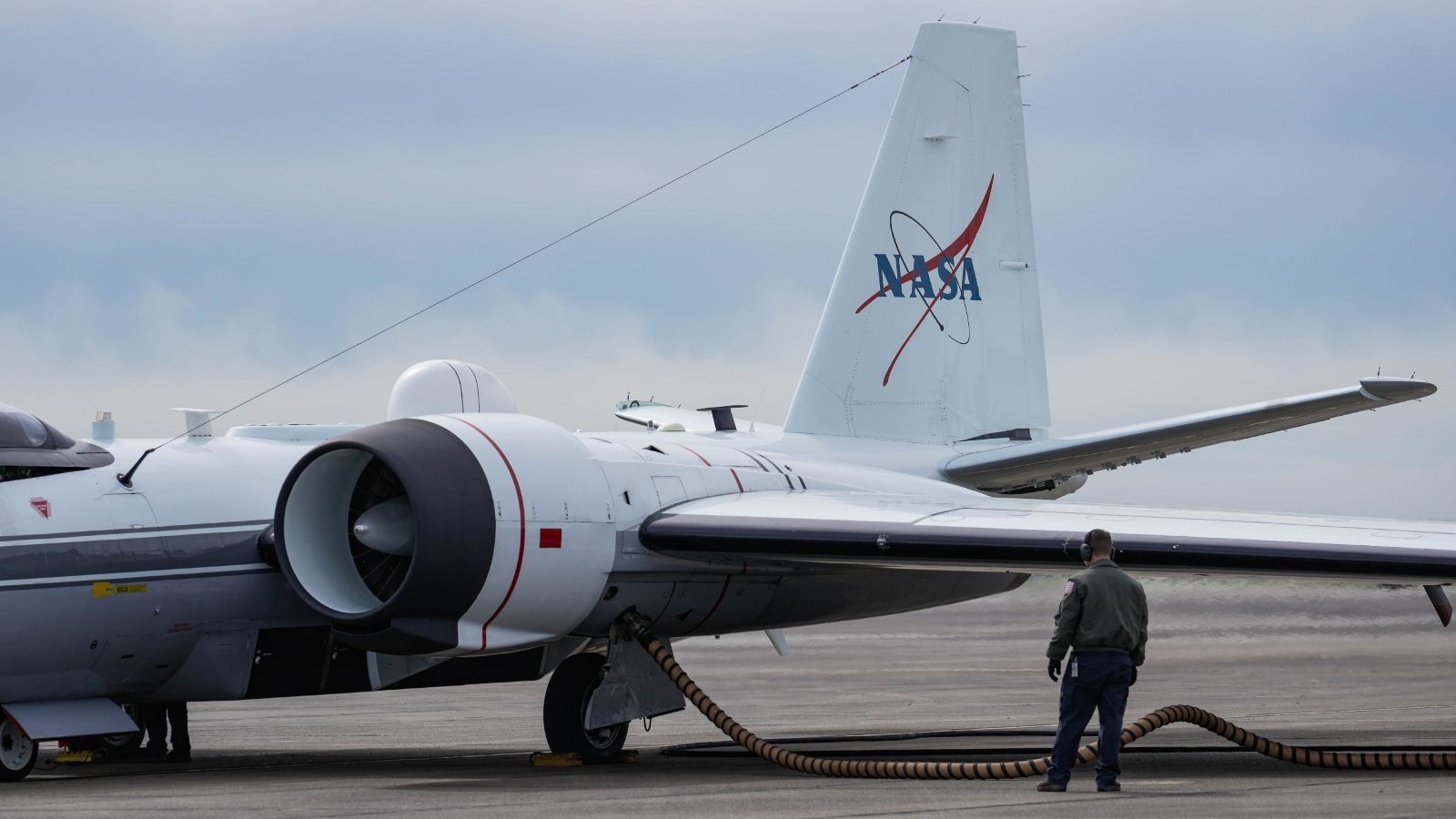
The image of the wreckage—a charred and mangled fuselage surrounded by firefighting foam—stands in stark contrast to the aircraft's normal appearance of sleek, white-and-blue speed. Ellington Field is a joint-use facility managed by NASA, the U.S. military, and the Houston Airport System, and is no stranger to high-performance aircraft. The fact that the crash happened here, on home turf, underscores the ever-present risks of flight testing and training, even for the world's most experienced aviators.
Investigating the Cause: A Standard Yet Critical Process
The meticulous search for answers begins with the wreckage
In the wake of the crash, a standard but thorough investigative process has been launched. NASA has stated it will convene a mishap investigation board to determine the root cause. This board, composed of experts in aircraft systems, operations, and safety, will pore over every available piece of evidence.
Their work will involve examining the wreckage, reviewing maintenance records for the 50-year-old airframe, analyzing data from onboard systems and air traffic control recordings, and interviewing the crew and ground personnel. The goal is not to assign blame, but to understand the sequence of mechanical or human factors that led to the accident. This forensic understanding is crucial for preventing future incidents, especially within a fleet of aircraft that are, by any measure, historical artifacts still performing demanding modern tasks.
The Challenge of an Aging Fleet
Maintaining and operating aircraft older than their pilots
This accident casts a spotlight on the age and sustainability of NASA's specialized aircraft fleet. The T-38 Talon first entered service with the U.S. Air Force in the early 1960s. NASA's models, even with upgrades and designated as T-38Ns, are fundamentally old airframes. Keeping them airworthy requires rigorous, continuous maintenance and periodic major overhauls.
Every component, from the airframe's metal skin, which expands and contracts with every flight, to the analog instruments in some cockpits, faces wear and fatigue. NASA's pilots and maintenance crews are experts at managing this aging process, but the laws of physics and metallurgy are unforgiving. The crash inevitably raises questions about the long-term viability of relying on these vintage jets, even as they remain uniquely suited for their training role due to their performance characteristics and relatively low operating costs compared to more modern alternatives.
Safety Record and Historical Precedent
Contextualizing a rare but not unprecedented event
While any crash is a serious event, NASA's aviation safety record has historically been strong. The T-38 fleet, in particular, has been a reliable workhorse for over half a century. However, this is not the first accident involving a NASA T-38. Past incidents, though rare, have occurred during training flights, resulting in the tragic loss of astronaut candidates and experienced pilots.
Each accident led to rigorous reviews and procedural changes. The space agency approaches aviation risk with the same seriousness it applies to spaceflight, employing layers of safety protocols and checklists. This latest crash will undoubtedly feed back into that continuous safety improvement cycle. It serves as a somber reminder that the path to space exploration is paved with inherent risk, not just in the vacuum above, but in the skies where astronauts train.
Looking Forward: Training and Logistics After the Loss
How NASA adapts its program with one less aircraft
The immediate question for NASA's operations leadership is how to mitigate the impact of this loss. The agency's remaining T-38s will likely see increased utilization, potentially accelerating maintenance schedules and requiring careful logistical planning to ensure all required training and transport flights are covered. NASA may also rely more heavily on other aircraft in its fleet or commercial travel for certain logistics.
For the Artemis II crew, their training will continue, but the margin for error in scheduling and resources has grown thinner. The crash is a disruptive logistical hurdle, but not an insurmountable one. The resilience of the overall training program will be tested as managers work to reallocate assets. Ultimately, the investigation's findings will influence not just T-38 operations, but may also inform discussions about the future composition of NASA's airborne training fleet as the agency looks toward sustained lunar exploration and eventual missions to Mars. According to livescience.com, published on 2026-01-29T17:28:19+00:00, the process of recovery and adaptation is now underway.
#NASA #ArtemisII #Space #Aviation #Accident


