

The Helix Nebula Reimagined: Webb Telescope Reveals Stellar Death in Unprecedented Detail

📷 Image source: cdn.mos.cms.futurecdn.net
A Cosmic Eye, Reopened
New Vision of a Familiar Celestial Landmark
For decades, the Helix Nebula has been known to amateur astronomers and the public as the 'Eye of God,' a hauntingly beautiful ring of gas some 650 light-years from Earth. Its familiar shape, often captured by the Hubble Space Telescope, showed a seemingly simple doughnut of glowing material. That view has been fundamentally rewritten.
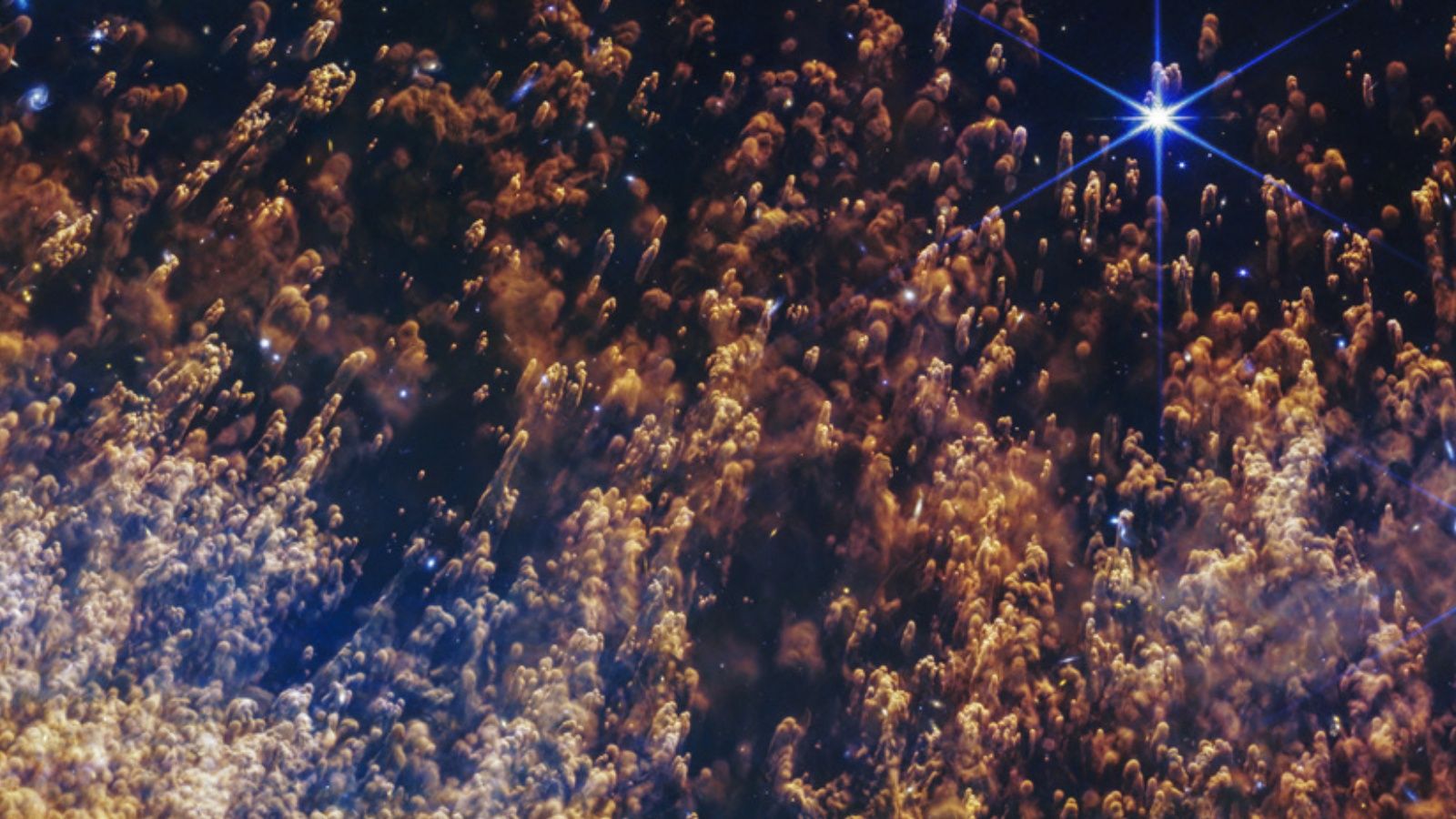
According to space.com, a new image from the James Webb Space Telescope, published on 2026-01-21T22:00:00+00:00, transforms this cosmic icon. The Webb's powerful infrared instruments peer through obscuring dust, revealing a structure more complex and dynamic than previously imagined—a celestial object resembling a vast, effervescent lava lamp filled with thousands of mysterious gaseous knots.
Beyond the Ring: The Infrared Advantage
How Webb Sees What Hubble Could Not
The dramatic difference between the Hubble and Webb views stems from the type of light each telescope is designed to capture. Hubble primarily observes visible and ultraviolet light, which is easily scattered by the dust and gas expelled from the dying star. This created the illusion of a relatively smooth, ring-shaped structure.
Webb's Near-Infrared Camera (NIRCam) and Mid-Infrared Instrument (MIRI) detect longer wavelengths of infrared light. This light penetrates the dusty shroud, much like night-vision goggles seeing through haze. The result is not a clean ring, but a vast, double-lobed nebula filled with intricate detail, showing the true three-dimensional architecture of this stellar finale.
Anatomy of a Stellar Death
The Planetary Nebula Phase Explained
The Helix Nebula is classified as a planetary nebula, a term that is a historical misnomer from early astronomers who thought they resembled planets. In reality, it represents a brief, violent phase in the life of a sun-like star. After billions of years, the star exhausts its nuclear fuel, swells into a red giant, and then sheds its outer layers into space.
The remaining hot core, known as a white dwarf, bathes the ejected material in intense ultraviolet radiation, causing it to glow. This process, which lasts only about 10,000 years—a blink in cosmic time—creates the nebula. The Helix offers a preview of our own Sun's fate, roughly 5 billion years from now.
The Enigmatic Knots
Thousands of Mysterious Cometary Globules
One of the most startling revelations in the Webb image is the sheer abundance and clarity of cometary knots. These are dense clumps of gas and dust, each with a glowing head and a long, faint tail streaming away from the central star. Hubble had identified a few hundred; Webb reveals there are likely many thousands, filling the entire nebula like a swarm of cosmic tadpoles.
The origin of these knots remains an active area of astrophysical research. They are thought to form as the faster, newer stellar wind from the white dwarf collides with and sculpts the slower-moving material ejected earlier in the star's death throes. Their survival in the harsh radiation environment is a puzzle, suggesting complex magnetic fields or other protective mechanisms may be at play.
A Global Observatory's View
How Earth-Based Telescopes Complement Webb
While space-based telescopes like Webb and Hubble provide unmatched clarity free of Earth's atmospheric distortion, ground-based observatories continue to play a crucial role. Large telescopes in Chile and Hawaii, for instance, use spectroscopic instruments to analyze the chemical composition of nebulae like the Helix in great detail.
This international ground-based data can identify specific molecules and elements within the knots and the diffuse gas, information that is harder for Webb to obtain at such high spatial resolution. The synergy between space and ground assets creates a more complete picture, blending Webb's stunning imagery with detailed chemical censuses from terrestrial telescopes.
The Technical Marvel Behind the Image
MIRI and NIRCam: A Tag-Team of Discovery
Creating this new view was not a simple snapshot. The released image is a composite of data from two of Webb's four main science instruments. The Near-Infrared Camera (NIRCam) captured the sharper, filamentary structures and the prominent blue and green hues, which represent energized hydrogen and oxygen gas.
The Mid-Infrared Instrument (MIRI) detected emission from hydrocarbon molecules and cooler dust, rendered in red. This dual-wavelength approach allows astronomers to separate different physical components: the hot, ionized gas (from NIRCam) from the cooler, molecular material (from MIRI), revealing how they interact in the nebula's complex ecosystem.
Historical Context: From Discovery to 'Eye of God'
The Evolution of Human Understanding
The Helix Nebula was discovered by German astronomer Karl Ludwig Harding in the early 19th century. For over a hundred years, it was studied as a faint, smudgy patch. The 'Eye of God' moniker is a modern, popular culture phenomenon, gaining traction in the late 1990s and early 2000s with the widespread distribution of Hubble's striking visible-light images.
This nickname, while evocative, arguably limited public perception to a two-dimensional symbol. Webb's new image shatters that iconic simplicity, forcing a reassessment. It demonstrates how each technological leap in astronomy doesn't just add detail to known objects, but can fundamentally redefine them, turning symbols into complex, dynamic physical systems.
The Limits of Even Webb's Vision
Unanswered Questions and Future Avenues
Despite its transformative power, the James Webb Space Telescope cannot answer every question about the Helix Nebula. The precise physics governing the formation and evolution of the cometary knots is still modeled with uncertainty. Furthermore, Webb provides a detailed snapshot in time; understanding the nebula's changes requires observations over decades or even centuries.
Key information, such as the exact three-dimensional velocity of each knot or the strength of magnetic fields within them, is not directly provided by this image. These gaps highlight that Webb is a tool for generating new, sharper questions as much as for providing definitive answers, paving the way for future telescopes with even more specialized instruments.
Impact on Astrophysics and Public Engagement
More Than Just a Pretty Picture
Scientifically, this image provides a high-resolution laboratory for studying the late stages of stellar evolution. The abundance of knots in the Helix suggests they may be a common, if not universal, feature in planetary nebulae, influencing how heavy elements are recycled into the interstellar medium. This enriches the cosmic pool of material for future generations of stars and planets.
For public engagement, such images serve a dual purpose. They capture the imagination, making vast cosmic processes tangible. Simultaneously, they visually demonstrate the value of multi-billion-dollar scientific investments, showing concrete returns in the form of profound new knowledge about our place in the universe, all communicated through the universal language of breathtaking imagery.
A Comparative Perspective: Nebulae Across Cultures
Celestial Patterns and Human Interpretation
The human tendency to see familiar shapes in cosmic clouds—eyes, pillars, or crabs—is a global phenomenon known as pareidolia. The 'Eye of God' is a Western moniker, but other cultures have their own interpretations of nebulous objects. For example, some Indigenous Australian traditions incorporate the Coal Sack dark nebula into celestial emu narratives.
This new Webb image, by complicating the simple 'eye' shape, inadvertently challenges these anthropocentric interpretations. It pushes viewers to appreciate the nebula not as a symbolic reflection of ourselves, but on its own extraordinary physical terms. This shift from mythological pattern-recognition to nuanced physical understanding marks a maturation in humanity's relationship with the cosmos, facilitated by technological advancement.
Perspektif Pembaca
The transformation of the Helix Nebula from a symbolic 'eye' to a turbulent, knot-filled structure challenges how we connect with the universe. Does knowing the complex, violent physics behind such a beautiful object deepen your sense of awe, or does it create a distance between human experience and the impersonal mechanics of cosmos?
We invite you to share your perspective. Have you ever looked at an astronomical image, like the Helix, and had your understanding of it completely reshifted by new science or a different explanation? How does that change your feeling about the scale and nature of the universe we inhabit?
#JamesWebbTelescope #HelixNebula #Astronomy #SpaceDiscovery #PlanetaryNebula


