

The Sun's Unrelenting Fury: A Deep Dive into the Ongoing Solar Storm Cycle

📷 Image source: earthsky.org
Introduction: A Hyperactive Star
Our sun enters a period of intense and sustained activity
The sun, the steady heart of our solar system, is currently in a state of remarkable agitation. According to earthsky.org, 2026-01-21T14:50:47+00:00, our star is producing a near-continuous stream of powerful eruptions, driving a series of significant geomagnetic storms at Earth. This isn't a single, isolated event but an ongoing cycle of heightened solar activity that has kept scientists, satellite operators, and aurora chasers on high alert for an extended period.
This sustained barrage originates from multiple, complex sunspot regions rotating across the sun's visible disk. These regions are tangled knots of magnetic energy that can suddenly snap, releasing vast amounts of radiation and charged particles into space. The current phase demonstrates that solar maximum—the peak of the sun's roughly 11-year activity cycle—can be a prolonged and turbulent period, not merely a brief spike in events.
The Mechanics of a Solar Eruption
How magnetic chaos on the sun translates to storms near Earth
The fundamental driver of all this space weather is the sun's magnetic field. In sunspot regions, this magnetic field becomes intensely concentrated and twisted. When these magnetic field lines reconfigure themselves in a process called magnetic reconnection, they release colossal amounts of energy equivalent to millions of hydrogen bombs. This explosive event is a solar flare, a burst of intense electromagnetic radiation that travels at the speed of light, reaching Earth in about eight minutes.
Often associated with the largest flares is a coronal mass ejection, or CME. A CME is a massive cloud of solar plasma—a hot gas of charged particles—and embedded magnetic fields blasted into interplanetary space. While the flare's light arrives quickly, a CME travels much slower, taking anywhere from 15 hours to several days to cross the 150 million kilometer (93 million mile) gap to Earth. It is the interaction of this arriving cloud with Earth's own magnetic shield, the magnetosphere, that triggers a geomagnetic storm.
The Direct Impact: Geomagnetic Storms Explained
What happens when the solar wind meets Earth's magnetic field
A geomagnetic storm is a major disturbance of Earth's magnetosphere. When a CME or a high-speed stream of solar wind arrives, it compresses the magnetosphere on the dayside and stretches it into a long tail on the nightside. This interaction transfers energy into the system, causing complex electrical currents to flow in near-Earth space. According to earthsky.org, the recent storms have been strong enough to be classified as G3 (Strong) and G2 (Moderate) levels on the National Oceanic and Atmospheric Administration's 5-point scale.
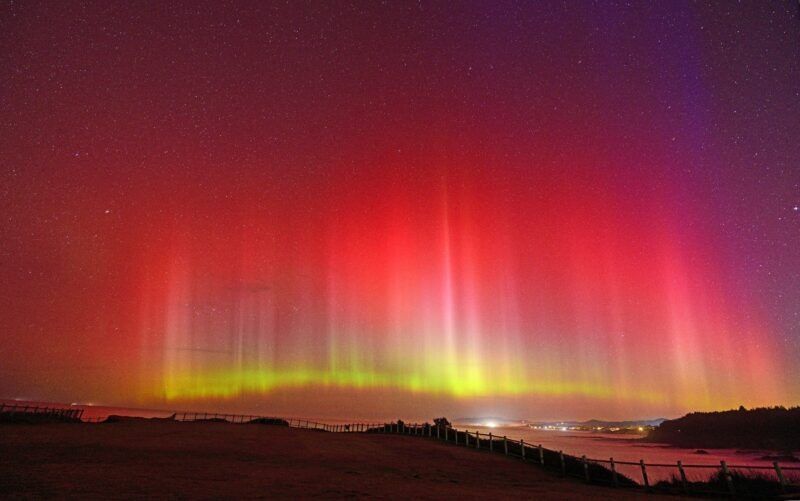
The most visible and beautiful effect of these storms is the aurora, or northern and southern lights. Charged particles from the sun are funneled by Earth's magnetic field toward the poles, where they collide with atoms in the upper atmosphere, causing them to glow in spectacular curtains of green, red, and purple. During intense storms, the auroral oval expands, allowing the lights to be seen at much lower latitudes than usual, sometimes as far south as the northern United States or central Europe.
Beyond the Light Show: Technological Vulnerabilities
The real-world risks posed by severe space weather
While auroras capture the public imagination, the technological impacts of geomagnetic storms are a serious concern for infrastructure operators. The induced electrical currents in the ground during a major storm can overload power grids, potentially causing widespread blackouts. A famous example is the 1989 Quebec blackout, which left millions in Canada without power for nine hours following an intense solar storm. Grid operators today closely monitor space weather forecasts to prepare protective measures.
Satellites are on the front line of these solar assaults. High-energy particles can cause physical damage to solar panels and electronics, degrade sensors, and disrupt communications and GPS signals. During strong storms, satellite operators may put spacecraft into a safe mode to protect them. Furthermore, increased atmospheric drag caused by the heating of the upper atmosphere can alter the orbits of satellites and space debris, creating collision risks for the thousands of objects in low-Earth orbit.
Global Monitoring and Forecasting Efforts
How the world tracks the sun's activity
A global network of ground-based and space-based observatories provides continuous surveillance of the sun. Key assets include NASA's Solar Dynamics Observatory, which images the sun in multiple wavelengths, and the ESA/NASA Solar and Heliospheric Observatory (SOHO). These spacecraft monitor for flares and, crucially, use coronagraphs to block the sun's bright disk and detect CMEs as they billow into space. This data is essential for determining a CME's speed and direction.
Forecast centers like NOAA's Space Weather Prediction Center in the United States and the Met Office's Space Weather Operations Centre in the UK analyze this data to issue alerts and forecasts. Their models attempt to predict if and when a CME will hit Earth, and how strong the resulting geomagnetic storm might be. However, as noted by earthsky.org, forecasting the precise intensity and timing remains challenging, as it depends on the CME's internal magnetic structure, which is difficult to measure from a distance.
Historical Context: Learning from Past Solar Superstorms
The Carrington Event and modern preparedness
The current activity, while significant, pales in comparison to historical extremes. The benchmark event is the Carrington Event of 1859, named after the astronomer who observed the causative solar flare. That storm produced auroras visible near the equator and caused telegraph systems—the advanced technology of the day—to fail, with some operators reporting sparks and fires. If a storm of that magnitude occurred today, studies suggest it could cause catastrophic, long-term damage to global power grids and satellite networks.
This historical precedent underscores the importance of modern preparedness. Since the Carrington Event, our technological footprint has become exponentially more complex and vulnerable. International efforts, such as those coordinated by the World Meteorological Organization, aim to improve global forecasting and response protocols. The goal is to move from reactive measures to a more resilient infrastructure designed to withstand a 'once-in-a-century' solar superstorm.
The Human Element: Radiation Exposure at High Altitudes
Risks for aviation and future space exploration
Geomagnetic storms have implications for human safety beyond the ground. During these events, radiation levels increase at high flight altitudes, particularly near the polar regions where Earth's magnetic shielding is weakest. For frequent flyers and airline crew on polar routes, this can lead to a higher cumulative radiation dose. Airlines sometimes reroute flights during severe storms to lower-latitude paths to mitigate this exposure, though this comes with increased fuel costs and flight time.
For future crewed missions to the Moon or Mars, this solar radiation poses a much greater challenge. Outside the full protection of Earth's magnetosphere, astronauts would be exposed to the full brunt of a solar energetic particle event. Developing reliable storm shelters within spacecraft and accurate early-warning systems is a critical hurdle for long-duration exploration. The current active solar cycle serves as a real-world testbed for the technologies and protocols needed to keep spacefarers safe.
Economic and Societal Costs of Space Weather
Quantifying the impact of a disrupted technological society
The economic toll of a major geomagnetic storm could be staggering. A 2013 study by Lloyd's of London and Atmospheric and Environmental Research estimated that a Carrington-level event could cause up to $2.6 trillion in damages to the U.S. alone, with recovery taking years. The disruption would cascade through finance (which relies on precise timing from GPS), telecommunications, transportation, and supply chains. The interdependence of modern systems means a failure in one sector can rapidly propagate to others.
On a day-to-day level, even moderate storms incur costs. Power companies spend on preventative grid management, satellite operators lose revenue from service interruptions or shortened spacecraft lifetimes, and airlines absorb the cost of flight rerouting. There is a constant trade-off between the expense of implementing robust protective measures and the statistical risk of an extreme event. This ongoing solar activity provides valuable data to refine those risk models and justify investments in resilience.
The International Dimension: A Shared Vulnerability
Why space weather is a global concern requiring cooperation
Space weather does not respect national borders. A CME impacts the entire sun-facing side of the planet simultaneously. A major storm could therefore cripple infrastructure across multiple continents at once, hampering the ability of any single nation to provide aid to another. This shared vulnerability makes international collaboration in monitoring, forecasting, and response not just beneficial but essential. Data sharing between space agencies and weather services is the cornerstone of effective global forecasting.
However, disparities in monitoring capabilities and infrastructure resilience exist between nations. Wealthier countries with advanced space programs and robust power grids are better equipped to forecast and weather a storm. Developing nations, which may be equally dependent on satellite services like GPS for navigation and timing, might have fewer resources for mitigation. This creates a potential 'space weather divide,' where the global south could suffer disproportionately from the impacts of a major event originating 150 million kilometers away.
Looking Ahead: The Future of Solar Cycle Prediction
The challenges in forecasting the sun's long-term behavior
While short-term forecasting of individual storms is improving, predicting the overall intensity and timing of the sun's 11-year cycle remains an elusive goal. The current cycle has proven to be more active and complex than many initial predictions suggested. The underlying dynamo processes that generate the sun's magnetic field deep within its interior are not fully understood, making long-term projections difficult. This uncertainty complicates planning for satellite missions, infrastructure upgrades, and space exploration timelines.
Scientists are developing more sophisticated models that incorporate data from helioseismology—the study of sound waves reverberating inside the sun—to probe its internal structure. The goal is to move from empirical pattern-matching to a true physical understanding of the solar dynamo. Success would mean better predictions of not just the severity of solar maximum, but also the potential for clusters of extreme storms, allowing for more strategic and cost-effective preparations by governments and industries worldwide.
Perspektif Pembaca
The dance between our planet's magnetic field and the sun's fury is a constant, unseen force shaping our technological existence. As society grows more reliant on vulnerable systems, our relationship with our star becomes more complex.
What single piece of critical infrastructure in your daily life—be it the power grid, GPS, internet, or something else—would you find most disruptive to lose for a week due to a severe solar storm, and how would you personally adapt? Share your perspective on which vulnerability concerns you most and why.
#SolarStorm #SpaceWeather #Aurora #Sun #GeomagneticStorm


