

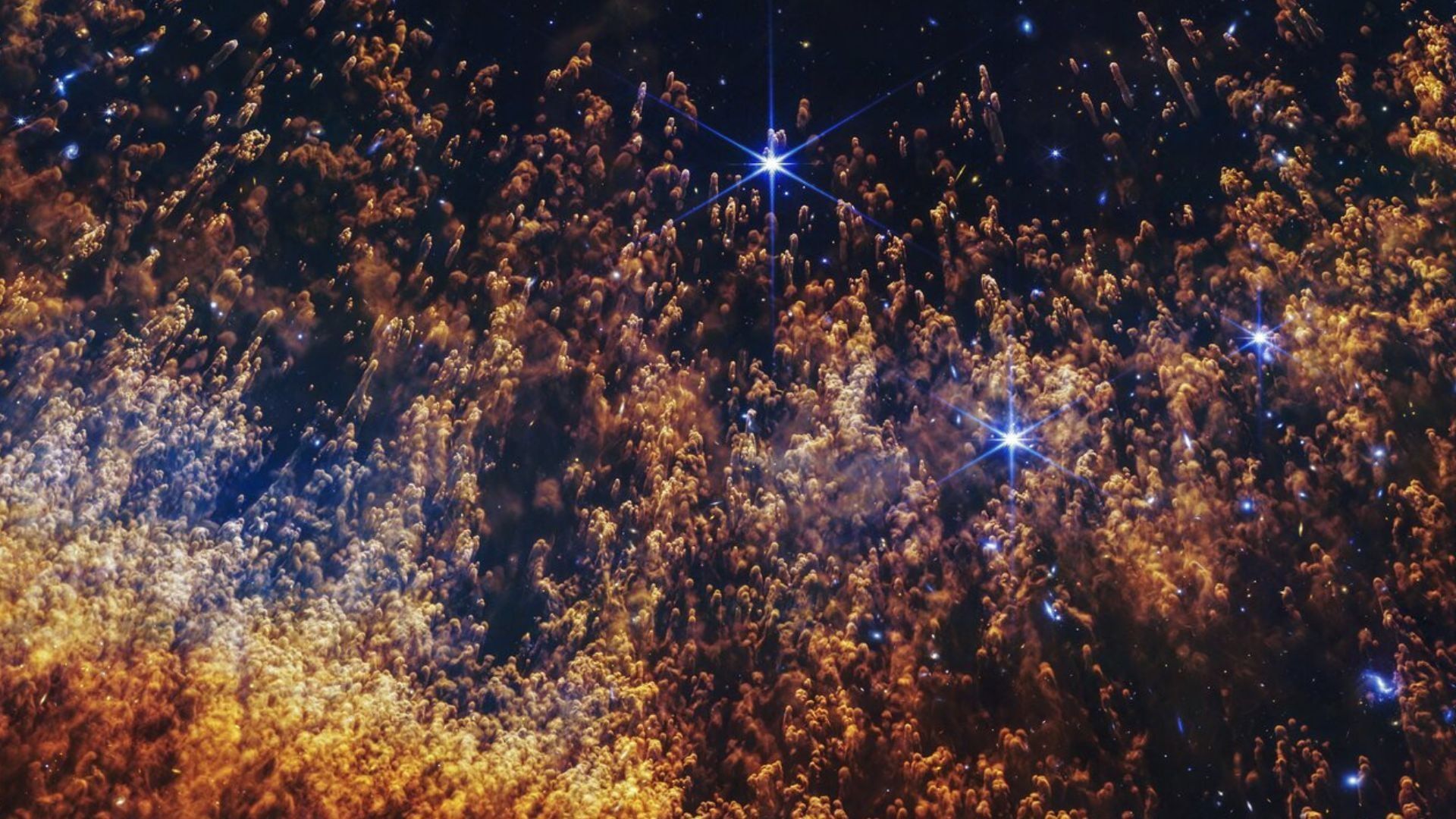
Webb Telescope's Helix Nebula Revelation: Unlocking Cosmic Chemistry of Life's Building Blocks

📷 Image source: cdn.mos.cms.futurecdn.net
A Cosmic Eye Reveals Its Chemical Secrets
JWST's infrared gaze penetrates a dying star's gaseous shroud
The James Webb Space Telescope (JWST) has turned its powerful infrared instruments toward one of the most iconic celestial objects visible from Earth: the Helix Nebula. Often nicknamed the 'Eye of God' for its striking, pupil-like appearance in earlier images, this nebula is the glowing aftermath of a star's death, located approximately 655 light-years away in the constellation Aquarius.
According to data published by livescience.com on 2026-01-25T11:00:00+00:00, Webb's new observations go far beyond creating a beautiful picture. The telescope's spectrographs have dissected the light from the nebula, identifying the specific molecules swirling within its vast, expanding cloud of gas and dust. This molecular census provides unprecedented clues about the raw materials available for planet formation—and potentially life—long after a star has expired.
Beyond the Iconic Image: What the Helix Nebula Really Is
A planetary nebula marks the Sun's probable future
The Helix is classified as a planetary nebula, a term that is a historical misnomer from early telescopic views that resembled fuzzy planets. In reality, it represents a late stage in the life of a sun-like star. After exhausting the hydrogen fuel in its core, the star expanded into a red giant before shedding its outer layers into space. The remaining hot, dense core, now a white dwarf, illuminates the ejected material, causing it to fluoresce.
This process is a fundamental recycling mechanism in the galaxy. The elements forged inside the star during its life and final death throes—carbon, nitrogen, oxygen—are blasted into the interstellar medium. According to the analysis from livescience.com, the Helix Nebula serves as a nearby laboratory to study the chemical output of this common stellar fate, one that awaits our own Sun in about 5 billion years.
Molecular Fingerprints in Infrared Light
How Webb's technology decodes cosmic chemistry
Webb's primary advantage for this study is its sensitivity to infrared light. The dusty tendrils of the nebula, which block visible light, are more transparent to these longer wavelengths. Furthermore, many molecules emit and absorb light at specific infrared frequencies, creating unique spectral 'fingerprints.' Webb's Near-Infrared Spectrograph (NIRSpec) and Mid-Infrared Instrument (MIRI) captured these fingerprints across the structure.
The technical process involves collecting light from specific regions of the nebula and splitting it into a spectrum—a rainbow of infrared colors. Dark lines or bright bands in that spectrum correspond to specific molecular bonds vibrating or rotating. By matching these patterns to known laboratory data, astronomers can create an inventory of the nebula's molecular content with precision far beyond previous observatories.
The Detected Molecules: A Toolkit for Future Worlds
Hydrogen, carbon chains, and potential precursors
The published findings, as reported by livescience.com, confirm the presence of fundamental molecular hydrogen (H₂) throughout the nebula, which was expected. More significantly, the data reveal emissions from carbon-based molecules, including polycyclic aromatic hydrocarbons (PAHs). These are complex, ring-structured molecules of carbon and hydrogen that are considered fundamental building blocks of prebiotic chemistry.
While the exact full inventory from this observation is not detailed in the source, the confirmed detection of such carbon-rich compounds in a planetary nebula is a key discovery. It demonstrates that the chemical foundations for organic chemistry are being manufactured and dispersed into space by dying stars. This material will eventually mix with other gas and dust, becoming part of future generations of stars, planets, and potentially, biological systems.
Context: The Stellar Lifecycle and Galactic Enrichment
How nebular ejecta seed the galaxy with heavy elements
The Helix Nebula findings fit into the broader narrative of cosmic chemical evolution. The early universe contained only hydrogen, helium, and trace lithium. All heavier elements, collectively called 'metals' by astronomers, are created via nuclear fusion inside stars or during their violent deaths in supernovae and nebular ejections. Planetary nebulae like the Helix are a primary delivery mechanism for elements like carbon, nitrogen, and oxygen.
This process, repeated over billions of years and across countless stars, has gradually enriched the interstellar medium. Each new generation of stars and planets forms from material that is chemically richer than the last. Therefore, studying the molecular output of the Helix provides a snapshot of one critical step in this grand cycle that made Earth's chemistry—and life—possible.
Comparative Analysis: Helix vs. Other Nebulae
Understanding variation in chemical outputs
Planetary nebulae are not chemically identical. Their composition depends on the mass, age, and specific evolutionary path of the progenitor star. The Helix, originating from a star very similar to our Sun, provides a crucial benchmark. Observations of nebulae from more massive stars might show different ratios of elements or even different types of complex molecules.
International astronomical efforts, using facilities like the Atacama Large Millimeter/submillimeter Array (ALMA) in Chile and now JWST, are building a comparative library of these objects. By contrasting the Helix's molecular makeup with that of nebulae in different galactic environments or from different stellar types, scientists can trace how a star's initial conditions dictate its final chemical gift to the galaxy. The livescience.com report positions this Helix data as a foundational point in that larger research endeavor.
Mechanisms of Molecule Survival in a Harsh Environment
How delicate compounds endure ultraviolet radiation
A central question raised by the detection of molecules like PAHs in the Helix Nebula is how they survive. The central white dwarf emits intense ultraviolet (UV) radiation, which has enough energy to break apart molecular bonds—a process known as photodissociation. The fact that these molecules are observed suggests the existence of protective environments within the nebula.
Astronomers hypothesize that dense, dusty clumps or globules within the expanding shell can shield molecules from the full brunt of the UV flux. These globules, some of which are visible as comet-like knots in high-resolution images, may act as incubators where more complex chemistry can occur. The survival of these molecules long enough to be ejected into deep space is critical for the theory that stellar death contributes to the prebiotic inventory of star-forming regions.
Implications for Astrobiology and Life's Origins
Connecting stellar death to the seeds of life
The discovery of carbon-based molecules in the Helix Nebula does not mean life exists there. The environment is far too hostile. Instead, it strengthens the link between stellar astrophysics and astrobiology. It provides observational evidence that key organic precursors are not only formed on planetary surfaces but are also synthesized in space and distributed widely.
This supports the panspermia hypothesis in its broadest sense—not necessarily the spread of life itself, but the galactic-scale dissemination of life's potential ingredients. When a molecular cloud enriched by the ejecta of stars like the Helix's progenitor collapses to form new planetary systems, those organic compounds are already present. They can be delivered to young planets via comets, asteroids, and dust, providing a head start for chemical evolution.
Limitations and Unanswered Questions
What the current data cannot tell us
While groundbreaking, the findings from the Helix Nebula, as reported, represent a starting point. The source material does not specify the exact abundances or isotopic ratios of the detected molecules, which are crucial for understanding their formation pathways. Furthermore, the spatial distribution of different molecules within the nebula's complex structure is likely varied and requires more detailed mapping.
There is also uncertainty regarding the maximum complexity of molecules that can form in such an environment. Can amino acids or nucleobases, the direct building blocks of life as we know it, form here, or are they only assembled in more sheltered, planetary settings? The current observations confirm the presence of robust precursors but leave open the question of how far the chemistry can progress before the material is diluted into the interstellar medium.
The Future of Nebular Science with JWST
A new era of detailed chemical cartography
The Helix Nebula observation is a demonstration of JWST's transformative capability for nebular astrophysics. Future programs will likely target a diverse array of planetary and supernova remnants across the Milky Way and even in nearby galaxies. The goal will be to create three-dimensional chemical maps, showing not just what molecules are present, but where they are concentrated and how they interact with the radiation field.
This will allow scientists to move from inventory-taking to studying active chemical processes in real-time. They can test models of molecule formation and destruction in these extreme environments. Each nebula becomes a recorded history of its star's final acts, and JWST is now the premier tool for translating that record, with profound implications for our understanding of galactic ecology and our own chemical origins.
Perspektif Pembaca
The discovery that the raw ingredients for life are being forged in the aftermath of stellar death forces a profound perspective shift. We are not merely inhabitants of a solitary planet but connected participants in a vast, cyclical chemical exchange that spans the galaxy.
What aspect of this cosmic connection between stellar death and the potential for new life do you find most compelling or awe-inspiring? Is it the sheer scale of the process, the specific chemistry involved, or the philosophical implications for our place in the universe? Share the perspective that resonates most deeply with you.
#JWST #HelixNebula #Astronomy #SpaceScience #CosmicChemistry


