

William Foege, Architect of Smallpox Eradication Strategy, Dies at 89

📷 Image source: statnews.com
A Life Dedicated to Global Health
The epidemiologist whose insight changed the course of history
William Foege, the epidemiologist whose strategic pivot became the cornerstone of the global campaign that eradicated smallpox, has died at 89. His death was confirmed by a family statement, according to statnews.com.
Foege’s career was a testament to the power of applied epidemiology and compassionate public health. While many are credited with the victory over one of humanity’s oldest scourges, it was Foege’s method—surveillance and containment, or 'ring vaccination'—that proved to be the decisive tactical shift. This approach moved away from mass, indiscriminate vaccination to a targeted strategy of isolating outbreaks and vaccinating everyone in the immediate vicinity.
The Genesis of a Radical Idea
From Nigeria's chaos to a global blueprint
The strategy was born not in a pristine Geneva conference room, but in the challenging realities of 1960s Nigeria. As a young medical officer with the U.S. Centers for Disease Control and Prevention, Foege faced a dire shortage of vaccine. According to the report, he and his team were forced to innovate, focusing their limited doses on tracking cases and vaccinating contacts.
This method, now standard in outbreak response, was revolutionary at the time. It demonstrated that smallpox could be contained without blanketing entire populations. The data from this success became the critical evidence that convinced global health leaders to adopt surveillance and containment as the official strategy for the World Health Organization’s intensified eradication program. It was a data-driven decision that saved countless lives and resources.
Leading the CDC Through Crisis and Change
Foege’s leadership extended far beyond a single disease. He served as director of the U.S. Centers for Disease Control and Prevention from 1977 to 1983, a period marked by significant public health challenges. His tenure saw the agency grapple with the first recognized cases of what would become the HIV/AIDS pandemic, toxic shock syndrome, and the aftermath of the Legionnaires' disease outbreak.
According to statnews.com, colleagues remember him as a leader who championed the agency’s core mission of disease prevention while navigating complex political landscapes. He emphasized the moral imperative of public health, often framing it as a matter of social justice. This philosophical approach influenced a generation of health officials who saw their work not just as technical, but as fundamentally human.
A Focus on the World's Most Vulnerable
From smallpox to Guinea worm and river blindness
After his time at the CDC, Foege’s impact continued to resonate through major global health initiatives. He was a key architect and senior advisor for the Carter Center’s health programs, working closely with former President Jimmy Carter. His expertise was instrumental in the near-eradication of Guinea worm disease and the fight against river blindness and trachoma.
These campaigns against neglected tropical diseases reflected his lifelong belief in serving the poorest and most marginalized communities. The report states that Foege applied the same principles of rigorous surveillance, community engagement, and strategic focus that had defeated smallpox. His work demonstrated that eradication was not a one-time miracle, but a repeatable model for tackling other ancient afflictions.
The Teacher and the Mentor
Beyond his operational achievements, Foege shaped the field through education and mentorship. He held a professorship at Emory University’s Rollins School of Public Health, where he was known for his ability to distill complex epidemiological concepts into clear, compelling lessons. His teachings emphasized the interconnectedness of health, economics, and human rights.
Former students and protégés, many of whom now lead global health organizations, describe his guidance as transformative. He didn’t just teach methods; he instilled a philosophy that public health is the foundation for peace and development. This legacy of mentorship ensured that his strategic thinking and ethical framework would influence the field for decades after his direct involvement ended.
Awards, Recognition, and a Lasting Philosophy
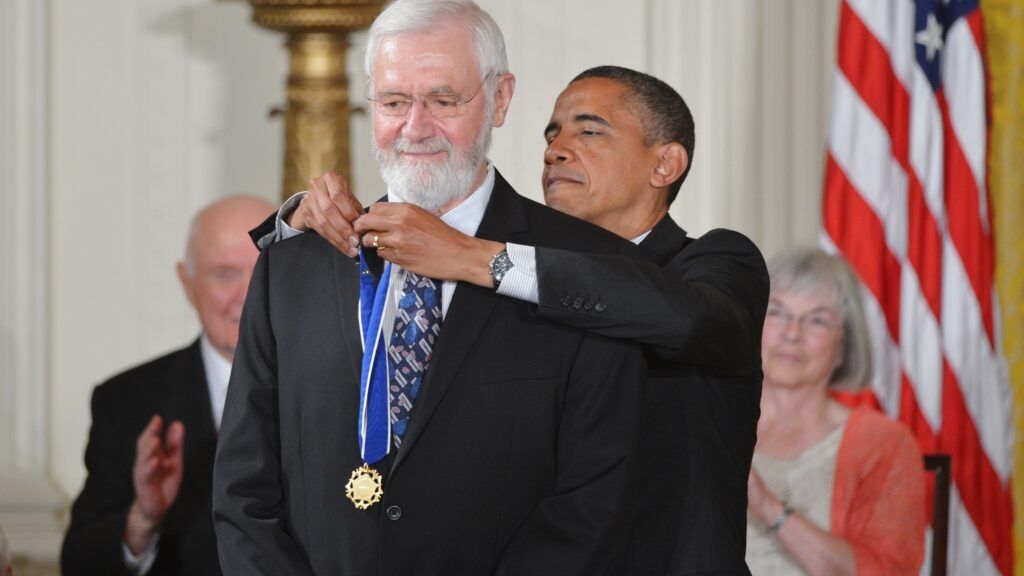
Foege received numerous accolades, including the Presidential Medal of Freedom, the highest civilian award in the United States. Yet, those who knew him say he wore these honors lightly, always redirecting praise to the collective efforts of field workers and communities.
His philosophy was perhaps best encapsulated in his own writings and speeches. He often argued that public health is ultimately about the stories behind the statistics—the individual lives saved, the suffering prevented. For Foege, the eradication of smallpox was not merely a technical victory but a profound moral achievement, proving that humanity could organize itself to eliminate a shared source of misery.
The Enduring Challenge of Eradication
Smallpox remains the only human disease conquered by design
Foege’s death comes at a time when the world is again grappling with the complexities of disease eradication and pandemic control. The successful model for smallpox, which he helped design, stands as both an inspiration and a sobering reminder. Decades later, smallpox remains the only human disease ever eradicated, highlighting the immense scientific, logistical, and political challenges involved.
The report from statnews.com underscores that his work established the foundational playbook: strong surveillance, international cooperation, adaptable strategy, and community trust. Current efforts to eliminate polio and other diseases still draw directly from the lessons learned during the smallpox campaign. In an era of vaccine hesitancy and misinformation, Foege’s legacy also underscores the irreplaceable value of clear communication and trust-building at the local level.
A Legacy Written in Lives Saved
William Foege’s life measured its impact not in years, but in generations freed from a deadly virus. His strategic insight in Nigeria turned a logistical limitation into a world-saving methodology. His leadership at the CDC steered the agency through turbulent times, reinforcing its scientific integrity.
Through his work with the Carter Center and as an educator, he extended his influence to battles against diseases of poverty, shaping the minds that would continue the fight. The eradication of smallpox, a milestone in human history, is inseparable from his contributions. As the public health community confronts new pandemics and old inequities, the principles he championed—evidence, equity, and unwavering compassion—remain the essential tools for building a healthier world. According to the publication, his death marks the passing of a giant, but the architecture of the world he helped create endures. statnews.com, 2026-01-25T20:18:42+00:00
#PublicHealth #Epidemiology #Smallpox #CDC #GlobalHealth


