

A Viking Age Enigma: Deciphering the Mixed Remains of a Mass Grave in Sweden

📷 Image source: cdn.mos.cms.futurecdn.net
Introduction: A Pit of Contradictions
Archaeologists in Sweden have uncovered a burial site that defies simple categorization. According to livescience.com, a mass grave dating to the Viking Age contains a perplexing mixture of complete, carefully placed skeletons and the jumbled, dismembered bones of other individuals. This discovery, made at a site in the historic port town of Sigtuna, presents a complex puzzle about death, ritual, and social identity in the 10th or 11th century.
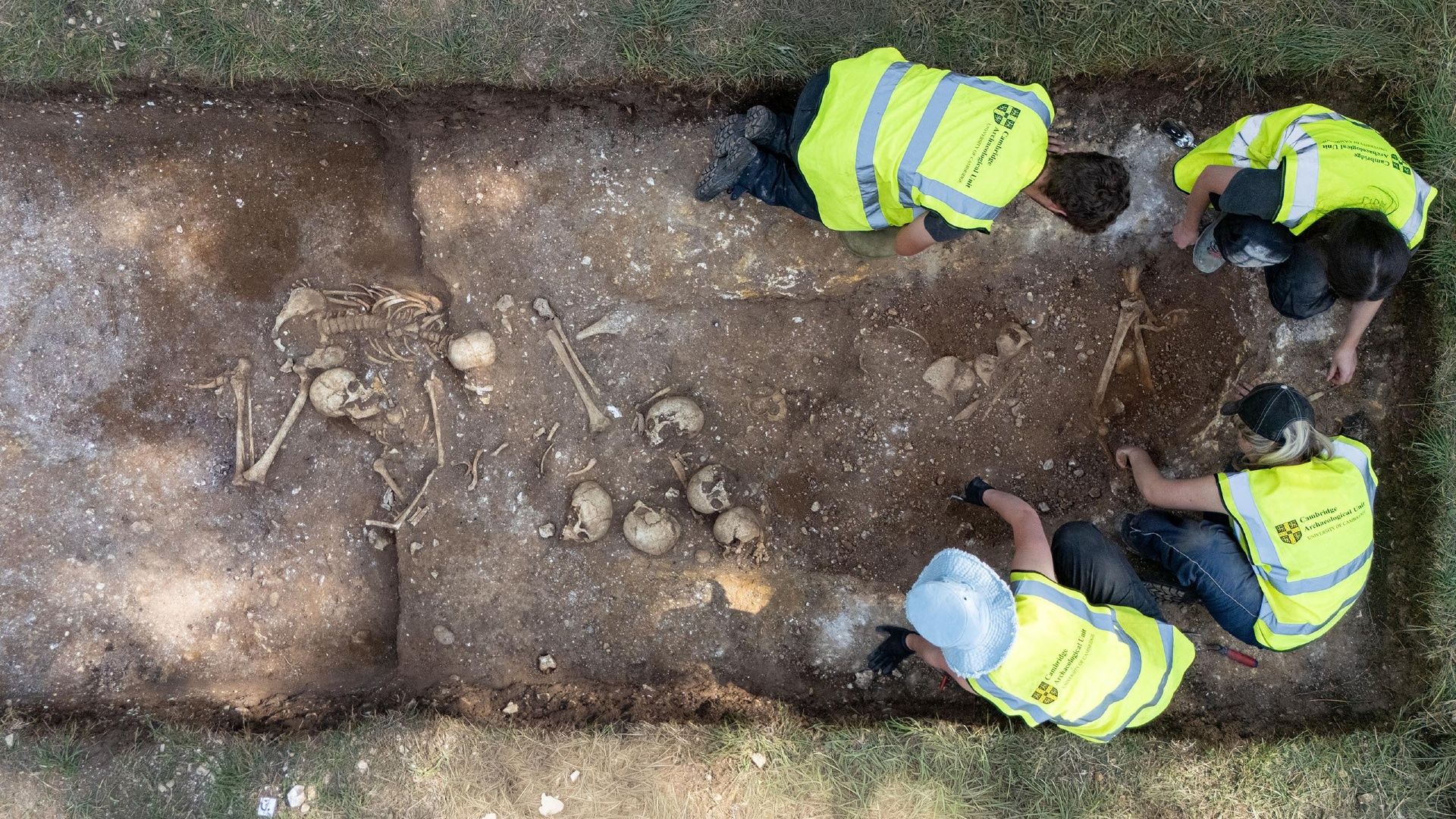
The grave, described in a study published in the journal Antiquity, held the remains of at least ten people. What makes the find particularly striking is the stark contrast in how these individuals were interred. Some skeletons were found intact, lying in a respectful, supine position. Others were represented only by scattered limb bones and skulls, suggesting they were deposited in the grave after decomposition or dismemberment elsewhere.
The Site and Its Historical Context
Sigtuna: A Crossroads of the Viking World
The excavation took place in Sigtuna, a town founded in the late 10th century that quickly became a prominent trading and political center. Sigtuna's location on Lake Mälaren connected it to the Baltic Sea trade routes, making it a hub for commerce, craftsmanship, and cultural exchange. This context is crucial for understanding the grave, as the town would have been a melting pot of local Swedes, traveling Norse, and possibly individuals from farther afield.
Archaeologists from the Cultural Environment of Stockholm County Council led the investigation. The mass grave was discovered during a routine archaeological survey preceding construction work. Such surveys are common in historically rich areas of Sweden and have led to numerous significant finds, though this particular grave's composition was immediately noted as unusual.
A Detailed Look at the Human Remains
Complete Burials Alongside Dismembered Bones
The grave's contents are split into two distinct groups. The first group consists of five complete skeletons. These individuals were laid to rest in an orderly fashion, indicating a deliberate and presumably respectful burial practice. Osteological analysis shows this group includes three adults, one teenager, and one child, pointing to a cross-section of the community rather than a single demographic like warriors.
The second group is composed entirely of disarticulated bones, representing a minimum of five more people. These remains include long bones and at least four skulls, mixed together without clear anatomical order. The state of these bones suggests they were either moved from another location after the bodies had skeletonized, or they were the result of deliberate post-mortem dismemberment. The reason for this stark dichotomy within a single pit is a central mystery of the discovery.
The 'Giant' and His Remarkable Surgery
Evidence of Advanced Viking Age Medicine
Among the complete skeletons, one adult male stands out—literally. According to the researchers, his stature was exceptionally tall for the period, estimated at 6 feet 3 inches (190 centimeters). In an era where the average male height was significantly less, he would have been perceived as a giant, a fact that likely shaped his social identity and how others viewed him during his life.
More astonishing than his height is the evidence of a complex medical procedure on his skull. The bone shows clear signs of trepanation, a form of early brain surgery where a hole is drilled or scraped into the cranium. The bone had partially healed, indicating he survived the operation for some time. This practice, known from other Viking Age and earlier cultures, was likely performed to treat severe headaches, mental illness, or to relieve pressure from a skull fracture.
Analyzing the Dismembered Remains
Theories of Ritual, Violence, or Reburial
The presence of dismembered bones alongside intact burials raises difficult questions. One possibility is that these individuals died in a violent event, such as a battle or raid. However, the lack of perimortem (around the time of death) trauma on the scattered bones, as reported by livescience.com, complicates this theory. If it was a massacre, one would expect to see cut marks or fractures from weapons.
Alternative explanations include complex funerary rituals. In some Norse practices, bodies were exhumed and moved after initial burial, which could lead to jumbled bones. Another possibility is that these were the remains of social outcasts, slaves, or executed criminals, denied the dignity of a full burial. The deliberate separation of body parts could have been a ritual act meant to prevent the dead from returning or to dishonor them.
The Medical Significance of the Trepanation
Understanding Viking Age Surgical Knowledge
The successful trepanation on the tall male provides rare, direct evidence of advanced medical knowledge in the Viking Age. The procedure required precise skill to penetrate the skull without damaging the underlying meninges and brain tissue, which would have been fatal. The survival and healing indicate post-operative care, including cleaning the wound and preventing infection—a significant challenge in a pre-antibiotic era.
This find adds to a small but growing body of archaeological evidence showing that Norse societies practiced sophisticated medicine. They used herbs, set bones, stitched wounds, and performed surgeries. The 'giant's' operation suggests he was a valued member of the community, worth the considerable risk and effort of such a dangerous procedure, further deepening the mystery of why he ended up in a mass grave.
Comparative International Context
Mass Graves and Mortuary Practice in the Early Medieval World
Mass graves from this period are not unique to Scandinavia, but their compositions vary widely based on context. In England, mass graves from the Viking Age often contain victims of the St. Brice's Day massacre or battle casualties, typically showing violent trauma. In contrast, some mass burials in early Christian cemeteries in Europe are linked to pandemic events, where bodies were interred quickly without signs of violence.
The Sigtuna grave is unusual because it mixes normative burial (complete skeletons) with what appears to be deviant or secondary burial (dismembered remains). Parallels might be found in certain Slavic or Baltic cultures where fragmentary reburial was part of ancestor cults, or in Anglo-Saxon execution cemeteries where bodies were sometimes dismembered. This places Sigtuna at a potential crossroads of differing mortuary traditions.
Potential Explanations and Leading Theories
Weighing the Evidence for a Coherent Narrative
Researchers are considering several scenarios to explain the grave's formation. One theory posits two separate burial events. The complete skeletons may have been the primary interments—perhaps a family group or victims of a disease. Later, bones from an older, possibly disturbed cemetery were collected and deposited into the same pit, creating the mixed assemblage. This practice, known as ossuary gathering, is documented in other historical contexts.
Another theory suggests a single, complex event. The individuals may have died from a non-violent cause like famine or an epidemic. For reasons lost to time, some were buried whole while others, perhaps dying later or arriving from elsewhere, were placed in the grave as disarticulated remains. The lack of clear trauma supports a non-violent cause of death for most, but the reason for the differential treatment remains elusive.
Limitations of the Investigation and Open Questions
What the Bones Cannot Tell Us
Despite advanced techniques like osteology and radiocarbon dating, significant uncertainties remain. The precise date of the burial within the Viking Age is not specified in the available report from livescience.com. Furthermore, without DNA or stable isotope analysis—which may be part of ongoing research—the genetic relationships between the individuals or their geographic origins are unknown. It is uncertain if they were all locals or if some were travelers.
Crucially, the social bonds connecting these ten people are invisible in the soil. Were they kin? Were they of different social strata? Did the tall man with brain surgery hold a special status? The grave's location outside Sigtuna's formal cemeteries hints at a non-normative burial, but whether this signifies exclusion, expediency, or a unique ritual is a matter of interpretation with no definitive answer yet.
Impact on Understanding Viking Age Society
Beyond Raiders and Traders
This discovery challenges monolithic views of Viking Age burial practices. It underscores the diversity and complexity of how Norse and adjacent communities dealt with death. The grave reveals that within a single community, multiple ways of handling the dead could coexist, reflecting different circumstances, beliefs, or identities. It moves the narrative beyond the famous ship burials of the elite to the more ambiguous, communal practices of the broader population.
The find also highlights the advanced, practical side of Viking society through the evidence of surgery. It forces a reconsideration of Sigtuna's early community as one capable of both profound violence (implied by the potential for dismemberment) and sophisticated care (demonstrated by the trepanation). This duality is a more nuanced and human picture of the past than popular culture often portrays.
Future Research Directions
The Next Steps in Solving the Mystery
The analysis of the Sigtuna mass grave is far from complete. Future work will likely involve detailed osteological analysis to identify any subtle pathologies or causes of death. Radiocarbon dating of individual bones could determine if all the remains are contemporaneous or if they represent deposits over decades. This is critical for distinguishing between a single event and multiple episodes of burial.
Perhaps most revealing would be biomolecular studies. Ancient DNA analysis could establish familial relationships between the individuals, answering whether this is a family plot. Strontium isotope analysis of their teeth could reveal where they grew up, testing if some were immigrants to Sigtuna. These scientific techniques offer the best hope for transforming the bones from a silent assembly into a chapter of personal and communal history.
Perspektif Pembaca
The discovery in Sigtuna forces us to confront the gaps in our understanding of the past. The co-mingling of respectful burial with disarticulated remains in a single pit is a powerful reminder that history is rarely simple or uniform.
What aspect of this discovery do you find most compelling or thought-provoking? Share your perspective on whether the mystery of the differing burial treatments is more likely rooted in ritual belief, social hierarchy, or practical necessity based on the available evidence.
#Archaeology #VikingAge #History #Sweden #Sigtuna


