

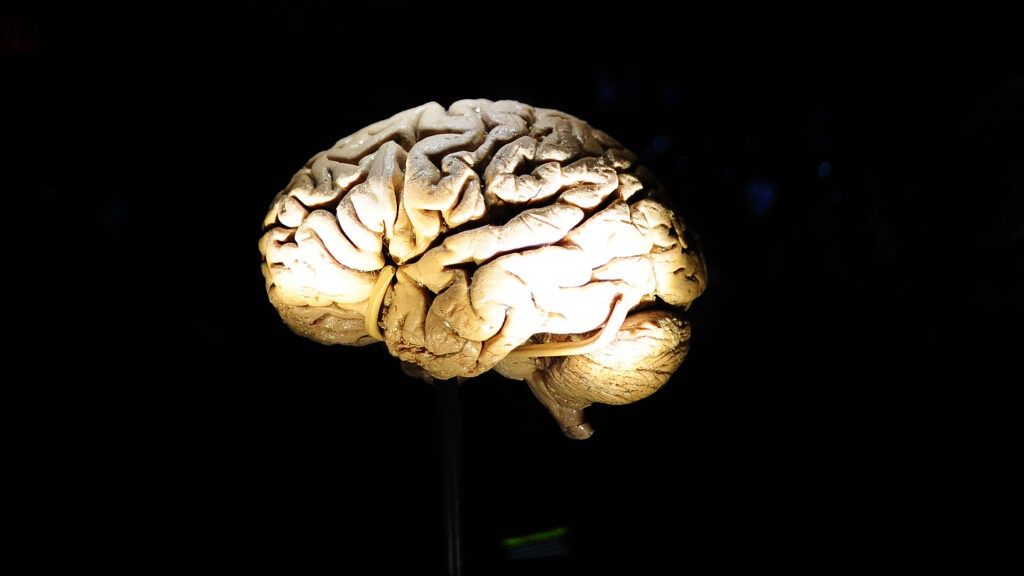
A Widow's Fury: NFLPA-Funded CTE Study Sparks Outrage Over Player Safety

📷 Image source: statnews.com
A Personal and Professional Outrage
A neuroscientist and widow confronts the NFLPA's controversial research
In the shadow of the Super Bowl, a storm of controversy has erupted not over a game-winning play, but over a study examining the very dangers of the sport itself. The critique comes from a uniquely qualified voice: Dr. Jennifer Bramen, a neuroscientist and the widow of former NFL player Jeffery Bramen, who died by suicide in 2022. Her fury is directed at a recent study funded by the NFL Players Association (NFLPA), which she argues dangerously downplays the link between football, CTE, and suicide.
According to her opinion piece on statnews.com, published on February 7, 2026, the study in question concluded that awareness of chronic traumatic encephalopathy (CTE) does not increase suicidal thoughts among former players. Dr. Bramen, who holds a Ph.D. in neuroscience, dismantles this finding with both personal anguish and scientific rigor. She contends the research is fundamentally flawed, serving more as public relations for the league than as legitimate science, and in doing so, betrays the very players the union is meant to protect.
Dissecting a Flawed Methodology
How the study's design may have predetermined its outcome
The core of Dr. Bramen's scientific critique lies in the study's methodology. The research, she explains, surveyed 1,700 former NFL players, asking them if they had heard of CTE and then assessing their mental health. It found no statistical difference in suicidal ideation between those aware of CTE and those who were not.
Dr. Bramen argues this approach is critically insufficient. 'You can’t measure the impact of CTE awareness by simply asking players if they’ve heard of it,' she states, drawing from the source material. The real psychological burden, she insists, comes not from casual awareness but from the specific, terrifying knowledge that one may already be suffering from an incurable neurodegenerative disease. The study failed to distinguish between players who had merely heard the term 'CTE' and those living with a diagnosis or debilitating symptoms that they now understand are linked to their career. This lack of granularity, according to her analysis, renders the central conclusion misleading.
The Glaring Omission: A Control Group
Perhaps the most significant scientific flaw Dr. Bramen identifies is the absence of a proper control group. A robust study would compare the mental health of former NFL players to a demographically similar group of men who did not play professional football. This would help isolate the specific effects of CTE awareness from other life stressors.
Without this comparison, the study's assertion that awareness isn't harmful is built on shaky ground. It cannot account for the baseline level of depression or anxiety that may already be elevated in this population due to the physical toll of their careers, the challenge of retirement, or the underlying brain damage itself. The statnews.com report highlights her position that the NFLPA-funded research asks the wrong question, designed to produce a reassuring soundbite rather than uncover a complex, uncomfortable truth.
A Union's Betrayal of Its Members
Funding research that protects the league over the players
The source of Dr. Bramen's personal fury is the role of the NFLPA. The players' union, an organization entrusted with safeguarding the health and welfare of its members, funded a study she views as intellectually dishonest and potentially harmful. She draws a direct line between this research and the NFL's decades-long history of minimizing the risks of head trauma.
'This feels like a page from the old NFL playbook,' she writes, according to the source article. By producing a study that suggests learning about CTE is not distressing, the union provides cover for the league. It creates a talking point that can be used to deflect responsibility, suggesting the problem is not the disease but the discussion around it. For families who have watched loved ones deteriorate, this narrative is a profound insult, implying their grief and fear are overblown.
The Human Cost Beyond the Statistics
Dr. Bramen's critique is not abstract. It is rooted in the loss of her husband, Jeffery, a defensive back who played for the Atlanta Falcons and Detroit Lions. His suicide followed years of struggling with depression, impulsivity, and cognitive decline—symptoms hauntingly consistent with CTE, though a postmortem diagnosis was not confirmed.
She describes the terrifying reality for families: watching a person change, grappling with mood swings and memory loss, and then discovering a scientific literature that links these exact symptoms to repeated head impacts. This specific, personalized awareness is what the study fails to capture. For every player or family member who reads the NFLPA study's headline and feels a false sense of security, Dr. Bramen sees a potential tragedy. The research, in her view, actively undermines efforts to get former players the compassionate, informed care they desperately need.
The Super Bowl's Deafening Silence
A stark contrast between celebration and unaddressed legacy
The timing of her published opinion, coinciding with the Super Bowl, is deliberate. The event represents the pinnacle of the sport, a cultural spectacle of athleticism and celebration. Yet, as Dr. Bramen points out, it also serves as an annual reminder of the stark disconnect between the game's glorified present and its traumatic legacy.
While millions watch for the thrill of the hit, former players and their families live with the consequences of thousands of such hits. The NFLPA study, released into this environment, acts as a form of noise cancellation, attempting to mute the growing concerns about the sport's long-term sustainability and duty of care. It raises a difficult question: can a union truly represent its members if it funds science that appears to minimize their most severe occupational hazard?
A Call for Authentic Science and Accountability
Dr. Bramen's argument is not against research itself, but for better, more ethical research. She calls for studies that follow players longitudinally, that image living brains, and that genuinely seek to understand the progression of CTE and its psychological impacts. The goal should be truth, not public relations.
True player advocacy, she contends, would involve the NFLPA pushing for greater safety protocols, funding unbiased research without pre-determined conclusions, and establishing robust mental health and neurological care programs for all former players. It means acknowledging the full weight of the evidence, even when it is inconvenient. The alternative is to continue a cycle where the institution protects itself first, leaving individual players and their families to shoulder the devastating burden alone.
An Unignorable Voice in the Concussion Debate
The power of Dr. Bramen's critique lies in its fusion of expertise and experience. As a neuroscientist, she dissects the study's weaknesses with precision. As a widow, she articulates its human cost with raw credibility. Her voice challenges the NFL and the NFLPA to move beyond defensive, damage-control science.
The debate over football and brain trauma is often framed as a clash between leagues and lawyers, or doctors and deniers. Dr. Bramen represents a different perspective: that of the directly affected insider who also holds the tools to analyze the data. Her fury, as detailed in the statnews.com piece from February 7, 2026, is a demand for integrity. It is a reminder that behind every statistic about 'awareness' and 'suicidal ideation' are real people living with fear, loss, and the irreversible consequences of the game they loved.
#CTE #NFL #PlayerSafety #Neuroscience #BrainTrauma


