

Electrochemical Breakthrough Aims to Unclog the Lithium Bottleneck

📷 Image source: spectrum.ieee.org
A Critical Refining Hurdle
Why the EV Revolution Hinges on Purer Lithium
The global push for electric vehicles has created an insatiable demand for lithium, but a significant bottleneck isn't in mining the raw material—it's in refining it to the ultra-pure grade required for batteries. Traditional methods are energy-intensive, chemically complex, and geographically limited, creating a precarious supply chain.
According to spectrum.ieee.org, a Canadian company, Mangrove Lithium, is pioneering a new electrochemical process that could dramatically simplify this critical step. Their technology, which recently secured a $10 million grant from the U.S. Department of Energy, promises a more flexible and potentially cleaner path to battery-grade lithium hydroxide.
The Problem with Conventional Refining
From Brine Ponds to Chemical Plants
Currently, most of the world's lithium is sourced from either hard rock ore or vast brine ponds in places like Chile and Argentina. The journey from these sources to battery-grade lithium hydroxide is long and fraught with complexity. The conventional process involves multiple steps of evaporation, chemical precipitation, and conversion, often requiring the intermediate production of lithium carbonate.
This method is not only slow—taking 12 to 24 months for brine-based lithium—but it also locks production into specific chemical pathways and large-scale centralized plants. The report states that this inflexibility is a major constraint, making it difficult to adapt to diverse lithium feedstocks or to deploy refining capacity closer to battery manufacturing hubs.
Mangrove's Electrochemical Core
A Modular, Membrane-Based Solution
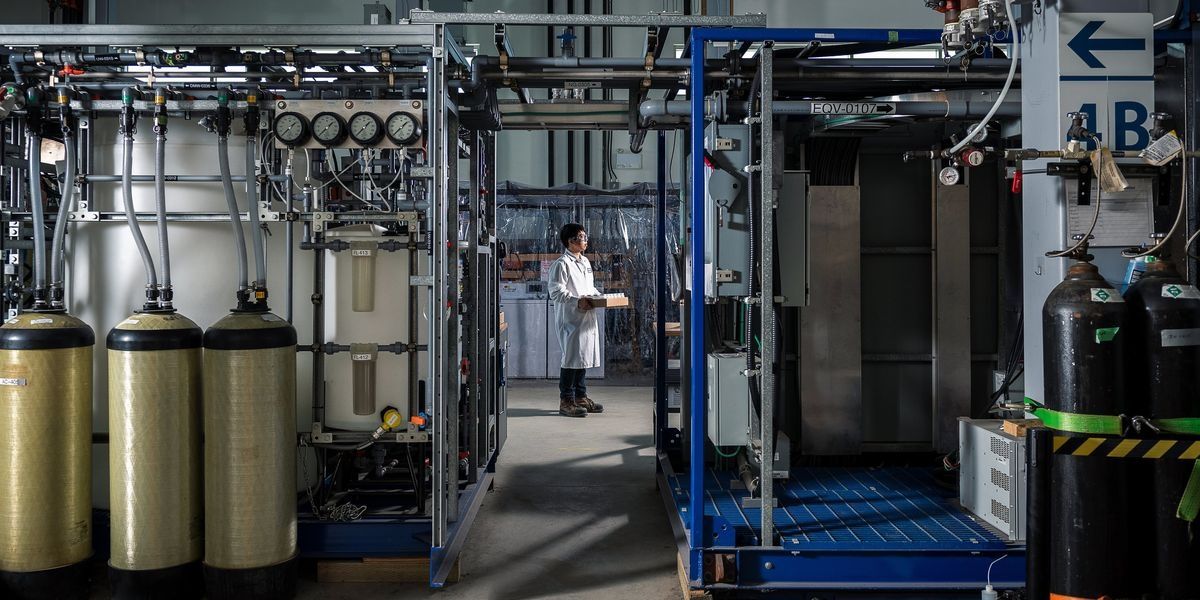
Mangrove's innovation centers on an electrochemical cell that directly converts impure lithium chloride or sulfate solutions into high-purity lithium hydroxide. The heart of the system is a proprietary ceramic membrane that is selectively permeable to lithium ions. When an electric current is applied, lithium ions are driven through this membrane, leaving behind impurities like magnesium, calcium, and boron.
The process is continuous and operates at relatively low temperatures, around 70 degrees Celsius, compared to the high-heat steps of traditional refining. This electrochemical 'pumping' of lithium allows for precise control over the final product's concentration and purity, targeting the stringent specifications required by cathode manufacturers.
Flexibility as a Key Advantage
Adapting to Diverse Global Feedstocks
Perhaps the most compelling aspect of the technology is its claimed feedstock agnosticism. According to spectrum.ieee.org, the system is designed to handle inputs ranging from lithium-rich brines and mine leachates to recycled battery material. This flexibility could be transformative.
It means a single modular plant could potentially serve multiple sources, reducing the need for bespoke, billion-dollar refineries. A company could deploy smaller-scale units at a mine site to produce a high-value purified product for shipment, rather than moving massive volumes of raw material. This modularity addresses a core logistical and economic pain point in the current supply chain.
The DOE Grant and Pilot Ambitions
Scaling from Lab to Commercial Demonstration
The recent $10 million award from the U.S. Department of Energy's Advanced Materials and Manufacturing Technologies Office is earmarked for a critical next phase: building a commercial-scale demonstration plant. The goal is to prove the process can reliably produce 1 metric ton per month of battery-grade lithium hydroxide monohydrate.
This pilot is not just about volume; it's a test of durability, efficiency, and real-world economics. The funding underscores a strategic push by the U.S. to foster domestic and allied capabilities in critical mineral processing, reducing reliance on a refining ecosystem currently dominated by China.
Energy and Environmental Considerations
A Greener Refining Proposition?
While any industrial process consumes energy, Mangrove's electrochemical approach claims several potential environmental benefits over the status quo. By avoiding the need to produce lithium carbonate as an intermediate, it eliminates the associated chemical reactions and byproducts, such as sodium sulfate.
The process also uses electricity as its primary driver. In a grid powered by renewable energy, this could significantly lower the carbon footprint of refined lithium. Furthermore, the system's closed-loop design aims to minimize water usage and waste generation compared to traditional evaporation ponds and chemical plants, though its full lifecycle analysis at commercial scale remains to be seen.
Challenges on the Path to Market
Proving Durability and Cost Competitiveness
The road from a successful pilot to widespread industry adoption is steep. Key hurdles remain. The longevity and fouling resistance of the critical ceramic membranes under constant industrial operation will be a major factor in operational costs. Can they maintain performance and selectivity over years of use?
Furthermore, the technology must prove it can achieve a lower all-in cost than incumbent methods, which have decades of optimization behind them. Convincing conservative mining and chemical companies to adopt a novel process for such a high-value product will require impeccable data from the demonstration plant and likely first adopters willing to take a calculated risk.
A Potential Shift in the Supply Chain
Implications for Miners, Refiners, and Automakers
If successful, Mangrove's technology could redistribute leverage and opportunity across the lithium value chain. For mining companies, it offers a way to capture more value on-site by producing a upgraded product directly. For regions with lithium resources but lacking traditional refining infrastructure, it presents a more accessible entry point.
For battery and automakers desperate for secure, diversified supplies, the promise of geographically distributed, modular refining is highly attractive. It could make sourcing from new, smaller deposits more economical and add resilience against geopolitical and logistical shocks. As the report from spectrum.ieee.org highlights, this isn't just about a new piece of lab equipment; it's about reimagining how a foundational material for the energy transition is purified and delivered.
#Lithium #EV #BatteryTech #CleanEnergy #SupplyChain


