

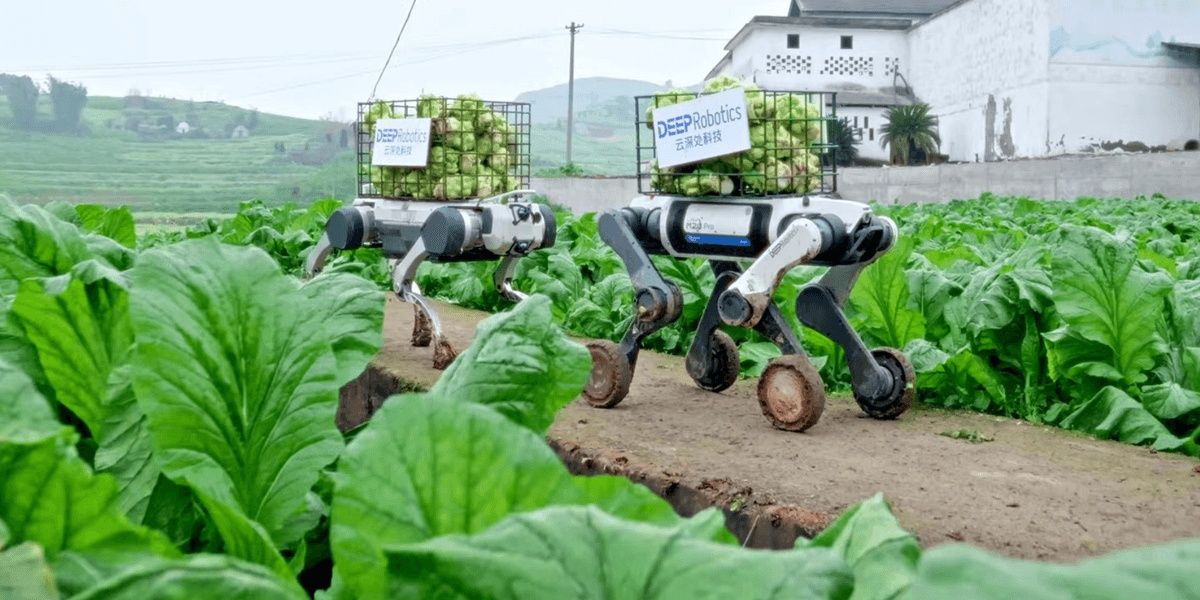
From Guard Dogs to Farm Dogs: Quadrupeds Take on Agriculture's Heavy Lifting

📷 Image source: spectrum.ieee.org
A New Breed of Farmhand
Quadruped Robots Transition from Security to Harvesting
The image of a robot dog often conjures thoughts of high-security facilities or futuristic patrols. But a new video from Spectrum IEEE reveals a far more pastoral application: these agile machines are being repurposed as agricultural workhorses. The footage shows a pair of quadruped robots, models from Boston Dynamics and Unitree, deftly navigating the uneven terrain of a farm field. Their mission? To autonomously harvest and transport produce, demonstrating a potential solution to persistent labor shortages and back-breaking work in agriculture.
This isn't a speculative concept. The video documents a real-world pilot where these robots are tasked with hauling baskets of produce from the field to a collection point. The shift from concrete floors to soft, uneven soil represents a significant technical challenge, one that these machines appear to be overcoming. As the global agricultural sector grapples with an aging workforce and the physical demands of harvesting, such innovations could redefine the very nature of farm labor.
The Technical Challenge of Unstructured Terrain
Operating in a controlled warehouse is one thing; navigating a farm field is another. According to the report from spectrum.ieee.org, the primary hurdle for these quadruped robots is adapting to the highly variable and unstructured outdoor environment. Fields are riddled with ruts, soft patches, and obstacles like rocks and plants, which can confuse standard navigation systems.
The robots showcased, including Boston Dynamics' Spot and Unitree's B2 model, rely on advanced sensor suites—combining lidar, cameras, and inertial measurement units—to build a real-time map of their surroundings. Their control algorithms must constantly adjust leg placement and body posture to maintain stability while carrying a load. This requires processing power to interpret sensor data and execute precise movements without tipping over, especially when the cargo shifts. The video evidence suggests they are managing this balance, literally and figuratively, as they trot with laden baskets.
Autonomous Harvesting in Action
From Detection to Delivery
The core task demonstrated goes beyond simple walking. The robots are engaged in a full harvest cycle. According to the spectrum.ieee.org report, the process begins with the robot identifying and navigating to ripe produce. Using its onboard vision systems, it can locate target crops, likely programmed to recognize specific colors, shapes, or sizes indicative of ripeness.
Once positioned, a robotic arm attachment—a common accessory for these platforms—is used to gently pick the fruit or vegetable and place it into a transport basket secured to the robot's back. The video shows the quadrupeds then autonomously plotting a course back to a designated depot, avoiding obstacles along the way. This end-to-end automation highlights a move towards what developers call 'task-level' autonomy, where the robot understands the objective and executes the necessary sequence of actions without step-by-step human guidance.
Addressing the Labor Crunch
The push for robotic farmhands isn't driven solely by technological curiosity; it's a direct response to a critical economic pressure. The agricultural industry worldwide faces a severe and growing shortage of reliable seasonal labor. This work is physically demanding, often conducted in harsh weather, and subject to fluctuating immigration and labor policies.
By deploying robots for the repetitive and strenuous task of hauling heavy produce, farmers could reallocate human workers to more skilled roles like quality inspection, machine maintenance, and complex selective harvesting. The report implies that this isn't about replacing people entirely, but about creating a hybrid workforce where machines handle the brute-force logistics. This could make farms more resilient and sustainable from a labor perspective, ensuring harvests are completed on time regardless of available human hands.
Payload and Endurance: The Metrics of a Workhorse
For a harvesting robot to be practical, it must carry a meaningful amount of produce. The video and report from spectrum.ieee.org provide concrete figures on this capability. The Unitree B2 model is shown carrying a payload of up to 80 kilograms, which is approximately 176 pounds. The Boston Dynamics Spot, while smaller, can still manage a significant load for its size.
Endurance is another key factor. A robot that needs recharging every hour is of little use for a full day's harvest. The electric quadrupeds are designed for extended operation, with battery lives that allow them to work for several hours before requiring a charge. This makes them viable for shift work in the fields. The combination of substantial payload capacity and all-day endurance transforms them from novel demonstrations into legitimate tools for improving operational efficiency on the farm.
Beyond Hauling: The Data-Collection Advantage
The value of these robots may extend far beyond their immediate cargo. As mobile sensor platforms, they can gather vast amounts of data during their daily rounds. Every trip through the field generates information on crop health, soil conditions, and pest presence. With multispectral or other specialized cameras, they could identify signs of disease or nutrient deficiency long before the human eye can see them.
This creates a feedback loop where the robot isn't just a courier but an integral part of precision agriculture. According to the context from the source, the data collected can inform irrigation schedules, fertilizer application, and harvest timing, leading to better yields and more sustainable resource use. The robot that hauls the tomatoes today could be providing the insights that help grow more and better tomatoes tomorrow, making it a dual-purpose asset for the modern farm.
The Path to Commercial Viability
Cost, Reliability, and Farmer Acceptance
The video proves the technical feasibility, but widespread adoption hinges on commercial viability. High upfront cost is a major barrier; a single advanced quadruped robot can represent a significant investment for a farm. Developers and early adopters will need to demonstrate a clear return on investment through labor savings, reduced waste, and increased yield from data insights.
Reliability in all weather conditions—mud, rain, dust, and heat—is another hurdle that field testing must overcome. Furthermore, farmers, who are traditionally pragmatic adopters of technology, need to trust the robots' durability and ease of use. The transition will likely start in high-value crop sectors like fruits and vegetables, where the cost of lost labor or damaged produce is greatest. The pilot projects shown in the video are critical steps in building that trust and proving the business case.
A Quiet Revolution in the Fields
The scene of a robot dog carrying a basket of produce is a powerful symbol of a shifting agricultural landscape. As reported by spectrum.ieee.org on 2026-02-27T18:00:55+00:00, this application leverages advanced robotics to solve a fundamental human challenge. It represents a convergence of mobility, autonomy, and manipulation in one of the oldest and most vital human industries.
While the sight may seem futuristic, the driving forces behind it—labor shortages, the physical toll of farming, and the need for greater efficiency—are very much present-day concerns. The successful demonstration of these quadruped harvesters suggests that the future of farming may not be dominated by giant, impersonal machines, but by nimble, intelligent assistants that work alongside humans. The question is no longer if robots will work in our fields, but how quickly they will become a familiar, indispensable part of the harvest crew.
#Robotics #Agriculture #AI #BostonDynamics #Automation


