

Silent Signals: How Caterpillars Use Their Hairs to Listen to the World

📷 Image source: earthsky.org
A Discovery in the Leaves
Unveiling an Unconventional Sense
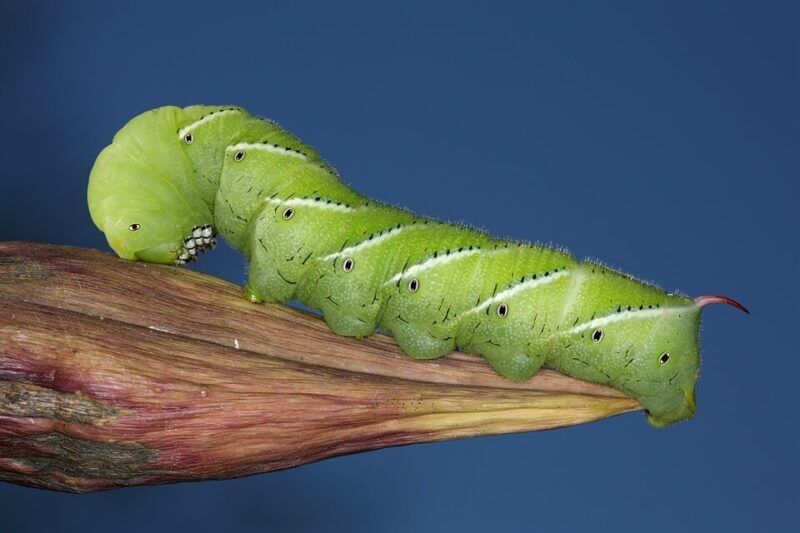
In the quiet rustle of a garden, a caterpillar munches on a leaf, seemingly oblivious to the world beyond its meal. Yet, groundbreaking research reveals these creatures are far from deaf. According to earthsky.org, scientists have made a startling discovery: certain caterpillars can hear, not with ears as we know them, but through tiny, delicate hairs that cover their bodies. This finding, published on February 9, 2026, fundamentally reshapes our understanding of insect sensory biology and predator evasion.
The study, detailed by earthsky.org, focuses on a group of caterpillars known for their distinctive, fuzzy appearance. Researchers found that these sensory hairs, or setae, are not merely for touch or defense; they are sophisticated auditory organs capable of detecting specific sound frequencies. This revelation challenges long-held assumptions about how soft-bodied, immature insects perceive and interact with their acoustic environment, suggesting a hidden layer of complexity in their struggle for survival.
The Mechanics of Hairy Hearing
How Setae Transform Sound into Signal
So, how does a hair become an ear? The process is a marvel of biomechanical engineering. According to the report, these specialized setae are exquisitely tuned to vibrate in response to particular sound waves in the air. When a sound at the right frequency hits, the hair oscillates. This physical movement is then transmitted to a sensory cell at the hair's base, which converts the mechanical vibration into a neural signal the caterpillar's nervous system can interpret.
This mechanism is notably distinct from the tympanal organs found in some adult moths and butterflies. Those are more like conventional eardrums—thin, stretched membranes. The caterpillar's system is decentralized and integrated into its outer layer. The research indicates this hair-based hearing is highly selective. It's not about appreciating a symphony but about picking up crucial, life-saving cues from the environment, filtering out irrelevant noise to focus on what truly matters for its immediate survival.
The Predator's Frequency
Tuned to the Sound of Danger
What sound is so critical it warrants an entirely novel auditory system? The answer lies in the flutter of wings. The earthsky.org report states that these caterpillar hairs are precisely tuned to detect the low-frequency sounds produced by the wingbeats of predatory wasps. These flying hunters are a primary threat to caterpillars, seeking them out to lay eggs that will eventually consume the host from within.
By being attuned to this specific acoustic signature—a frequency range reportedly between 100 and 500 hertz—the caterpillar receives an early warning system. The gentle hum we might barely notice is, for the caterpillar, a blaring alarm siren. This targeted hearing allows it to freeze its movement or drop from the leaf, employing evasive maneuvers before the wasp can even get a visual lock. It's a defensive strategy built not on strength or speed, but on advanced sensory intelligence.
Evolutionary Implications
A Sensory Arms Race
This discovery opens a new window into the evolutionary arms race between predator and prey. The development of hair-based hearing in caterpillars represents a direct and sophisticated countermeasure to the hunting prowess of wasps. It underscores how evolutionary pressure can drive the repurposing of existing structures—in this case, tactile hairs—for entirely new sensory functions.
Scientists speculate this trait likely evolved in species under intense predation pressure. It's a clear example of adaptation, where a slight sensitivity in a hair to vibration conferred a survival advantage, was naturally selected, and was refined over generations into a dedicated auditory organ. This finding prompts further questions about how widespread such hearing mechanisms might be in other insect larvae or soft-bodied arthropods that lack traditional ears.
Research Methodology and Validation
Proving Hearsay with Science
How did researchers confirm that hairs, and not some other hidden structure, were responsible for hearing? The earthsky.org article describes a meticulous experimental process. Scientists used precise laser vibrometry to measure microscopic vibrations in the caterpillars' hairs when exposed to controlled sounds. They then compared neural responses when the hairs were stimulated versus when they were carefully immobilized or shielded.
The correlation was undeniable: the neural signals only occurred when the hairs were free to vibrate. Furthermore, by testing different sound frequencies, the team mapped the hairs' sensitivity range, confirming its peak alignment with the wingbeat frequency of relevant wasp species. This rigorous approach ruled out other potential sound detection methods and solidly established the setae's primary auditory role.
Beyond Wasps: A Broader Acoustic Landscape
What Else Might They Hear?
While the primary function appears laser-focused on detecting wasps, researchers are curious about the broader acoustic picture. Could these hairs pick up other environmental sounds? The vibration of an approaching bird's wings, the rustle of a foraging rodent, or even weather events like wind might generate frequencies within the detectable range.
The current research, as reported, strongly emphasizes the anti-wasp adaptation. However, it is plausible that this sensory system provides a more general awareness of the environment. For a vulnerable animal like a caterpillar, any advanced warning of disturbance, regardless of the specific source, could be beneficial. This opens fertile ground for future studies to explore the full spectrum of acoustic information these insects might process and how they differentiate between various threats.
Contrasts with Adult Hearing
From Hairy Larvae to Membranous Ears
The discovery creates a fascinating biological contrast within the same species' lifecycle. Many of the adult moths and butterflies that these caterpillars become possess tympanal organs—completely different hearing structures often located on the thorax or abdomen. These are efficient for the adults' needs, which may include detecting bat echolocation calls during night flight.
This means the insect essentially discards one complex auditory system (the hairy, decentralized one) after metamorphosis and develops another. It highlights how dramatically an organism's sensory priorities and anatomical solutions can shift between life stages. The caterpillar is engineered for survival in a sedentary, leafy world menaced by wasps, while the moth is engineered for survival in an aerial world menaced by bats. The sensory tools are tailored to the specific ecological niche of each phase.
Future Directions and Unanswered Questions
The Path Forward for Sensory Biology
The revelation from earthsky.org is far from the final word; it's a starting point for numerous new inquiries. Key questions remain. How exactly is the vibrational signal from the hair processed by the caterpillar's relatively simple brain? Are there differences in hearing sensitivity between species or even between individual hairs on the same caterpillar? Furthermore, could understanding this mechanism inspire new, ultra-sensitive micro-mechanical sensors for human technology?
Researchers now have a new model system for studying the evolution of hearing and vibration detection. As the report confirms, this work dismantles the simplistic view of caterpillars as deaf, eating machines. Instead, it paints a portrait of a perceptive organism, quietly listening to the world through its skin, engaged in a silent, vibrational dialogue of survival that has been ongoing for millions of years, just now becoming audible to human science.
#Science #Biology #Insects #Research #Evolution


