

The Unanswered Question: Probing the Ultimate Origins of Our Universe

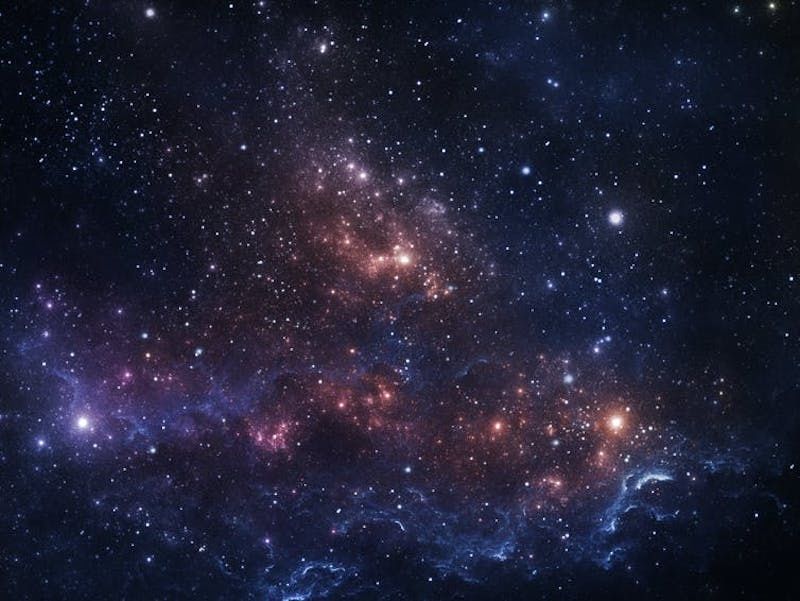
📷 Image source: earthsky.org
Introduction: The Most Profound Puzzle
From Philosophy to Physics
For millennia, humans have looked at the stars and asked a seemingly simple question: why does anything exist at all? This inquiry, which sits at the boundary of philosophy, cosmology, and fundamental physics, remains one of the most profound puzzles facing science today. It challenges our understanding of reality, pushing the limits of what we can observe and comprehend.
According to a feature on earthsky.org, published on 2026-02-08T09:00:09+00:00, modern cosmology has provided a detailed history of the universe back to a tiny fraction of a second after the Big Bang. Yet, the ultimate origin—the reason for the initial conditions or the cause of the Bang itself—eludes definitive explanation. The article underscores that while we have a robust narrative of cosmic evolution, the foundational 'why' remains an open frontier.
The Standard Cosmological Model: A Story with a Missing First Page
The Triumph and Limits of the Big Bang Theory
The prevailing scientific narrative, the Lambda-Cold Dark Matter (ΛCDM) model, describes a universe that began in an extremely hot, dense state approximately 13.8 billion years ago. From that initial singularity, space itself expanded and cooled, allowing energy to condense into fundamental particles, then atoms, and eventually the galaxies and stars we see today. This model is supported by a wealth of evidence, from the cosmic microwave background radiation to the observed abundance of light elements.
However, as noted by earthsky.org, this model is fundamentally a description of what happened after the beginning, not an explanation for the beginning itself. The laws of physics, as we currently understand them, appear to break down at the moment of the singularity. This leaves a critical gap in our story: what set this entire process in motion, and what, if anything, preceded it?
Quantum Origins: Something from Nothing?
Exploring the Possibility of a Spontaneous Universe
One leading set of ideas from theoretical physics suggests the universe could have arisen from a quantum fluctuation in a pre-existing void. In quantum field theory, empty space is not truly empty but seethes with transient particles and energy that pop in and out of existence. Some cosmologists propose our entire cosmos could be a vastly larger, stabilized version of such a fluctuation.
This concept, while mathematically intriguing, raises its own deep questions. It typically requires some form of pre-existing quantum field or spacetime fabric from which to fluctuate, which some argue merely pushes the question of origins back a step. Furthermore, our current theories struggle to describe how the specific, finely-tuned conditions necessary for a long-lived universe like ours could emerge purely randomly from such an event.
The Multiverse Hypothesis: Our Universe as One of Many
A Cosmic Landscape of Possibilities
A broader framework that attempts to address the fine-tuning of our universe's physical constants is the multiverse concept. This idea posits that our Big Bang was not a unique event but one of perhaps an infinite number occurring in a vast meta-universe or 'multiverse.' Each of these universes could have different laws of physics, with ours being one of the rare, habitable variants.
Proponents argue this could explain why our universe appears so specially suited for life without invoking a designer—if there are countless universes, it's statistically likely that at least one would have the right conditions. However, critics point out a major limitation: the multiverse is, by its nature, potentially unobservable and untestable with current technology. It remains a speculative, though influential, idea in theoretical circles rather than a confirmed scientific fact.
The Role of Cosmic Inflation
A Pivotal Epoch That Shaped Everything
A key component of modern cosmology is the theory of cosmic inflation. This proposes that a fraction of a second after the beginning, the universe underwent an exponential expansion, smoothing it out and planting the seeds for all future structure. Inflation is supported by specific patterns observed in the cosmic microwave background, the afterglow of the Big Bang.
Inflationary theory addresses *how* our universe got its large-scale properties, but it does not definitively explain *why* inflation started or what preceded it. Some models link the inflationary field to quantum processes, potentially connecting it to ideas of a spontaneous origin. Yet, the initial trigger and the ultimate source of the energy that drove inflation remain active areas of research and debate among physicists.
Philosophical and Conceptual Hurdles
When Science Confronts Metaphysics
The question 'why is there something instead of nothing?' inevitably brushes against philosophical domains. Some philosophers and scientists argue it may be a question that science, in its current form, is fundamentally unequipped to answer. Science excels at describing mechanisms and histories within the universe using natural laws, but applying those same laws to explain the origin of the universe itself—and the laws—can lead to circular reasoning.
For instance, asking for a 'cause' of the universe assumes that causality, a relationship that operates within spacetime, also applies to the origin of spacetime. This may not be a valid assumption. The earthsky.org article highlights this tension, noting that some thinkers propose the universe may be a 'brute fact' with no further explanation, a conclusion that is deeply unsatisfying to the human drive for causal understanding.
The Fine-Tuning Enigma
A Universe Remarkably Suited for Life
Observations reveal that the fundamental constants of nature—such as the strength of gravity or the nuclear forces—appear exquisitely balanced to allow for the existence of stars, planets, and ultimately, life. If these values were slightly different, complex structures could not form. This apparent fine-tuning is a major facet of the origin debate.
Explanations for fine-tuning range from the multiverse (where we naturally find ourselves in a habitable universe) to theories of a deeper, unified physics that necessitates these values. Another possibility, though not a scientific one in the traditional sense, is the anthropic principle: we observe these constants because they are compatible with our existence as observers. This principle is descriptive rather than explanatory, but it frames the boundaries of the discussion.
Future Avenues of Inquiry
Where the Search for Answers is Headed
The scientific pursuit of cosmic origins continues through multiple fronts. Cosmologists are refining measurements of the cosmic microwave background and large-scale structure to test inflationary models and probe the universe's earliest moments. Particle physicists are conducting experiments, like those at the Large Hadron Collider, to uncover new fundamental particles and forces that may have played a role in the hot Big Bang.
Simultaneously, theorists are working on more complete frameworks, such as quantum gravity theories that seek to unify general relativity with quantum mechanics. A successful theory of quantum gravity might allow physicists to model the singularity itself or describe a universe that cycles or emerges from a prior state. However, as per the source material, significant conceptual and mathematical hurdles remain before any such theory can make testable predictions about the ultimate origin.
International Perspectives and Collaborative Efforts
A Global Quest for Understanding
The drive to understand cosmic origins is a truly global endeavor. Major observatories like the Atacama Cosmology Telescope in Chile, the Planck space observatory (a European Space Agency mission), and the upcoming Vera C. Rubin Observatory in Chile involve international consortia of scientists. These collaborations pool resources, expertise, and perspectives to tackle a problem that transcends national boundaries.
Different cultural and philosophical traditions also bring varied lenses to the question of existence. While the scientific method provides a common framework for evidence, the interpretation of what a 'first cause' might mean or the implications of a universe from nothing can vary. This global dialogue enriches the pursuit, reminding us that the question is not just a technical one but a fundamental part of the human experience.
Implications and Limitations of the Search
What Finding—or Not Finding—an Answer Means
The search for an answer to why the universe exists carries profound implications. A scientific explanation rooted in natural law would represent the ultimate extension of human reason, potentially demystifying our cosmic home. It could also have philosophical and even theological repercussions, challenging or reshaping long-held worldviews about creation and existence.
Conversely, we must confront the possibility that a complete, empirically verifiable answer may forever lie beyond our reach. The tools of science are confined to observations within this universe, which may impose a fundamental horizon on our knowledge. Acknowledging this limitation is not a failure but a sober recognition of the boundaries of human inquiry. The value may lie as much in the refined questions we learn to ask as in a final answer.
Reader's Perspective
The quest to understand why the universe exists is more than an academic exercise; it touches on how we find meaning in our place in the cosmos. Different people reconcile the mystery in different ways—through scientific curiosity, philosophical reflection, spiritual belief, or a combination thereof.
We invite you to share your perspective. How do you personally grapple with the question of why there is something rather than nothing? Does the ongoing scientific search for answers influence your sense of wonder, meaning, or connection to the universe? Your viewpoint adds a valuable human dimension to this eternal inquiry.
#Cosmology #BigBang #Universe #Physics #Science


