

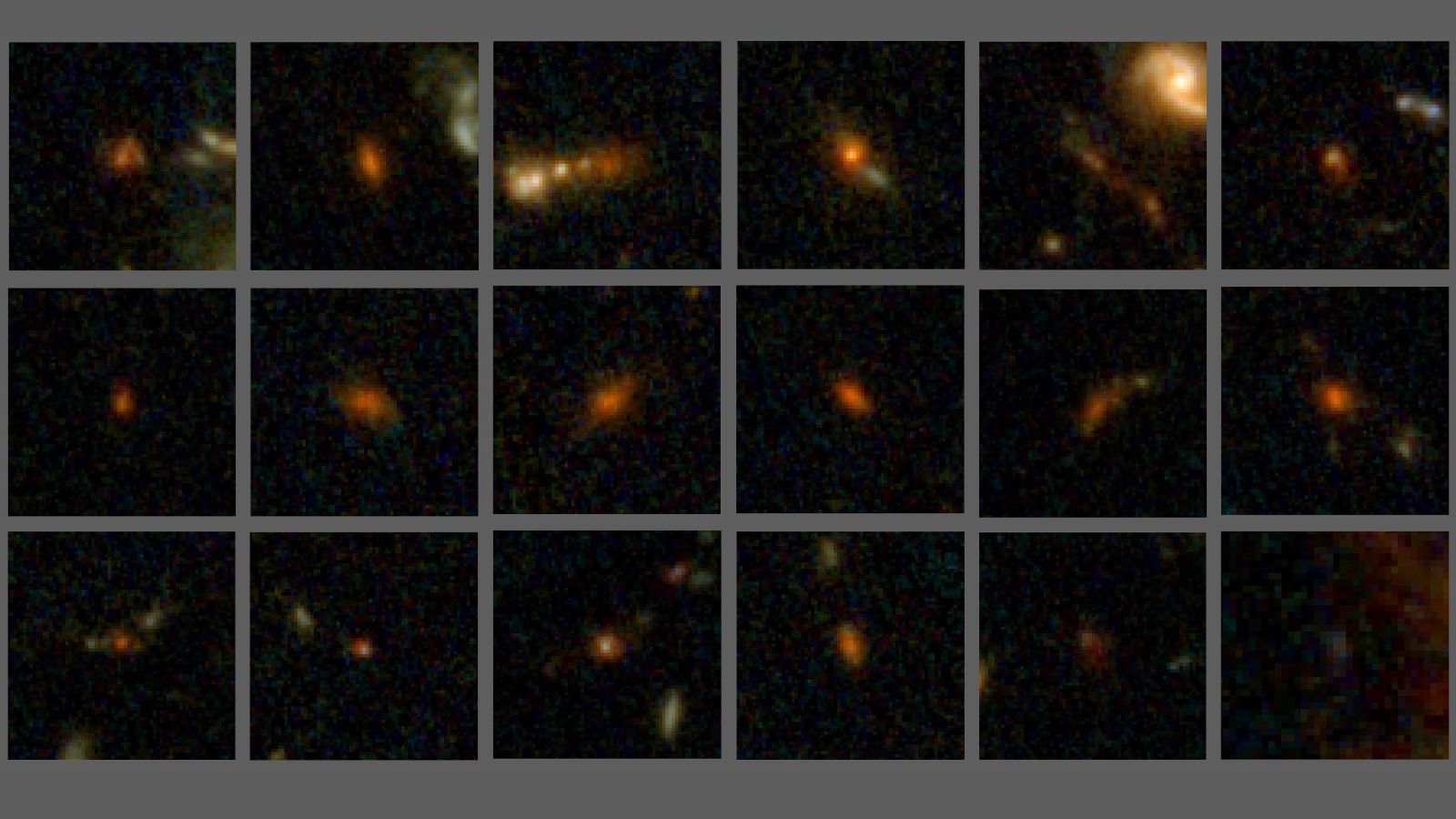
Webb's Cosmic Dust Storm: Seventy Ancient Galaxies Challenge the Dawn of Time

📷 Image source: cdn.mos.cms.futurecdn.net
A Cosmic Census at the Edge of Time
The James Webb Space Telescope spots an unexpected population in the early universe
Peering into the deepest, oldest reaches of the cosmos, the James Webb Space Telescope (JWST) has uncovered a population of galaxies that shouldn't be there. According to a report from space.com, astronomers have identified at least 70 galaxies, each brimming with dust, that existed when the universe was a mere 700 million years old. This discovery, published on February 20, 2026, directly challenges long-held theories about the timeline of cosmic evolution.
The sheer number and dusty nature of these ancient systems force a fundamental question: how did the universe get so messy, so fast? The prevailing model suggested the first galaxies were relatively pristine, composed largely of hydrogen and helium gas. Yet Webb's powerful infrared eyes are painting a far more complex and dusty picture of the cosmic dawn.
The Dust Dilemma: A Timeline Under Pressure
Cosmic dust isn't mere household grime; it's a critical component made of heavy elements like carbon, silicon, and iron. These elements are forged in the nuclear furnaces of stars and scattered into space when those stars die in supernova explosions. The presence of significant dust implies a prior generation of stars must have already lived, died, and enriched their surroundings.
According to the space.com report, finding such dusty galaxies only 700 million years after the Big Bang puts immense strain on existing timelines. It suggests that the first stars, known as Population III stars, must have formed, evolved, and exploded far earlier and more prolifically than most models predicted. The universe, it seems, got down to the business of recycling stellar material into new generations of stars and galaxies with startling speed.
Webb's Infrared Advantage: Seeing the Unseeable
How the telescope cuts through cosmic redshift
This discovery was only possible because of JWST's unique capabilities. Light from these incredibly distant galaxies has been traveling for over 13 billion years. During that journey, the expansion of the universe has stretched the light waves, a phenomenon known as redshift. The visible light these galaxies emitted has been shifted far into the infrared part of the spectrum, which is invisible to human eyes and to telescopes like Hubble.
Webb, however, is specifically designed as a premier infrared observatory. Its suite of instruments can detect this faint, stretched light, allowing it to see the galaxies as they were in their infancy. The data reveals not just their existence, but also the distinct chemical signatures of dust in their light, a fingerprint of rapid stellar evolution.
Quantity and Quality: A Statistical Shift
The significance lies not just in finding one or two oddball galaxies, but in identifying a substantial population. Seventy galaxies represent a statistically meaningful sample, indicating this is not a rare fluke but a common feature of the early universe. This forces a revision of our statistical understanding of galaxy formation in the first billion years.
As detailed in the report, astronomers used Webb's Near-Infrared Spectrograph (NIRSpec) to confirm the distances and properties of these galaxies. The data suggests these systems are actively forming stars, but the dust shrouds much of that activity, meaning earlier surveys with less powerful instruments likely missed entire swaths of the early cosmic population. We may have been underestimating the universe's early productivity by a significant margin.
The Stellar Forge: Rethinking the First Stars
The implications cascade backward in time. To produce the amount of dust observed, the very first stars must have been different than imagined. Perhaps they were more massive, burning through their fuel faster and exploding more violently. Or, perhaps, they formed in denser clusters, leading to a rapid-fire series of supernovae that quickly polluted the primordial gas.
This discovery adds weight to theories that the first billion years were a period of intense, chaotic, and dusty construction. The classic, clean narrative of gradual galaxy assembly is being replaced by a picture of a universe that got its hands dirty almost immediately, building complex structures from recycled stellar ashes far earlier than anyone anticipated.
A New Challenge for Cosmological Models
Computer simulations that model the evolution of the universe from the Big Bang to the present now face a new and stringent test. Any successful model must be able to account for the rapid emergence of a large population of dusty galaxies within the first 700 million years. This requires tweaking parameters related to star formation efficiency, supernova rates, and how quickly heavy elements can cool and condense into dust grains.
The space.com report indicates that theorists are already revisiting their code, using this Webb data as a crucial benchmark. The goal is to create a new generation of simulations that can birth a dusty cosmos from pristine beginnings at a pace that matches Webb's startling observations.
The Road Ahead: From Detection to Detailed Anatomy
Identifying these galaxies is just the first step. The next phase of research will involve longer, deeper observations with Webb to study them in finer detail. Astronomers want to measure their exact masses, map the distribution of dust and gas within them, and pinpoint their star-formation rates.
Further spectroscopic analysis will reveal the precise chemical makeup of the dust and gas. Is the composition similar to dust in later galaxies, or is it primitive and different? Each answer will provide another clue about the nature of those elusive first stars and the physical conditions in the universe's first chapters.
Rewriting the Cosmic Narrative
The discovery of these seventy dusty galaxies is more than a new catalog entry; it's a paradigm shift in the making. It demonstrates that the era of first light and first structure was richer, more complex, and more industrious than our textbooks described. The James Webb Space Telescope, by pushing our vision to the very edge of the observable universe, is fundamentally rewriting the story of cosmic dawn.
As astronomers continue to analyze this data and gather more, one thing is clear: our understanding of how the universe built itself from nothing into the web of galaxies we see today is undergoing a profound and dusty revision. The cosmos, it turns out, wasted no time in getting to work.
#JamesWebb #Astronomy #Galaxies #CosmicDawn #SpaceDiscovery


