

Beyond the Greenback: The Global Quest for Non-Dollar Stablecoins

📷 Image source: cdn.decrypt.co
The Unshakable Anchor
Why the Dollar Dominates Digital Currency
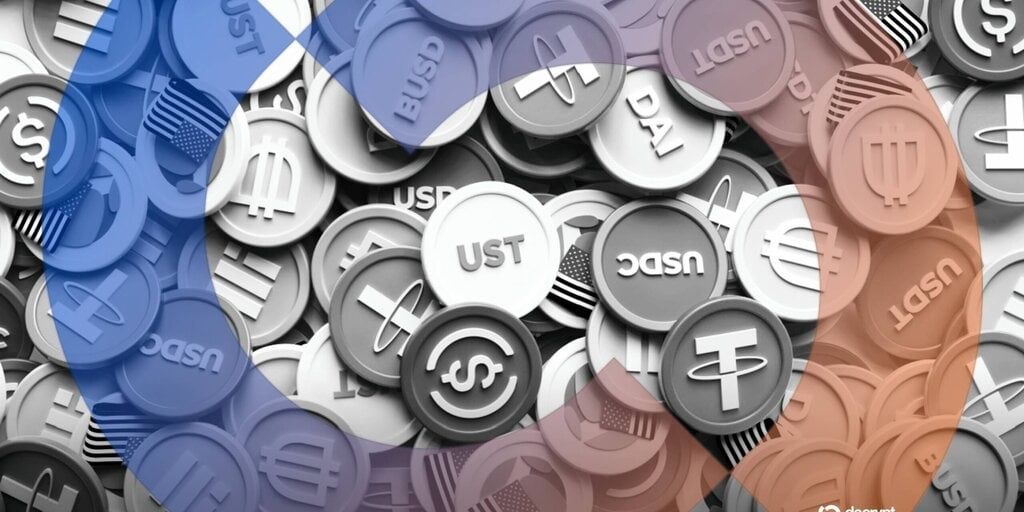
Stablecoins, cryptocurrencies designed to maintain a stable value by pegging to a reserve asset, have become the workhorses of the digital economy. Their primary function is to provide a predictable unit of account and medium of exchange within the volatile crypto markets. According to decrypt.co, the vast majority of this multi-hundred-billion-dollar market is tethered to a single fiat currency: the United States dollar.
This dominance is not accidental. The U.S. dollar's role as the world's primary reserve currency, its deep and liquid financial markets, and its perceived political stability make it a seemingly natural anchor. For global traders and decentralized finance (DeFi) protocols, a common dollar-denominated stablecoin creates a universal pricing layer, simplifying transactions across borders without the friction of traditional banking systems. This has cemented the dollar's position as the default benchmark for value in crypto.
Cracks in the Foundation
The Geopolitical and Regulatory Imperative for Change
However, this reliance on the dollar is increasingly viewed as a critical vulnerability, not a strength. Geopolitical tensions and the weaponization of dollar-based financial infrastructure through sanctions have spurred nations and economic blocs to seek alternatives. For countries facing U.S. sanctions or those wary of dollar hegemony, transacting in a dollar-pegged stablecoin offers little strategic advantage over using the dollar itself.
Simultaneously, regulatory pressure is mounting. The U.S. government is actively crafting legislation, such as the proposed Lummis-Gillibrand Payment Stablecoin Act, which would impose strict rules on issuers. These rules could mandate that issuers be U.S.-domiciled banks, potentially freezing out international players and forcing global users to comply with U.S. regulatory oversight. This convergence of geopolitics and regulation is the primary catalyst driving the search for stablecoins pegged to other assets.
The Sovereign Counteroffensive
National Digital Currencies Enter the Fray
One direct response is the development of Central Bank Digital Currencies (CBDCs). Over 130 countries, representing 98% of global GDP, are exploring CBDCs according to the Atlantic Council's tracker. A digital euro or digital yuan, issued and backed directly by their respective central banks, presents a sovereign alternative to private dollar stablecoins. These would be the ultimate 'official' stablecoins.
Yet, CBDCs come with their own baggage. They raise profound questions about privacy, as they could give governments unprecedented visibility into citizen transactions. Their design could also impact the traditional banking system by disintermediating commercial banks. Furthermore, the adoption of a foreign CBDC, like a digital yuan, for international trade would simply shift dependency from one central authority to another, rather than creating a truly decentralized or neutral monetary instrument.
Commodity-Backed Visions
Pegging Value to the Physical World
Another path diverges from fiat currency entirely, looking instead to tangible assets. Proposals exist for stablecoins backed by baskets of commodities like gold, oil, or lithium. The theory is that such a peg would derive value from globally recognized, physical resources, insulating it from the monetary policy of any single nation. Gold, with its millennia-long history as a store of value, is a frequent candidate.
In practice, commodity-backed stablecoins face significant hurdles. The storage, custody, and independent auditing of physical reserves are complex and costly. The value of commodity baskets can still be volatile based on global supply and demand shocks. Perhaps most critically, these assets are not inherently liquid for daily transactions; you cannot easily buy a coffee with a fraction of a barrel of oil. This limits their utility as a practical medium of exchange compared to currency-pegged rivals.
The Algorithmic Experiment
Seeking Stability Through Code Alone
The most radical departure is the concept of algorithmic stablecoins. These aim to maintain their peg not through collateral reserves, but through automated smart contracts that algorithmically expand or contract the token supply in response to market demand. If the price falls below the peg, the system destroys tokens to create scarcity; if it rises above, it mints new ones. The goal is a 'decentralized central bank' run by code.
This category has a troubled history. The dramatic collapse of TerraUSD (UST) in May 2022, which erased tens of billions of dollars in value, exposed the extreme fragility of certain algorithmic models under market stress. The event served as a stark warning that stability guaranteed purely by incentive mechanics and market participation can fail catastrophically. While new, more robust models are being researched, the category must overcome a severe crisis of confidence before gaining mainstream traction.
Multi-Currency Baskets
Diversifying the Peg
A more moderate innovation involves pegging a stablecoin to a basket of several fiat currencies, such as the IMF's Special Drawing Rights (SDR) which includes the U.S. dollar, euro, Chinese yuan, Japanese yen, and British pound. This approach diversifies risk away from any single currency's economic performance or policy decisions. It mimics the strategy of a balanced investment portfolio applied to a monetary peg.
For users, however, this creates complexity. The stablecoin's value would fluctuate slightly against any single constituent currency. This requires users to mentally convert its value, adding friction for everyday use where people think in terms of their local currency. Furthermore, the governance of which currencies are included in the basket and their weighting becomes a politically charged decision, potentially reintroducing the very centralization and geopolitical tensions these projects aim to avoid.
The Infrastructure Challenge
Liquidity, Adoption, and the Network Effect
Any challenger to dollar stablecoins must solve a monumental chicken-and-egg problem: liquidity and adoption. Major dollar stablecoins like Tether (USDT) and USD Coin (USDC) are deeply integrated into every major cryptocurrency exchange, DeFi protocol, and blockchain. This creates immense network effects; their utility is a function of their universal acceptance. A new euro-pegged or gold-pegged stablecoin would need to build this ecosystem support from near zero.
This requires convincing exchanges to list it, liquidity providers to fund its trading pairs, and developers to build it into their applications. Without deep liquidity, the stablecoin would suffer from high slippage (the difference between expected and executed trade prices), making it inefficient for large transactions. Overcoming the entrenched dominance of incumbents is perhaps the most significant non-technical barrier to entry.
Regional Power Plays
Localized Stablecoins for Targeted Economies
Some efforts are focusing not on global dominance, but on serving specific regional or economic corridors. A stablecoin pegged to the Singapore dollar or the Hong Kong dollar could facilitate trade and finance within Asia. The proposed BRICS bridge, a platform for settlements between member nations (Brazil, Russia, India, China, South Africa), could logically incorporate stablecoins pegged to a basket of local currencies to reduce dollar dependency in intra-bloc trade.
These regional projects may stand a better chance of initial adoption by solving clear, localized pain points, such as expensive remittance corridors or regional trade financing. They can tailor compliance to local regulations and partner with regional banks and payment processors. Success in one region could then provide a blueprint and a credibility boost for expansion, building a multi-polar stablecoin landscape gradually rather than through a single global challenge to the dollar.
The Privacy Paradox
Balancing Transparency with Anonymity
The evolution of stablecoins forces a reckoning with privacy. Fully-regulated fiat-backed stablecoins, in their quest for compliance, typically require user identification (KYC - Know Your Customer) and transaction monitoring, mirroring traditional banks. This is at odds with the pseudonymous ethos of early cryptocurrency. A sovereign CBDC would likely have even greater surveillance capabilities.
Conversely, a stablecoin that prioritizes privacy through advanced cryptographic techniques like zero-knowledge proofs could face immediate and severe regulatory hostility globally, limiting its pathways to mainstream liquidity and merchant acceptance. Finding a sustainable middle ground—perhaps through tiered systems or transaction privacy for small amounts—remains an unsolved design and policy challenge that will shape the usability and acceptance of any non-dollar alternative.
A Fragmented Future
The End of a Universal Standard?
The most likely outcome is not the replacement of the dollar stablecoin, but the proliferation of alternatives for specific use cases. The crypto monetary landscape may become multi-currency. A trader might hold dollar stablecoins for liquidity on global exchanges, use a euro stablecoin for DeFi protocols based in the European Union, and utilize a gold-pegged token as a long-term savings vehicle. Specialized stablecoins could emerge for specific industries like carbon credits or tokenized real estate.
This fragmentation would add complexity, requiring sophisticated wallets and interfaces to manage multiple currency exposures. It could also lead to new forms of volatility—not in the price of a single stablecoin, but in the exchange rates between different stablecoin pegs. The dream of a single, universal, decentralized money would give way to a pragmatic ecosystem of interconnected, specialized value tokens, reflecting the multifaceted and politically divided nature of the global economy itself.
Reader Perspective
The move away from dollar-dominated stablecoins is as much a social and political experiment as a financial one. It challenges assumptions about what gives money its value and who gets to control it.
What do you see as the most significant trade-off: the efficiency and network effects of dollar stablecoins, or the potential sovereignty and resilience offered by diversified alternatives? Do you believe a non-dollar stablecoin can ever achieve the same level of global liquidity and trust, or will we inevitably see a stratified system where different coins serve different masters and purposes? Share your perspective based on your experience in crypto, finance, or as an observer of global economics.
#Stablecoins #CBDC #Cryptocurrency #Geopolitics #Finance


