

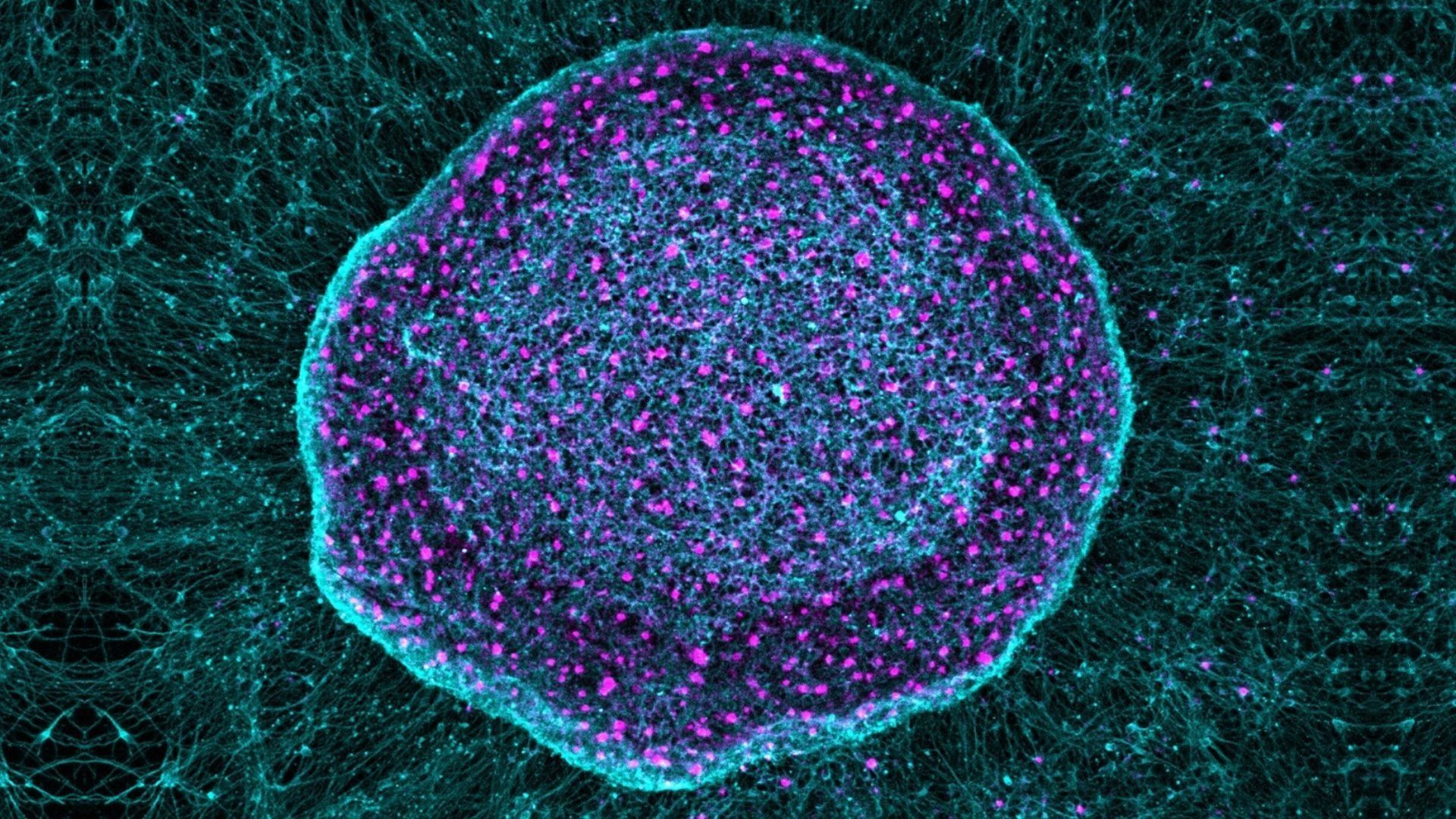
The 'Pain Sponge': A Stem-Cell Breakthrough That Could Intercept Agony Before It Hits the Brain

📷 Image source: cdn.mos.cms.futurecdn.net
A Biological Firewall Against Pain
Scientists engineer a living device to intercept neural distress signals
Imagine a living, microscopic sponge, implanted near your spine, that soaks up pain signals before your brain ever gets a chance to register them. This isn't science fiction but the goal of a groundbreaking new study. According to livescience.com, researchers have developed a tiny, implantable device derived from human stem cells that acts as a 'pain sponge,' designed to intercept and mop up the chemical messengers of pain as they travel toward the brain.
The concept, published in a report on livescience.com on 2026-01-22T21:40:00+00:00, represents a radical shift from traditional pain management. Instead of flooding the entire body with drugs like opioids or relying on electrical stimulation, this approach seeks to create a precise, biological barrier at the source. The device is engineered to release a natural painkiller exactly where and when it's needed, potentially offering relief for chronic pain sufferers without the debilitating side effects of current treatments.
How the Sponge Intercepts the Body's Alarm System
The precise mechanics of soaking up distress chemicals
The human body's pain signaling system is a complex cascade. When tissue is damaged, specialized nerve cells release chemicals, including one called adenosine triphosphate (ATP). This ATP acts as a 'danger signal,' binding to receptors on other neurons and triggering a chain reaction that ultimately sends an 'ouch' signal racing up the spinal cord to the brain.
The stem-cell-derived 'sponge' is designed to break this chain. The report states that the device is packed with precursor cells that mature into interneurons—specialized nerve cells that act as communication bridges within the spinal cord. These engineered interneurons are programmed to release a neurotransmitter called gamma-aminobutyric acid (GABA). GABA is the nervous system's primary inhibitory chemical; it effectively calms overexcited neurons and dampens signal transmission.
By positioning this living device at the spinal nerve root, the idea is that it will sense the flood of ATP from injured tissue and respond by releasing a localized, precise dose of GABA. This GABA then soaks up or counteracts the excitatory pain signals, preventing them from progressing further along the neural highway. It's akin to having a dedicated emergency crew stationed at the scene of an accident, containing the problem before it can cause a major traffic jam in your central nervous system.
The Stem Cell Foundation: Building a Living Machine
From pluripotent potential to specialized neural function
The core of this technology lies in its use of human stem cells. Researchers didn't harvest specialized neurons; they started with induced pluripotent stem cells (iPSCs). These are adult cells, like skin cells, that have been chemically reprogrammed back to an embryonic-like state. From this blank slate, they can be guided to become almost any cell type in the body.
In this case, scientists directed the iPSCs to develop into a specific class of spinal cord interneurons called GABAergic progenitors. According to the livescience.com report, these progenitor cells are the immature versions of the neurons needed for the sponge. Once implanted, they are designed to further mature and integrate into the local neural environment. This use of human-derived cells is crucial, as it aims to minimize immune rejection and create a biologically compatible implant that can function in harmony with the patient's own nervous system over the long term.
The Promise for Chronic Pain: Beyond Opioids
Addressing a crisis with targeted, biological precision
The potential applications for a successful 'pain sponge' are vast, but its most significant impact could be on the treatment of chronic pain. Conditions like neuropathic pain, phantom limb pain, or severe lower back pain are often inadequately managed by existing drugs. Opioids, while powerful, come with high risks of addiction, tolerance, and respiratory depression.
This new approach offers a fundamentally different paradigm. 'By delivering a natural painkiller exactly where it is needed, we could potentially avoid the side effects of systemic drugs,' the report notes. The device aims for on-demand, localized relief. It wouldn't numb the entire body or cloud mental function; it would simply intercept the erroneous or excessive pain signals at their relay station. For millions living with intractable pain, this could mean a return to functionality without the shadow of dependency or cognitive fog.
The Surgical Gateway: Implanting the Future of Pain Relief
A minimally invasive procedure for maximum targeted effect
How would such a device actually reach its post? The research suggests a relatively straightforward surgical procedure. The tiny, capsule-like sponge would be implanted near the dorsal root ganglion. This is a critical structure—a cluster of nerve cell bodies located just outside the spinal cord that acts as a gatekeeper for sensory information, including pain, coming from the body.
Placing the device here is a strategic masterstroke. It positions the biological factory right at the first major processing center for pain signals, before they are fully integrated and sent upward. The surgery to access this area is considered minimally invasive compared to deep brain or spinal cord procedures. This practical consideration is key for translating a laboratory breakthrough into a viable clinical therapy that surgeons could adopt and patients could reasonably undergo.
From Lab Rodents to Human Trials: The Path Ahead
Proven concept in animals lays the groundwork for future development
The research detailed by livescience.com is currently at the preclinical stage, with experiments conducted in mouse models. In these studies, mice implanted with the stem-cell device showed reduced pain responses in standardized tests. This proof-of-concept is the essential first step, demonstrating that the biological principle can work in a living organism.
The road from successful mouse trials to an approved human therapy is long and fraught with challenges. Scientists must next ensure the long-term safety and stability of the implants in larger animal models. They need to verify that the cells don't overproduce or underproduce GABA, don't form tumors, and continue to function reliably for months or years. The immune response, even to human-derived cells, must be meticulously managed. While the timeline is uncertain, this foundational work provides a compelling new blueprint for attacking pain, one that could eventually steer the field away from purely pharmacological solutions.
The Biological vs. Electronic Frontier of Neuromodulation
How living implants differ from today's spinal cord stimulators
The 'pain sponge' enters a field already exploring implantable devices for pain, most notably spinal cord stimulators (SCS). These existing devices work by delivering mild electrical pulses to the spinal cord to scramble or mask pain signals. However, they can have limitations, including the sensation of the stimulation itself, battery replacements, and lead migration.
The stem-cell approach is fundamentally biological. Instead of overriding signals with electricity, it aims to modulate the nervous system's own chemical language. It seeks to restore a natural balance by supplementing the body's own inhibitory systems precisely where they are failing. This could offer a more nuanced and potentially more sustainable form of intervention. The device wouldn't require a battery, as the living cells are its engine, powered by the body's own nutrients. It represents a move toward 'bio-integrated' therapies that work with human physiology, not just against its symptoms.
A Vision for Personalized Neurological Therapeutics
The broader implications of programmable stem-cell implants
The significance of the 'pain sponge' research may extend far beyond pain management. It serves as a powerful prototype for a new class of programmable, living implants. The core technology—using engineered human stem cells to deliver specific therapeutic molecules on demand in response to local biological cues—could be adapted for other neurological disorders.
Could similar devices be designed to release dopamine in precise patterns for Parkinson's disease? Or deliver neuroprotective factors for spinal cord injury? The report on livescience.com highlights this as a foundational platform. By changing the type of stem-cell-derived neuron or the neurotransmitter it releases, scientists could theoretically create a suite of bio-devices for various conditions. This vision points toward a future of personalized neurological medicine, where implants are tailored not just to a disease, but to an individual's unique genetic and biological makeup, offering hope where conventional treatments have reached their limits.
#Health #Science #MedicalBreakthrough #StemCells #PainManagement


