

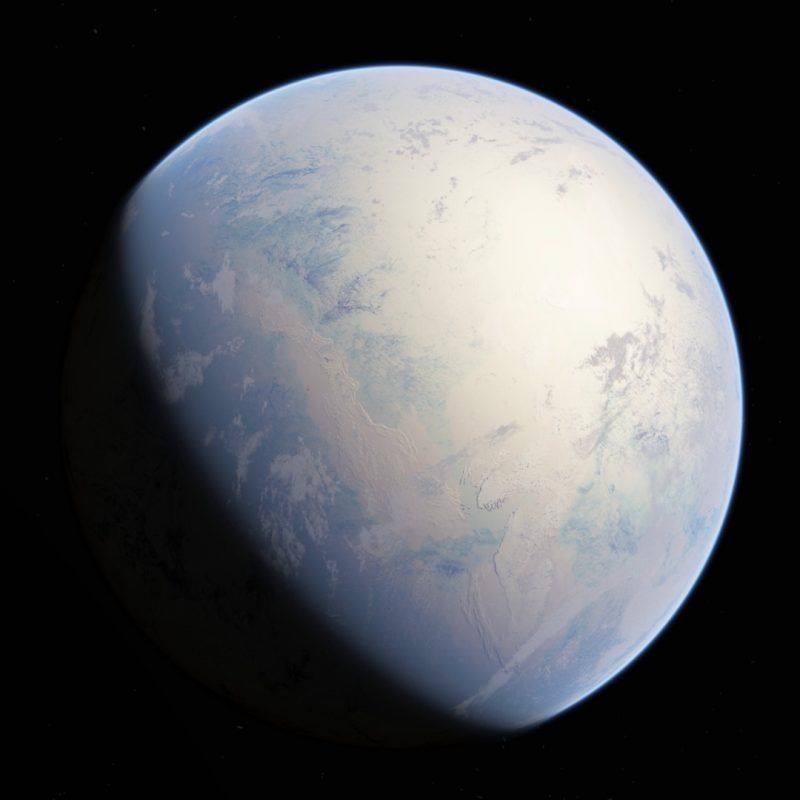
Life's Refuge: How Ice-Free Pockets on a Frozen Planet Sheltered Earth's Earliest Organisms

📷 Image source: earthsky.org
A Frozen World with Hidden Havens
Re-examining the extremes of Snowball Earth
For decades, the concept of a 'Snowball Earth' has painted a picture of our planet as a global ice cube, a world entirely encased in ice for millions of years. This extreme glaciation, occurring between 720 and 635 million years ago, presented a profound puzzle: how did early life not only survive but eventually thrive in such inhospitable conditions? A new study, published in the journal Nature Communications, offers a compelling answer. According to earthsky.org, researchers have found geological evidence that challenges the 'hard snowball' model. Instead of a completely solid freeze, they propose the existence of significant ice-free oases—stretches of open ocean water that provided crucial refuges for photosynthetic life.
This research, led by scientists from the University of Southampton and others, analyzed sedimentary rocks in Australia's outback that date back to the Sturtian glaciation, the first major Snowball Earth event. The findings suggest a more nuanced 'slushball Earth' scenario. These open-water areas, potentially kept ice-free by geothermal heat or other factors, would have been vital sanctuaries. They would have allowed sunlight to penetrate, enabling photosynthetic organisms to continue producing oxygen and forming the base of a food web in an otherwise frozen world.
The Chemical Fingerprint in Ancient Rock
Iron isotopes tell a story of open water
The key evidence lies not in fossils, but in the subtle chemical signatures locked within ancient stones. The research team focused on the isotopic composition of iron found in sedimentary rocks from the Australian formation. Isotopes are variants of the same element with different atomic weights, and their ratios can act as a powerful environmental proxy.
According to the report, the specific pattern of iron isotopes they discovered is characteristic of deposition in oxygenated marine environments. This is critical. On a truly frozen planet with a fully ice-covered ocean, water would become stagnant and devoid of oxygen. The presence of this oxygenated iron signature strongly indicates that parts of the ocean remained open and dynamic, allowing for gas exchange with the atmosphere. This process would have been driven by wind and waves in these ice-free zones, creating the conditions necessary to imprint this distinct chemical fingerprint into the seabed sediments that eventually became rock.
Beyond Mere Survival to Evolutionary Catalyst
The implications of these refuges extend far beyond simple survival. These ice-free oases were likely not just isolated pockets of life clinging on, but active centers of biological and geochemical activity. According to earthsky.org, the study posits that these environments were essential for maintaining a functioning biological pump—a process where organisms draw carbon dioxide from the atmosphere and sequester it in the deep ocean.
This ongoing process would have had a major influence on global climate. By continuing to draw down greenhouse gases, life in these refuges may have played a role in prolonging the glacial conditions. Paradoxically, by surviving, these ecosystems helped maintain the very ice age that threatened them. Furthermore, these stable, yet challenging, environments could have served as pressure cookers for evolution, potentially setting the stage for the increased biological complexity that emerged after the ice finally retreated.
The Slushball vs. Hard Snowball Debate
A scientific model evolves with new data
This research adds significant weight to the 'slushball Earth' hypothesis, which has coexisted with the more severe 'hard snowball' model for years. The traditional hard snowball theory posits a global ice cover so complete that it would have had an albedo, or reflectivity, high enough to make the planet nearly impossible to escape from its frozen state without extraordinary events like massive volcanic outgassing.
The evidence for open water, however, suggests a more moderate scenario. A slushball Earth, with substantial areas of open ocean in the tropics or around geothermal hotspots like mid-ocean ridges, is more dynamically plausible. These open areas would lower the planet's overall albedo, absorbing more solar heat and making the eventual deglaciation less mystifying. The debate is fundamental to understanding the limits of planetary climate stability and the tenacity of life.
Modern Analogues and Planetary Insights
To understand these ancient refuges, scientists often look to modern analogues. While no present environment perfectly matches a Snowball Earth oasis, certain locations offer glimpses. Polynyas—persistent areas of open water surrounded by sea ice, such as those found in the Antarctic—demonstrate how localized factors like ocean currents or wind can maintain ice-free zones in otherwise frozen seas.
Similarly, regions near volcanic islands or hydrothermal vents in polar areas show how geothermal heat can create localized habitable zones. Studying the ecosystems within these modern polynyas helps researchers model the productivity and limitations that ancient oases might have possessed. This line of inquiry also extends our understanding of where life could persist on other icy worlds, such as Jupiter's moon Europa or Saturn's moon Enceladus, where global oceans lie beneath icy shells.
The Australian Geological Record
A time capsule from the deep freeze
The specific site of this discovery, the Yudnamutana region in the Flinders Ranges of South Australia, is a world-class geological archive. The rocks here were deposited on the ancient seafloor during the Cryogenian Period. According to earthsky.org, the team meticulously analyzed the iron isotope ratios in these deposits, which required sophisticated mass spectrometry techniques to detect the subtle variations that betray their origin.
These Australian strata are part of a global network of geological evidence from the Snowball Earth episodes, with similar deposits found on other continents that were once connected in the supercontinent Rodinia. Correlating findings from these disparate locations helps scientists build a more three-dimensional, global picture of the environmental conditions during these extreme glaciations and test whether open-water refuges were a local or widespread phenomenon.
Implications for the Rise of Complex Life
The survival of photosynthetic life through these glacial epochs has direct consequences for one of biology's greatest events: the rise of complex, multicellular organisms. The Snowball Earth events predate the Cambrian Explosion—the period around 541 million years ago when most major animal phyla appeared in the fossil record—by over a hundred million years.
If the oceans had been completely sterile under the ice, the rapid diversification of life in the Cambrian would be even more perplexing. The existence of refuges provides a logical bridge. They served as reservoirs of genetic and ecological diversity, preserving lineages of eukaryotic life (organisms with complex cells) through the long winter. When the ice finally melted, these survivors were poised to recolonize the newly warmed oceans, potentially accelerating evolutionary innovation in a nutrient-rich, post-glacial world.
A Revised View of Planetary Resilience
This study, as reported by earthsky.org on 2026-02-20T12:50:07+00:00, ultimately reframes our understanding of Earth's most severe climate disaster. It moves the narrative from a story of life barely enduring a global catastrophe to one of strategic resilience within environmental sanctuaries. The planet was not a uniform ball of ice but a patchwork of extreme and moderate environments.
This revised view underscores the incredible adaptability of the biosphere. Even when global conditions seem overwhelmingly hostile, localized niches can persist, preserving the threads of life's tapestry. It also highlights the intricate feedback loops between life and climate; the very organisms sheltering in these oases were likely influencing the global carbon cycle and, thus, the duration of the ice age itself. The discovery reminds us that the geological record often holds subtle clues that force us to reconsider even our most dramatic visions of the past.
#Science #Geology #SnowballEarth #EarlyLife #ClimateHistory


