

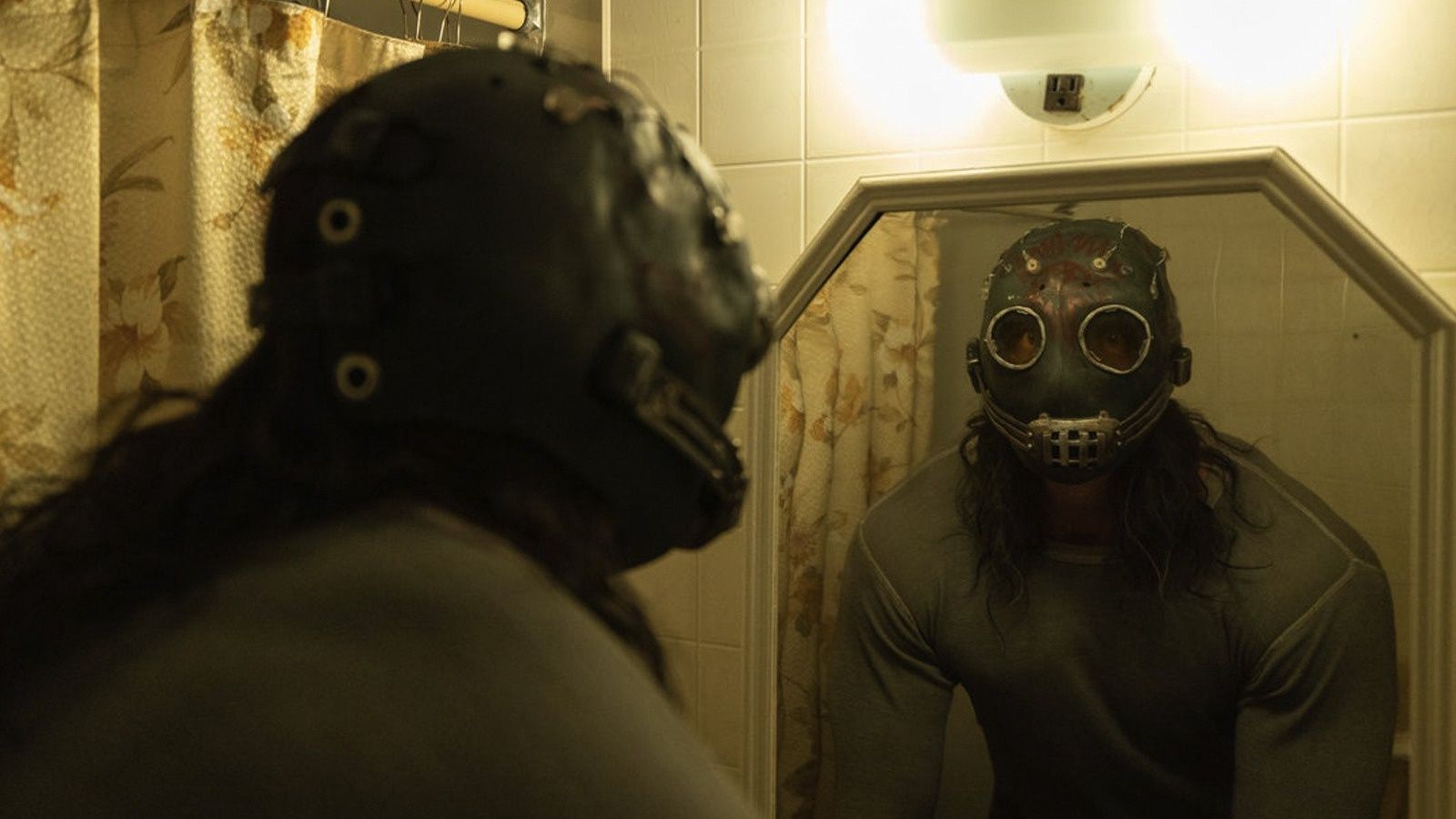
The Practical Gore of Psycho Killer: How a Producer's Realism Shaped the Film's Most Disturbing Scene

📷 Image source: slashfilm.com
A Producer's Threshold
When Even Horror Veterans Draw a Line
In the landscape of modern horror, where boundaries are constantly tested, producer Roy Lee found his limit during the making of Psycho Killer. According to an exclusive interview published on slashfilm.com on February 20, 2026, Lee, a veteran known for films like The Ring and It, revealed that one scene in the upcoming slasher film was almost far more graphically disturbing than what appears in the final cut. This admission highlights the ongoing negotiation between creative vision, practical effects, and audience tolerance that defines contemporary genre filmmaking.
Lee's role extended beyond traditional production duties; he served as a crucial filter for the film's visceral content. The producer described reviewing footage and realizing a particular kill sequence, already designed to be the movie's grossest moment, could cross from effective shock into outright repulsion. His intervention led to a recalibration, demonstrating how seasoned producers often act as the audience's first proxy, gauging what serves the story versus what might alienate viewers entirely.
Anatomy of the Gross-Out
Deconstructing the Scene That Tested Limits
While Lee did not divulge every grisly detail to slashfilm.com, he indicated the scene involves a kill utilizing a common household appliance in a horrifically inventive way. The initial concept from the special effects and makeup team involved more extensive visceral damage and a longer, more detailed focus on the physical aftermath. The goal was to create a moment that would be memorable for its brutal practicality, a signature of the film's antagonist.
The original version reportedly emphasized the mechanical failure of the human body in extreme detail. Lee felt this approach risked shifting the audience's reaction from terrified engagement to disgusted detachment. The concern wasn't merely about censorship or ratings, but about narrative pacing and tonal balance. An overly protracted focus on gore, he argued, could halt the movie's momentum and reduce the killer from a frightening figure to a mere vector for elaborate bodily destruction.
The Mechanics of Practical Effects
How the Gore Was Actually Made
The scene in question relied heavily on practical effects—physical props, makeup, and mechanical rigs created on set—rather than computer-generated imagery (CGI). This choice, confirmed by Lee, is central to the film's gritty aesthetic. Practical effects often involve complex prosthetics, synthetic blood and tissue, and precisely engineered mechanisms to simulate injury. The tactile reality of these effects in front of the cameras and actors frequently sells the horror more convincingly than post-production digital work.
However, the very effectiveness of practical effects created the dilemma. Because the prosthetic work and blood rigs were so convincing and tangible, filming the initial, more extreme version yielded footage that felt uncomfortably real. Lee described the dailies as being almost medically explicit. This verisimilitude forced the production team to confront the scene's impact head-on, leading to discussions about where the line between horror movie fantasy and unsettling realism should be drawn for this particular story.
A History of Horror Line-Drawing
Psycho Killer in a Legacy of Censorship and Choice
Lee's decision echoes a long history of self-regulation and debate within the horror genre. From the 'video nasties' moral panic in the United Kingdom during the 1980s to the Motion Picture Association's rating board in the United States, filmmakers have always negotiated content limits. What's changed is that the line is now often drawn internally by creators like Lee, based on artistic intent and audience expectation, rather than solely by external censors.
This internal gatekeeping reflects a matured genre where filmmakers are more conscious of their work's context. A film like Psycho Killer exists in an ecosystem that includes extreme horror subgenres, mainstream studio releases, and global streaming content. Lee's choice positions the film within a specific niche: aiming for high-impact, practical horror that remains accessible to a broad thriller audience, rather than venturing into the more confrontational territory of underground or 'torture porn' subgenres.
The Global Gore Gradient
How Audience Tolerance Varies Worldwide
The producer's considerations are not universal. Audience thresholds for graphic content vary significantly by culture and market. For instance, horror traditions in East Asia often emphasize psychological dread and supernatural eeriness over explicit gore, while certain European genres have historically embraced more graphic and artistic bodily horror. As a producer with films released internationally, Lee is undoubtedly aware of these gradients.
This global perspective may have subtly influenced the edit. A scene deemed excessively nasty for a core market might face even stronger reception challenges abroad, potentially affecting distribution and marketing. By pulling back, the production may have aimed for a more universally comprehensible form of shock—one rooted in the frightening idea rather than the explicit, lingering image. This balancing act is a quiet, crucial part of financing and selling horror films in the international marketplace.
The Ripple Effect on the Narrative
How One Scene's Change Alters the Whole
Altering the film's grossest moment had narrative consequences beyond the immediate shock value. In slasher films, kill sequences are not just spectacle; they are character beats for the villain and pacing devices for the plot. A more extreme version of the scene might have prematurely peaked the film's intensity or defined the killer in a purely savage light, leaving less room for other dimensions of fear.
The trimmed version, as described by Lee, likely maintains the killer's inventive cruelty but allows the horror to breathe elsewhere. It preserves a rhythm where tension and release are carefully managed. This decision underscores that in effective horror, what is implied or left partially to the imagination often terrifies more lastingly than what is shown in exhaustive detail. The edit became an exercise in restraint, aiming to make the overall film more frightening by making one of its parts slightly less graphically explicit.
The Ethical Murk of Realistic Violence
When Make-Believe Feels Too Real
Lee's discomfort points to an ethical gray area in horror effects. When practical effects achieve a high degree of realism, they can inadvertently mimic real-world trauma with uncomfortable accuracy. The production team, including the effects artists, must navigate the psychological impact of creating such realistic simulations of violence on set, even in a controlled, fictional environment.
Furthermore, there is an unspoken responsibility to the audience. While suspension of disbelief is a contract viewers enter, excessively realistic and prolonged gore can traumatize some viewers in ways stylized or CGI violence might not. Lee's role, in this instance, involved an ethical calibration: delivering the thrills promised by the genre while avoiding content that could cause genuine harm or distress that extends beyond the intended cinematic scare. This is a modern calculation, informed by greater awareness of audience psychology.
The Risk of Over-Correction
Could Trimming the Gore Dilute the Film's Identity?
The decision to scale back the scene is not without its own creative risks. For a film marketing itself as a visceral, practical-effects-driven slasher, the grossest moment is a selling point. Hardcore horror fans often seek out these boundary-pushing sequences, and diluting them might lead to perceptions that the film has been 'sanitized' or compromised for wider appeal. This tension lies at the heart of mainstream horror production.
Lee's challenge was to retain the scene's power and memorability while removing elements he felt were counterproductive. The success of this edit won't be known until the film's release and audience reaction. It represents a gamble that less can be more—that a quicker, perhaps slightly less explicit, but well-executed bit of violence will leave a stronger impression by engaging the viewer's imagination rather than overwhelming it with viscera. This philosophy aligns with classic horror masters who understood the power of suggestion.
The Collaborative Nature of Cinematic Violence
Director, Producer, and Effects Team in Dialogue
The revision was not a unilateral decree. Lee emphasized it was a collaborative discussion with the film's director and the special effects team. The effects artists, who had poured significant skill and time into creating the more elaborate version, had to be brought into the conversation. Their expertise was crucial in understanding what could be removed or shortened without making the remaining footage look technically flawed or inconsistent.
This collaboration highlights that on-set gore is a complex technical achievement. Changing it isn't as simple as deleting a CGI layer; it may involve reshooting with adjusted prosthetics, re-choreographing actor movements, or re-editing to use different camera angles. The final version is thus a consensus piece, shaped by artistic vision, practical filmmaking constraints, and strategic audience considerations. It is a testament to the fact that no single scene in a major film is the product of just one perspective.
Psycho Killer's Place in the Horror Pantheon
Defining Itself Through Restraint
By publicly discussing this choice, Roy Lee has subtly framed Psycho Killer's approach to horror. It positions the film as one that values craft and psychological impact over sheer grotesquerie. In an era where some films compete for notoriety based on extreme content, Psycho Killer, through this producer's story, signals a different priority: effective, character-driven scares built on a foundation of superb practical work.
This calculated restraint could become a defining feature, setting it apart from both tamer studio offerings and more nihilistic independent horror. It suggests a film confident enough in its core premise and execution that it doesn't need to rely on its grossest possible moment to be memorable. Instead, it trusts that a killer concept, compelling characters, and well-deployed shocks will resonate more deeply and widely with audiences seeking a thrilling, but not traumatizing, cinematic experience.
Perspektif Pembaca
The line between terrifying and tasteless in horror is deeply personal and constantly shifting. Roy Lee's editorial decision on Psycho Killer's most gruesome scene represents one professional's take on that ever-evolving boundary.
Where do you draw your line as a viewer? Are the most effective horror moments those that show everything in grim detail, trusting in practical effects mastery to deliver the shock, or those that pull back, allowing your own imagination to construct a terror that might be far worse than anything put on screen? Does knowing a scene was deliberately scaled back from an even more extreme version make you more or less interested in seeing the final result?
#PsychoKiller #HorrorFilm #PracticalEffects #RoyLee #FilmProduction


