

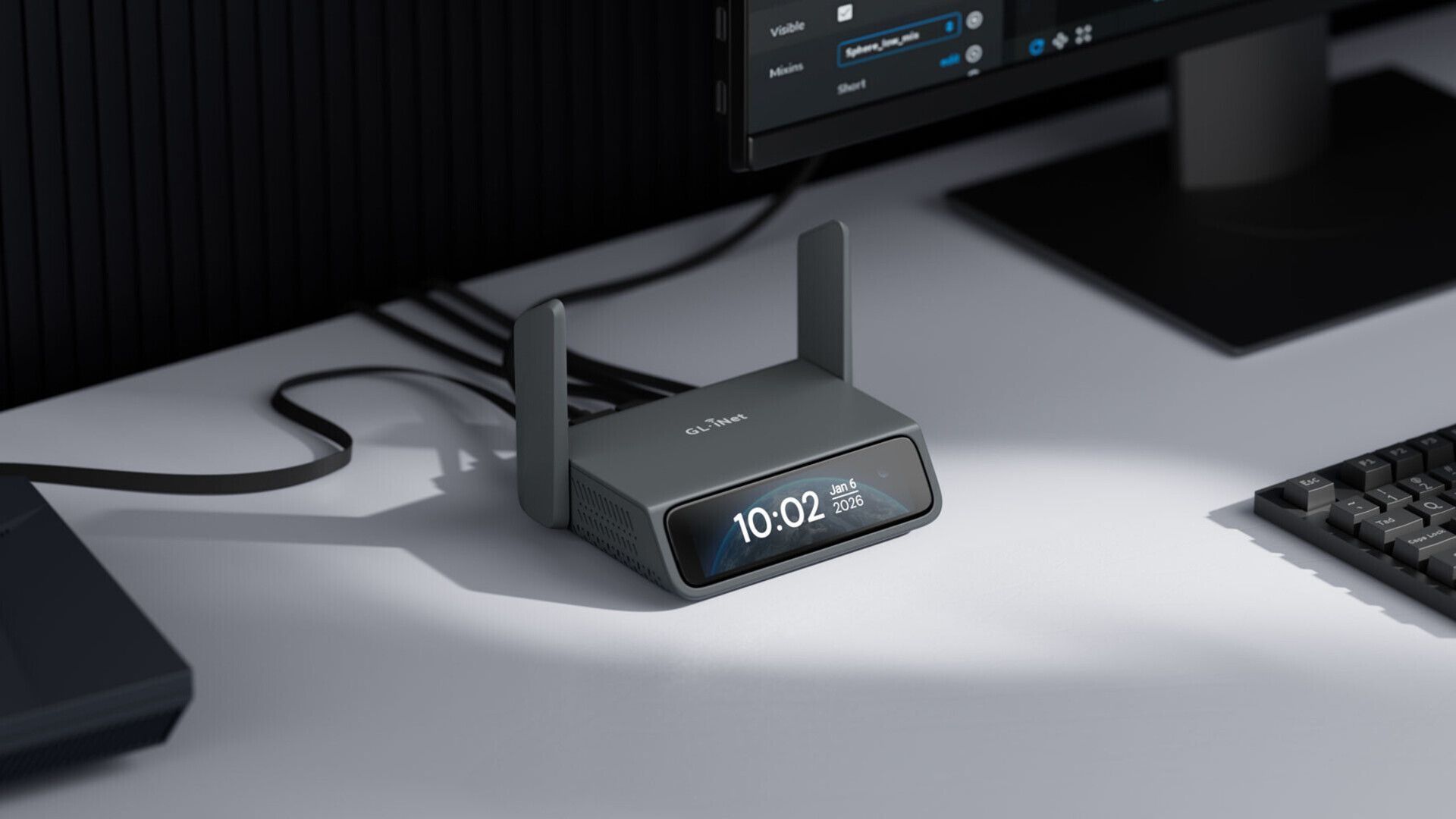
Remote PC Control Reaches New Heights with Portable 5G KVM Featuring Touchscreen

📷 Image source: cdn.mos.cms.futurecdn.net
The Dawn of Truly Remote PC Management
A pocket-sized solution for global access
Imagine needing to reboot a server in London while you're on a train in Tokyo, or accessing files from a desktop in New York while troubleshooting from a café in Berlin. For IT professionals and power users, the dream of seamless, location-independent computer control has often been hampered by clunky software, network dependencies, or insecure connections. According to techradar.com, a new hardware device is promising to shatter those limitations by combining several key technologies into a single, portable unit. The report states this device is a 5G-enabled remote KVM (Keyboard, Video, Mouse) switch that incorporates its own touchscreen and HDMI port, aiming to provide complete control over a PC or server from virtually any corner of the globe with cellular coverage. This isn't merely another remote desktop application; it's a dedicated hardware tool designed to function independently of the host computer's operating system or network state, a critical distinction for system administrators dealing with boot-level issues or network failures.
Unpacking the Hardware: More Than Just a Dongle
The device, as detailed by techradar.com, packs a surprising array of physical interfaces into its form factor. The inclusion of a built-in touchscreen is a significant departure from traditional KVM switches, which typically only offer video output and USB pass-through. This screen likely serves a dual purpose: providing a visual interface for the device's own settings and configuration, and potentially offering a basic secondary display for the connected host PC. The presence of an HDMI port suggests the unit can capture video output directly from a computer's graphics card, a method that generally offers lower latency and higher compatibility than software-based screen scraping. For input, it almost certainly features USB ports to connect a keyboard and mouse to the host system, completing the core KVM functionality. The 5G modem is the cornerstone of its remote capability, providing the wide-area network connection that frees the user from reliance on the host's local Wi-Fi or ethernet, which may be down or unreachable.
The 5G Advantage: Latency, Bandwidth, and Ubiquity
Why cellular connectivity changes the game
The choice of 5G over older cellular standards or pure internet-based solutions is deliberate. According to the techradar.com report, it enables control from 'almost anywhere in the world.' 5G networks offer two potential benefits crucial for remote control: enhanced mobile broadband (eMBB) for higher data rates needed for smooth video transmission, and ultra-reliable low-latency communication (URLLC) in some deployments. Lower latency is paramount when sending mouse movements or keystrokes, as any perceptible delay makes a system feel sluggish and unresponsive. While public 5G networks may not always guarantee the lowest possible latency, they represent a significant step forward from 4G LTE. Furthermore, 5G's widespread rollout means a professional could carry this device and, with an appropriate SIM card from a global provider, establish a secure connection to their office hardware from a construction site, a client's premises, or even a vehicle, without needing to request or configure access to a local guest network.
Core Use Cases: IT Administration and Beyond
The primary audience for this tool is clear: IT system administrators, network engineers, and DevOps professionals. For them, the ability to perform out-of-band management is invaluable. If a server crashes during an OS update or a network misconfiguration locks everyone out, a hardware-based KVM over 5G provides a lifeline that software running on the failed system cannot. The report from techradar.com implies this utility by emphasizing control from anywhere. However, the applications likely extend further. Creative professionals working with high-end rendering workstations could check on progress remotely. Broadcast engineers could manage playback or graphics systems off-site. Researchers could monitor long-running computational experiments on lab computers. Even for a small business owner, it could serve as a secure way to access a point-of-sale system's backend without being physically present in the store. The touchscreen interface may also simplify initial setup or navigation in situations where carrying a full keyboard and mouse is impractical.
Technical Mechanics: How the Remote Connection Works
A look under the hood of the remote control process
While the techradar.com article does not delve into extreme technical specifics, the general operation of such a device can be inferred from existing KVM-over-IP technology. The unit would connect to the host PC via its HDMI and USB ports. Internally, a hardware encoder captures the HDMI video signal, compresses it using a codec like H.264 or H.265, and packets it for transmission. Simultaneously, it encrypts the data stream for security. The 5G modem then transmits this encrypted video stream to a cloud relay server or directly to the client device (like a laptop or phone running a companion app) using a secure protocol. Keystrokes and mouse movements from the remote user travel the reverse path: they are sent from the client app, through the 5G network, to the KVM device, which then translates them into USB HID (Human Interface Device) signals that the host PC interprets as local input. This hardware-based approach means the host PC only 'sees' a standard monitor and USB peripherals, with no special drivers or software agents required for basic control.
Security Implications of a Hardware Backdoor
Any device that provides remote access to a computer system introduces a significant security consideration. The strength of this KVM device's security model would be paramount. According to the premise of the techradar.com report, it creates a potential access point from the public internet (via 5G) into a private network or standalone machine. Key questions arise: Is the video and input stream encrypted end-to-end with modern standards like AES-256? How does the device authenticate a remote user—via a strong password, certificate-based authentication, or a multi-factor system? Can the 5G connection be firewalled or configured to only accept connections from specific IP ranges or through a private VPN? A compromised KVM device could grant an attacker full control of the attached PC. Therefore, for enterprise adoption, features like detailed access logs, role-based permissions, and integration with existing security infrastructure would be essential. The physical security of the device itself also matters, as it could be a target for theft if left attached to an unattended server rack.
Comparing the Landscape: Hardware vs. Software Solutions
The market for remote PC access is dominated by software solutions like TeamViewer, AnyDesk, Chrome Remote Desktop, and built-in tools like Windows Remote Desktop or SSH. These are often low-cost or free for personal use and work well for routine access. However, they have a critical point of failure: they require the host computer to be powered on, booted into a functioning operating system, and connected to a network with the software running. The hardware KVM described by techradar.com operates at a lower level. It can potentially control the BIOS/UEFI settings, reboot the machine, and interact with it before the OS even loads. This makes it a tool for disaster recovery, not just convenience. Traditional IP-based KVM switches exist for data centers, but they are typically rack-mounted, expensive, and require a fixed ethernet connection. This device appears to democratize that capability, making it portable and cellular-enabled. The trade-off is likely cost, complexity of setup, and the ongoing expense of a 5G data plan versus the simplicity of a software-only approach.
The Future of Distributed Work and System Management
The emergence of a tool like this 5G KVM is a symptom of a larger trend: the complete decoupling of physical location from technical work. As teams become more distributed and infrastructure is managed across multiple clouds and data centers, the need for robust, reliable, and secure remote access tools only grows. This device represents a convergence point. It takes the proven, hardware-level reliability of a KVM switch and marries it with the ubiquitous connectivity of 5G and the user experience of a touchscreen. While the techradar.com report highlights its immediate utility, the longer-term implications are about resilience. It enables smaller businesses to manage critical infrastructure without a full-time on-site IT presence. It allows for rapid response to system failures regardless of an administrator's location. As 5G networks mature and private 5G networks become more common in industrial settings, the use cases for such a portable management tool could expand into manufacturing, healthcare, and field services, blurring the lines between traditional IT and operational technology management.
Practical Considerations for Potential Users
For anyone considering such a device, several practical factors come into play beyond the headline features. According to the context of the techradar.com article, portability is key, so battery life would be a major specification. How long can it operate on a single charge while actively transmitting a video stream over 5G? The quality of the video encoding will determine both the visual clarity of the remote session and its data consumption—a critical factor given cellular data caps. The device's compatibility with various PC resolutions and refresh rates, especially for gaming or creative workstations, would need verification. Furthermore, the user experience of the companion mobile or desktop app used to connect to the KVM is just as important as the hardware itself. Is it intuitive? Does it support multi-monitor setups? Can it transfer files? Finally, the total cost of ownership, including the device's purchase price and the ongoing 5G subscription, must be weighed against the value of the uptime and accessibility it provides. For a large enterprise, it could be a minor expense; for a freelancer, it may be a significant investment reserved for critical systems.
#Technology #5G #KVM #RemoteWork #IT


